
Daring Rescue Operation in Iran: US Military Extracts Officer After 36 Hours
US President Trump Discusses Complex Rescue Mission
On Monday, President Donald Trump provided details about the dramatic rescue of a military officer who endured 36 hours behind enemy lines in Iran. He revealed that the officer was "injured quite badly" and was "bleeding rather profusely" before being successfully recovered. During a press briefing at the White House, Trump emphasized the military's commitment to not leaving any American behind, stating, "In the United States military, we leave no American behind. We don't do it." He elaborated on the complexities of the rescue operation, which took place in "treacherous mountain terrain."
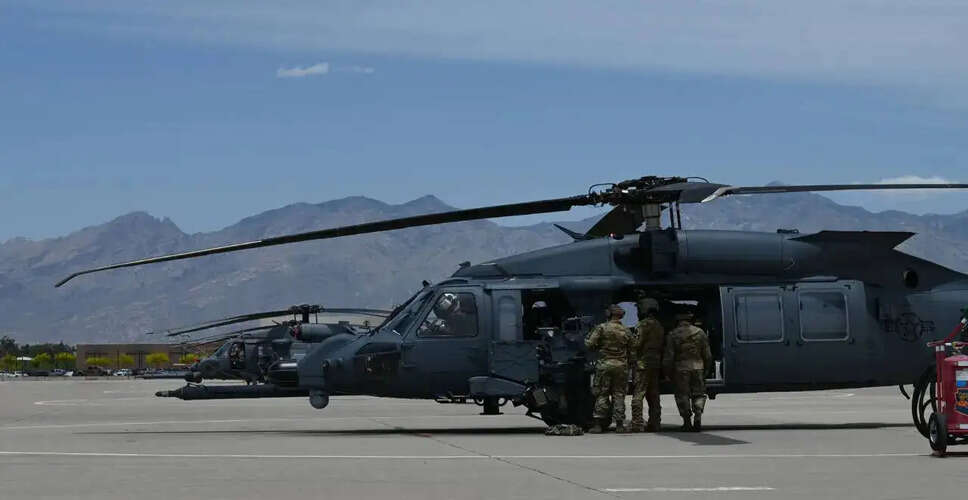
Trump explained that the initial search and rescue teams managed to locate the pilot of an F-15E Strike Eagle, who was subsequently extracted from hostile territory by an HH-60W Jolly Green II helicopter. He praised the helicopter's capabilities, noting that the rescue teams faced gunfire at very close range but miraculously, no one was injured during the operation. The president also mentioned that a second crew member, a highly respected colonel serving as a weapons system officer, had landed far from the pilot, complicating the rescue further.
The officer had been unaccounted for since the aircraft was downed on Friday. Trump characterized the rescue as a "very risky" operation that involved a firefight in southern Iran. He noted that the pilot had already been rescued during the mission, which saw two HH-60W helicopters sustain damage from enemy fire, resulting in injuries to several personnel. The colonel was ultimately extracted from south-west Iran on Sunday in what Trump described as one of the largest and most intricate combat search operations ever conducted by the military.
According to Trump, the operation involved a total of 155 aircraft, including bombers, fighter jets, refueling tankers, and rescue helicopters. He mentioned that much of the operation relied on deception, stating, "A lot of it was subterfuge. We wanted them to think he was in another location." Many aircraft had to operate at low altitudes, which exposed them to heavy enemy fire. "We got a helicopter in it with a lot of bullets," he remarked.
The HH-60W Jolly Green II helicopter is specifically designed for combat search and rescue missions, replacing the older HH-60G Pave Hawk. It is equipped with advanced mission systems that enhance situational awareness in contested environments, featuring sophisticated cockpit displays that provide essential flight information. The aircraft is also outfitted with radar warning receivers, missile and laser threat detection systems, and countermeasures like chaff and flares. Additional protective features include cabin and cockpit armor, as well as externally mounted weaponry. Its capabilities extend to advanced communication systems, tactical data links, and modifications such as infrared-masking exhausts and upgraded rotor blades.