
Cuba Faces Crisis Amid US Oil Blockade and Nationwide Blackouts
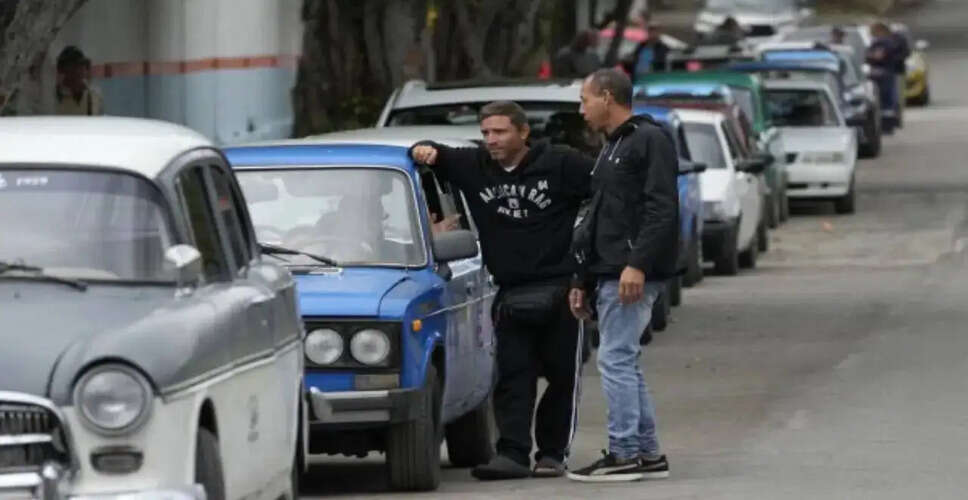
Crisis Deepens in Cuba
Cuba is currently experiencing a severe crisis, exacerbated by the United States' oil blockade that has significantly restricted fuel supplies to the island. On Monday, the nation suffered a nationwide blackout following a collapse of its power grid, which has ignited new protests. Former US President Donald Trump has intensified his rhetoric against the communist regime, stating, "I do believe I'll (have) the honour of taking Cuba. Taking Cuba in some form, whether I free it, take it, I can do anything I want," further escalating tensions.
Power Supply Issues
Fuel Squeeze Behind Blackout
Cuba, with a population of approximately 11 million, has long struggled with power shortages. However, the situation has deteriorated significantly in recent months due to the US cutting off oil shipments from Venezuela, a crucial supplier for Havana. The US has also cautioned other nations against providing fuel to Cuba, and this pressure is evidently taking its toll. President Miguel Díaz-Canel recently stated that the country has not received any fuel for the past three months. Despite the grid failure, officials indicated that there were no issues with the operational power units, implying that the blackout was due to supply shortages rather than technical failures.
Protests Erupt
Protests Erupt
The escalating blackouts have led to widespread protests throughout Cuba. Demonstrations have been ongoing for over a week, with violence reported in the central city of Moron, where protesters targeted Communist Party offices and set furniture ablaze. "Every night for 10 days they have gone out to protest in a different area of the country because of the blackouts," noted Norges Rodriguez from YucaByte. "This is the first time they have protested so many consecutive days in a row." In response, authorities have made several arrests.
Trump's Focus on Cuba
'Iran Before Cuba'
Trump has suggested that Cuba might be his next target after addressing issues in Venezuela and Iran. He mentioned that while Washington is "talking to Cuba, we're going to do Iran before Cuba," in reference to the ongoing military actions against Tehran. A White House representative later stated, "As the President has indicated, we are in discussions with Cuba, whose leaders should negotiate a deal that he believes 'would be very easily made.'" He further remarked that Cuba is a failing nation facing significant challenges due to the loss of support from Venezuela and Mexico halting oil shipments.
Cuba's Shift in Approach
Under increasing pressure, Díaz-Canel has indicated a willingness to change tactics, stating that Cuba is engaging in talks with the US to address "bilateral differences through dialogue." In an unusual move, his government has also invited Cubans living abroad to contribute to the country's economic and social development. Deputy Prime Minister Oscar Perez-Oliva Fraga announced that expatriates would be permitted to invest in small private enterprises, marking a significant shift from a historical stance that labeled exiles as "gusanos" or "scum." However, opposition groups remain doubtful. Orlando Gutierrez-Boronat remarked, "The regime must be truly desperate to seek resources from the very people they once branded as 'scum' and forced into exile. It is vital to withhold investment now and wait for a truly free Cuba."