
Cuba Attempts Direct Communication with Trump Amid Economic Crisis

Cuba's Bold Move
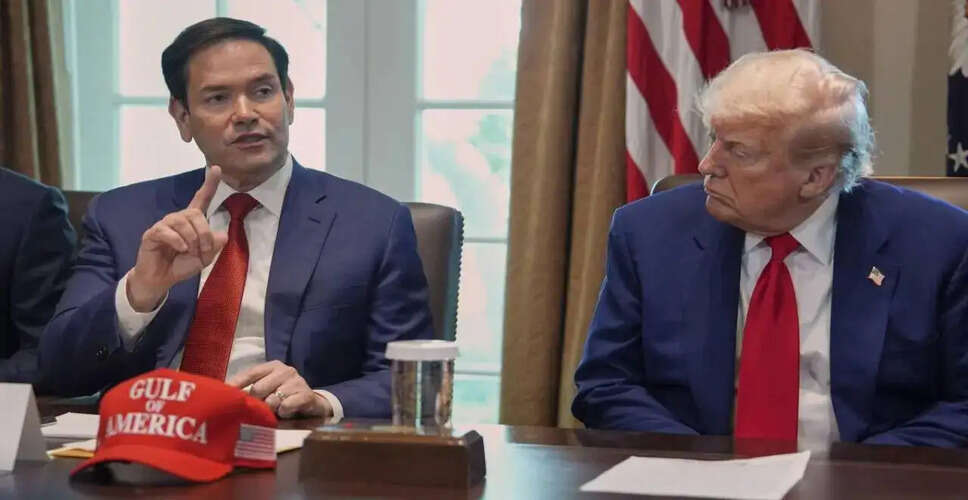
In a surprising development that took US officials by surprise, a high-ranking member of Cuba's government reportedly sought to bypass Secretary of State Marco Rubio to deliver a letter directly to President Trump last week, as reported by a current and a former US official.
Details of the Letter
The correspondence, which bore an official Cuban seal and resembled a diplomatic note, proposed economic partnerships, requested relief from sanctions, and included a caution regarding a potential US military action, according to the US official. The individual selected to deliver this letter was Roberto Carlos Chamizo González, a 37-year-old businessman from Havana involved in the luxury tourism and high-end car rental industries. However, he was stopped at the Miami airport by a Customs and Border Protection agent, who confiscated the letter and sent him back to Cuba. The reasons for his being flagged remain unclear.
The White House has not confirmed whether the letter reached the president, instead directing inquiries to Trump's recent public statements regarding Cuba.
The Architect Behind the Letter
The initiative to send the letter is believed to have been orchestrated by Raúl Rodríguez Castro, the 41-year-old grandson and close aide of former Cuban President Raúl Castro, who is still a dominant figure in the nation. Known as "the Crab" due to a birth defect, Rodríguez Castro has been a long-time bodyguard for Raúl Castro and continues to accompany him during rare public events. He has also been involved in behind-the-scenes discussions between Cuban and US representatives.
Circumventing Rubio
Analysts suggest that the decision to bypass traditional diplomatic channels was intentional. Rubio, whose family emigrated from Cuba, has consistently advocated for stricter measures against Havana, aiming to destabilize the Communist regime. By attempting to communicate directly with Trump, Cuba may have believed it could initiate a different type of dialogue. Peter Kornbluh, co-author of "Back Channel to Cuba: The Hidden History of Negotiations Between Washington and Havana," noted, "The Cubans seem to be trying to bypass Rubio to send a direct message to Trump, indicating a lack of trust in Rubio as a neutral mediator and a desire to appeal directly to the president amid escalating tensions."
Cuba's Dire Economic Situation
The context for this letter is a nation facing severe economic challenges, with many experts describing it as the worst crisis in decades. Years of governmental mismanagement, stringent US sanctions, and a near-total oil blockade initiated by Trump have crippled the economy. The situation deteriorated further following the US military's actions against Venezuelan President Nicolás Maduro in January, which deprived Cuba of a crucial ally. Trump has characterized Cuba in stark terms, stating, "Cuba will be next. Cuba is a failing country, and we will be there to help them out."
Potential for Negotiation
Some analysts speculate that Trump might be amenable to negotiating an economic deal with Cuba without insisting on complete regime change, similar to his approach with Venezuela. However, Cuban President Miguel Diaz-Canel has made it clear that he will not compromise on Cuba's political structure, complicating any potential agreement with hardline Cuban-American politicians and voters, who are among Trump's staunchest supporters. Representative Mario Díaz Balart, a Republican from Florida, stated, "This regime must disappear." In recent weeks, US officials have engaged in discreet discussions with Cuban representatives, including those within Raúl Castro's inner circle, but the outcome of these talks remains uncertain.
The existence of the letter was initially reported by a US government-funded Spanish-language broadcaster aimed at Cuban audiences and was later confirmed by a major news outlet, which noted it could not verify the letter's specific contents.