
Crude Oil Tankers Navigate Strait of Hormuz Amid Tensions
Tensions in the Persian Gulf and Oil Supply
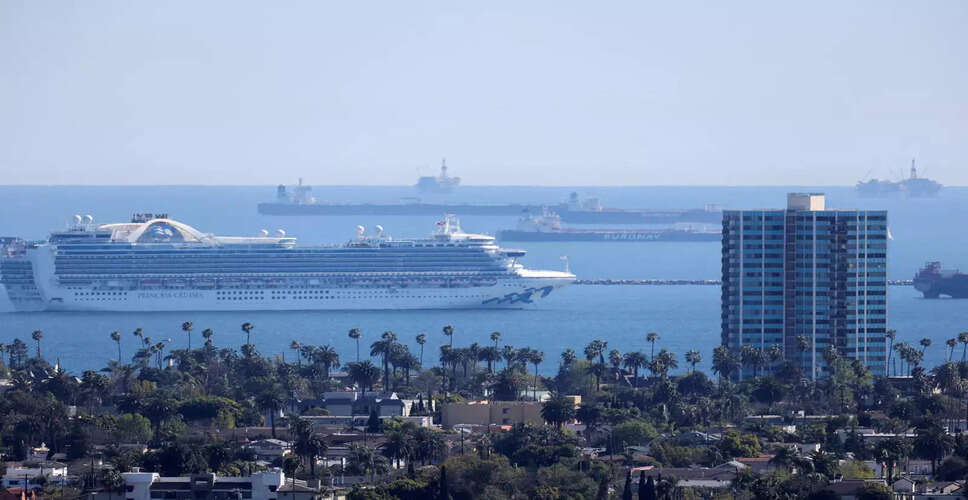
Mumbai: In light of ongoing tensions affecting shipping routes in the Persian Gulf, two crude oil tankers have successfully traversed the Strait of Hormuz and are now en route to Indian waters, alleviating some worries regarding energy supplies. The Liberian-flagged vessel MT Smyrni is expected to arrive at Mumbai port on Saturday, carrying approximately 140,000 metric tonnes of crude oil. Additionally, the Indian tanker Jag Prakash, which holds around 50,000 metric tonnes of crude, has also passed through this crucial strait.
Reports indicate that Jag Prakash was initially destined for Africa, and it remains uncertain whether it will be redirected to India, which may incur extra costs. Shipping industry sources highlight the importance of these vessels' passage, especially since at least 37 Indian ships are currently impacted by the ongoing conflict in the region. Analysts suggest that India might experience temporary relief in crude oil supplies, as several tankers carrying Russian oil, including those from the so-called “shadow” fleets, are changing their routes mid-journey to head towards Indian ports following a recent waiver from the United States that permits the resumption of Russian oil imports.
Shadow fleets, often referred to as dark fleets, consist of tankers that operate outside the conventional regulatory framework governing global maritime trade and are frequently utilized to transport oil that is under sanctions. Vessel-tracking data reveals that at least four tankers have already altered their course towards India, including a non-sanctioned Very Large Crude Carrier believed to be part of this shadow fleet. Sources indicate that two of these vessels were initially bound for China after loading crude from Russia’s Far East but changed their trajectory mid-voyage to head towards Indian ports.
Another tanker, the Suezmax Indri, with a capacity of 80,000 metric tonnes, was originally on its way to Singapore before abruptly changing its course on March 4. This vessel later delivered crude sourced from Russia’s Baltic region at Sikka port in Gujarat on March 9. International shipping data shows that approximately 60 million barrels of Russian crude are currently at sea, loaded before March 6, when the waiver was announced, and are within a typical 30-day sailing distance from India. Out of this total, around 24 million barrels are being transported by non-sanctioned vessels, while the remaining 36 million barrels are on sanctioned tankers.
Despite these developments, shipping operations in the Gulf continue to face significant challenges. Officials from shipping companies report that both export and import activities are still constrained, with some cargo being rerouted via road transport to ports closer to their points of origin or destination within the Gulf. Several vessels have also been redirected via the Cape of Good Hope to avoid high-risk areas, a decision that has considerably increased operational costs.
Port authorities have stated that the Jawaharlal Nehru Port, managed by the Jawaharlal Nehru Port Authority, has effectively handled cargo build-up by optimizing refrigerated storage and transport systems. Sunil Vaswani, executive director of the Container Shipping Line Association, remarked that the situation has become increasingly difficult for shipping companies. “We were hoping this would not turn into a prolonged issue, but there is still no relief. Some ships are stranded on either side of the Strait of Hormuz, while services to the Persian Gulf have been suspended,” he noted.
Vaswani further explained that while shipping lines have sufficient vessels and containers available, the tonnage and containers stuck in the region are inflating costs and limiting inventory utilization. “In fact, freight rates have dropped by 70–80% over the past five years. However, surcharges have increased due to higher insurance premiums, vessel waiting costs, and other operational expenses, including crew safety. Consequently, the overall cost of global trade has risen,” he added.