
Could the New Lebanon-Israel Agreement Change Decades of Conflict?
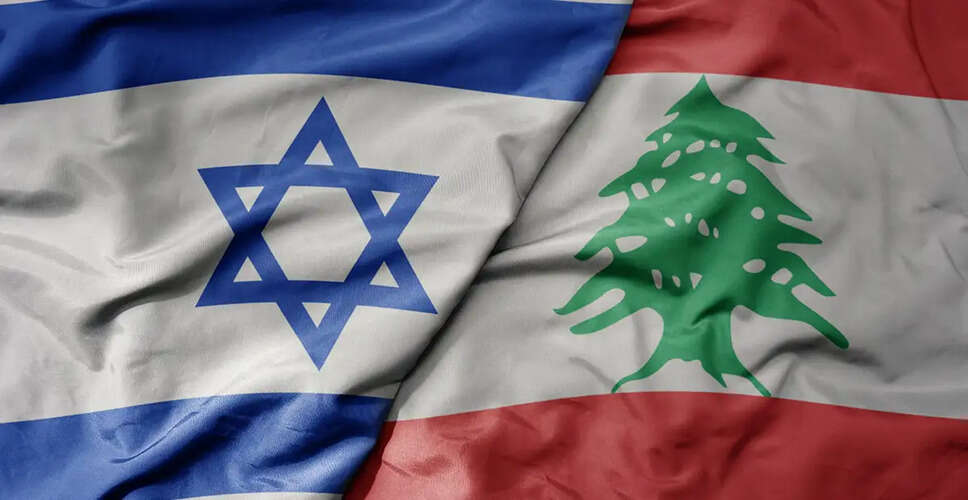

A Potential Turning Point in Lebanon-Israel Relations
Washington: The framework agreement established between Lebanon and Israel in June 2026 has the potential to be the most significant accord between the two nations in nearly eight decades, should it come to fruition.
However, the realization of this deal is uncertain. It aims to foster peaceful relations and outlines a strategy for disarming Hezbollah, ensuring Israel's complete withdrawal from Lebanon, and reinstating Lebanese sovereignty over its territory.
Currently, these goals seem far from achievable. Hezbollah has outright rejected the agreement, and Israel's ongoing military actions threaten to weaken the Lebanese government's domestic legitimacy, hindering its ability to enforce the deal.
Experts specializing in armed conflict and peace processes in the Middle East have analyzed previous ceasefires between Israel and Hezbollah from 1993, 1996, 2006, 2024, and April 2026. Their upcoming research reveals a consistent trend: each agreement merely provided a temporary pause in hostilities or slightly reduced violence, with an implicit understanding that conflict would eventually resume.
Historical Context of Ceasefires
Lebanon and Israel have yet to normalize their relations, but there is a historical precedent for agreements that have successfully contained conflict. The 1949 UN-mediated Lebanese-Israeli General Armistice Agreement concluded hostilities following the 1948 Arab-Israeli war. With ongoing international support and UN oversight, it established the de facto border that largely persists today and prevented a return to full-scale war for about twenty years.
However, this relative peace began to deteriorate in the 1970s as the Palestine Liberation Organization increased its military presence in Lebanon, leading to repeated confrontations with Israel, culminating in Israel's invasions of Lebanon in 1978 and 1982.
Since the 1982 invasion, various agreements and ceasefires aimed at halting hostilities have repeatedly failed. Parties involved have often exploited pauses in fighting to regroup, enhance their capabilities, and solidify political or territorial advantages in anticipation of future conflicts.
The 1983 agreement between Israel and Lebanon exemplifies this dynamic and serves as a cautionary tale. It promised peace and normalization in exchange for an Israeli withdrawal from Lebanon but collapsed within a year when anti-government factions launched a coordinated offensive against Lebanese army positions in West Beirut, undermining the Lebanese government's authority and fracturing the military along sectarian lines.
The Rise of Hezbollah
Following Israel's prolonged occupation, Hezbollah emerged from a coalition of Shiite Islamist militants, making its notable entrance into the conflict by attacking an Israeli military base in 1982. The group later orchestrated bombings of the US Embassy in Beirut and the barracks of American Marines and French peacekeepers in 1983.
Over the years, Hezbollah has gained strength, bolstered by Iranian support and a compelling narrative of resistance against Israel. The conflict in Lebanon has largely revolved around the ongoing struggle between Hezbollah and Israel.
Violence has ebbed and flowed, with ceasefire agreements reached in 1993, 1996, and after the 2006 war. However, crucially, Hezbollah's disarmament was either omitted from the agenda or inadequately addressed in a 2006 UN Security Council resolution that lacked effective implementation mechanisms.
Consequently, the periods of relative calm following these ceasefires allowed Hezbollah to rebuild its military strength, consolidate its political power, and dictate the timing of renewed hostilities with Israel.
The Current Landscape
The current situation presents a unique context, as the balance of power in Lebanon has shifted, making Hezbollah's disarmament and a historic settlement with Israel more politically feasible than in recent decades.
Israel's military actions have significantly weakened Hezbollah, while public sentiment in Lebanon has increasingly turned against the group, attributing the country's repeated conflicts to its actions.
Support for Hezbollah among Lebanon's Shiite community has diminished, and resentment towards Iran, its primary backer, is on the rise.
Since taking office in 2025, President Joseph Aoun and Prime Minister Nawaf Salam have aimed to leverage this shift by advocating for Hezbollah's disarmament in accordance with the 2006 UN resolution, which calls for the disarmament of all non-state armed groups in Lebanon and the extension of state authority throughout the south.
While these goals have long been aspirational, they now appear to be within reach.
Challenges Ahead
Nevertheless, the opportunity for diplomatic progress is limited, and actions from both Israel and Hezbollah could jeopardize it. The risk exists that short-term political motivations may overshadow long-term strategic goals.
With elections on the horizon and many of Israel's objectives in its conflict with Iran unmet, Prime Minister Benjamin Netanyahu faces increasing pressure to deliver concrete results against Hezbollah.
As a result, prolonging the conflict in Lebanon may provide domestic political benefits, allowing him to delay his criminal trial and present himself as a wartime leader with strong security credentials.
Conversely, Hezbollah is attempting to leverage Israel's ongoing military operations and Netanyahu's insistence on maintaining a long-term presence in Lebanon to bolster its political standing.
For an organization founded on resistance to Israeli occupation, reclaiming that narrative may be the most effective way to regain relevance and legitimacy.
The Importance of Diplomacy
In a tragic paradox, Israel risks repeating the strategic errors that contributed to Hezbollah's rise, inadvertently revitalizing an adversary it has nearly defeated.
The historical pattern of four decades of conflict and ceasefire negotiations suggests that both Hezbollah and Israel remain committed to ongoing confrontation. Thus, the likelihood of a ceasefire devolving into full-scale war remains high unless face-to-face diplomacy is enhanced and professionalized.
Expert diplomacy has often been crucial for significant breakthroughs in conflict resolution. During the 1973 Arab-Israeli war, Egyptian and Israeli commanders met along the Suez-Cairo road under UN auspices, both sides eager to halt the fighting and broadly agreeing on principles that eventually led to disengagement and the 1979 Egyptian-Israeli peace treaty.
More recently, American diplomacy has shown that even long-standing disputes between Israel and Lebanon can be negotiated. After facilitating the 2022 maritime boundary agreement, US envoy Amos Hochstein initiated a new round of discussions aimed at resolving disputed land border sections and easing tensions along the Blue Line, a UN-determined demarcation line pending final border negotiations. Although these efforts were overshadowed by the October 7, 2023, Hamas attacks and subsequent regional conflicts, they illustrate that sustained US involvement can yield tangible progress.
The Path Forward
It is evident that ongoing diplomacy is essential for any agreement's success. In the current context, this would necessitate American pressure on Israel to limit military actions within Lebanese territory. Furthermore, the next phase of negotiations must address long-standing territorial and political disputes that have hindered regional peace.
Simultaneously, Lebanon will require consistent diplomatic support to maintain momentum for Hezbollah's disarmament, along with security assistance and financial backing to empower the Lebanese military to extend government authority across the entire national territory.
Opportunities like this are rare in armed conflict, arising not from design but from the unintended convergence of military outcomes, political shifts, and diplomatic initiatives. They are also fleeting.
The history of the Israel-Lebanon conflict is marked by missed chances and openings that closed before they could be solidified. This moment may represent one of those rare opportunities, possessing the potential for a breakthrough while also carrying the fragility of a mirage.