
Controversial Sinking of Iran's IRIS Dena: A Historical Perspective
The Sinking Incident and Its Implications
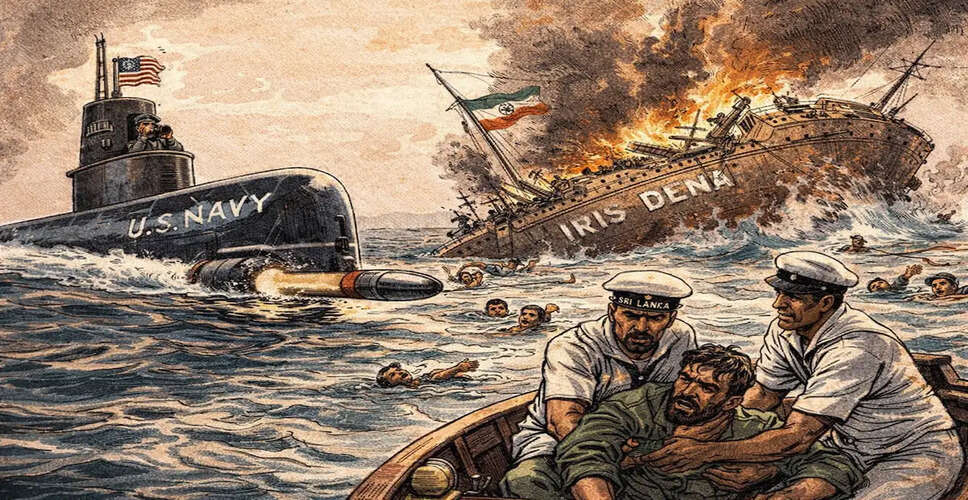
Recently, the Mark 48 torpedo, a formidable weapon used by the US Navy, sank Iran's IRIS Dena in the Indian Ocean. Following this event, US Defense Secretary Pete Hegseth made headlines by declaring it "the first sinking of an enemy ship by a torpedo since World War II." This statement has sparked a significant historical discussion, revealing uncomfortable truths about American military conduct. The attack resulted in over 80 fatalities, with many others left to perish, while 32 survivors were rescued by Sri Lanka's naval forces. This incident not only raises questions about the laws of warfare but also about fundamental principles of honor in combat.
Historical Context: Nazi Germany's Conduct
When Nazis Rescued Their Enemies
During World War II, German soldiers often ensured that survivors from enemy vessels they had sunk were rescued, adhering to a code of honor even amidst conflict. For instance, in 1942, the German submarine U-156 sank the British troopship Laconia off the coast of West Africa. Following the attack, the crew of U-156 took the extraordinary step of rescuing over 400 survivors, including Italian POWs. Commander Werner Hartenstein made a decision that defied military protocol by surfacing the submarine to assist those in distress, even sending out an SOS to nearby ships for help. This act of humanity occurred during a time when the very existence of Nazi Germany was at stake.
The Tragic Consequences of American Intervention
However, the situation took a tragic turn when an American B-24 Liberator bomber attacked U-156, disregarding the Red Cross flags displayed on the submarine. As a result, Hartenstein was forced to dive, leaving many survivors to drown. The American pilots returned home, claiming victory and receiving medals, but the true cost was the lives of those who could have been saved. This incident led to the issuance of the Laconia Order by Karl Dönitz, which prohibited U-boat crews from rescuing survivors, a direct consequence of American actions that turned rescue efforts into a perilous endeavor.
Sri Lanka's Humanitarian Response
What Should Have Been Done
After the US submarine's attack on IRIS Dena, it was Sri Lanka that took the initiative to conduct a rescue operation, despite its limited military resources compared to the US. The Sri Lankan navy successfully saved 32 injured sailors and transported them to a local hospital. In stark contrast, the United States made no effort to search for or rescue survivors, failing to acknowledge its responsibility under international law. The Geneva Convention II, which the US ratified, mandates that all possible measures be taken to assist shipwrecked individuals, and the US Naval Handbook categorizes abandoning survivors at sea as a war crime.
Reflections on Historical Conduct
The historical record is clear, and the comparison between the actions of Nazi Germany and the US in these specific instances is not drawn by adversaries but emerges from the facts themselves. The recent comments by Hegseth inadvertently invited this comparison, highlighting a troubling aspect of military ethics and the responsibilities of nations in conflict.