
Confronting the Challenges of Tourism in the Himalayas
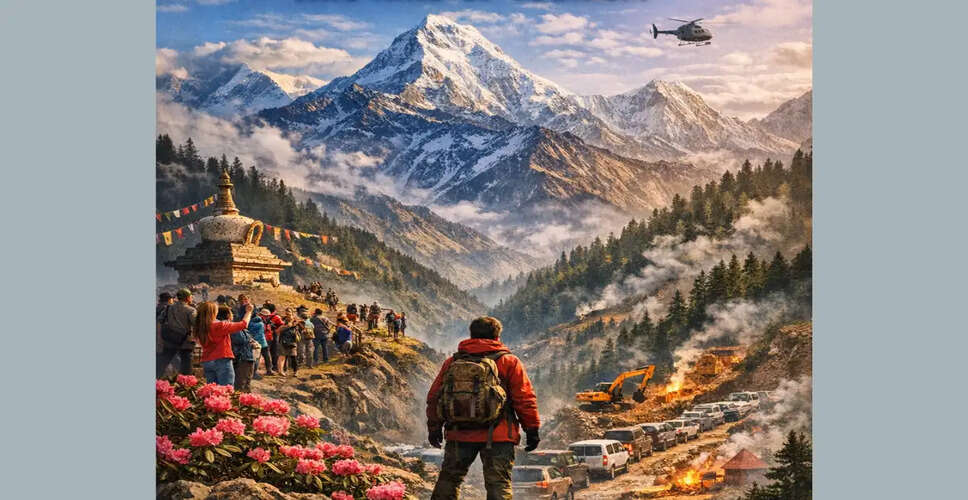

A Call to Understand the Himalayas
Dr. Amrik Singh Thakur
In a plea for the Himalayas, it is crucial to recognize the ecological impact of mass tourism. The Himalayas, often seen as a playground, are much more than a mere destination; they are a complex ecosystem that requires understanding before it is irrevocably harmed. The saying, 'Himalaya bhi Himalaya ko nahin jaanta,' reflects the lack of awareness about this majestic range. Each part of the Himalayas is unique, and comprehending its entirety is a lifelong endeavor.
From the lush, green hills of the northeast to the stark beauty of Ladakh and Karakoram, the Himalayas are undergoing a gradual yet alarming transformation. This change is not sudden but resembles the slow retreat of glaciers, driven by the forces of tourism development.
The Illusion of Progress: It is essential to clarify the current situation. Various state governments in the Indian Himalayas, including Uttarakhand and Himachal Pradesh, are aggressively promoting tourism as a key economic strategy. This has led to the construction of roads through sensitive areas, an increase in helicopter services, and the proliferation of hotels and resorts near sacred sites. Each year, the influx of tourists grows, bringing with it more vehicles, noise, and waste. While the benefits of tourism—such as revenue and job creation—are often highlighted, the critical questions about who truly benefits and the long-term costs remain unaddressed.
The Himalayas are not just a picturesque backdrop; they are one of the youngest and most fragile mountain systems globally. They are seismically active, prone to landslides, and their rivers, fed by retreating glaciers, are vital for millions in South Asia. Treating this region merely as a recreational area is a grave oversight.
Understanding Rowdy Tourism: A term gaining traction among locals is 'rowdy tourism,' which describes the behavior of many visitors who arrive without any genuine interest in the region. They often bring urban consumer habits into delicate ecosystems that cannot sustain such pressures.
The repercussions of this behavior are tangible. Wildlife corridors are disrupted by the noise and light from unregulated tourist facilities, pushing animals like leopards and bears closer to human habitats, which increases conflict. Sacred rivers, such as the Ganga and Mandakini, are polluted by untreated waste from nearby hotels. The pilgrimage towns, once revered for their spiritual significance, are now transformed into commercial hubs.
Moreover, the roads constructed to accommodate tourists exacerbate erosion and increase the likelihood of landslides, which have already claimed numerous lives in recent years. The link between poorly planned infrastructure and disaster risk is well-documented yet often ignored.
Cultural Erosion: The ecological damage, while severe, may be less irreversible than the cultural degradation occurring in the region. The Himalayas are not just a geographical entity; they are a rich tapestry of diverse communities, languages, and traditions that have evolved over millennia.
The folk traditions of Uttarakhand, for instance, embody a deep understanding of the mountains, including knowledge about medicinal plants and seasonal dangers. These cultural practices, however, are often overlooked in favor of economic gain, as they do not translate into immediate financial benefits.
When locals refer to the current wave of tourists as 'asabhya' (uncivilized), they highlight a significant disconnect. Many visitors engage with a superficial version of the Himalayas, missing its true essence and fragility. The infrastructure built to cater to them often undermines the very qualities that make the region worth visiting.
The Political Economy of Exploitation: This situation is not coincidental. The prevailing model seeks to maximize short-term economic benefits from natural and cultural resources while externalizing the costs to local communities and ecosystems. This approach must change. The Himalayan states require governance that prioritizes ecological sustainability and imposes limits on visitor numbers based on thorough assessments. Investment should focus on local communities and their knowledge systems, fostering a tourism model that is slow, small-scale, and genuinely beneficial to residents rather than large corporations.
The Himalayas have withstood numerous challenges throughout history, and they will endure this current crisis as well. However, the future of this region will significantly impact water security for billions, the survival of unique ecosystems, and the preservation of invaluable cultural wisdom. Tourism itself is not the enemy; ignorance is. The solution to ignorance is not more infrastructure but a deeper understanding of the land.