
Concerns Rise Over Pakistan's Heritage Sites Amid Restoration Efforts
Heritage Sites Under Threat
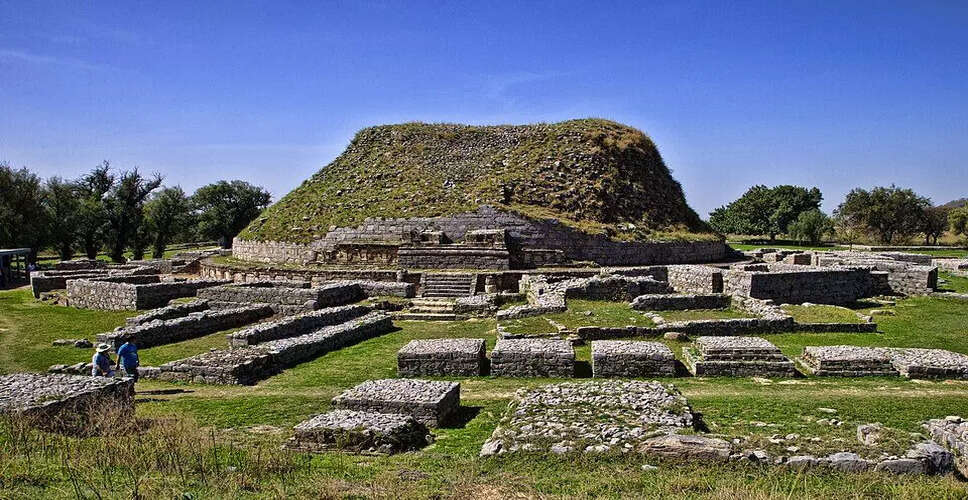
File image of The ancient university at Taxila(Photo: @PrasunNagar/X)
Islamabad, April 2: Recent restoration activities at the UNESCO World Heritage sites of Mohra Moradu and Sirkap in Taxila have sparked significant alarm regarding the preservation of Pakistan's archaeological heritage. These historically rich sites are now at risk of being classified as endangered by UNESCO, not due to natural deterioration but as a result of misguided human actions, according to a recent report.
“The use of cement in restoration efforts, which contravenes established conservation guidelines, highlights a troubling deficiency in expertise, oversight, and dedication among the relevant institutions. Equally concerning is the lack of response from the Punjab Archaeology Department, which reportedly ignored urgent communications from the Department of Archaeology and Museums in Islamabad for weeks. This indifference reflects a dangerous neglect of national heritage,” an editorial in a prominent daily noted earlier this week.
The silence from the department illustrates a broader trend of neglect. Conservation transcends mere physical preservation; it requires transparency, collaboration, and respect for expert input. Unfortunately, there is a glaring absence of meaningful engagement with conservation specialists and historians, which jeopardizes Pakistan's invaluable sites. Without investment in specialized training and adherence to international best practices, these efforts could lead to irreversible damage.
Last December, a prominent minority rights organization accused the Pakistani government of intentional neglect and institutional apathy regarding the preservation of Hindu and Sikh religious heritage, which the authorities claim to safeguard.
The Voice of Pakistan Minority (VOPM) reported that 98% of Hindu and Sikh worship sites in Pakistan are either abandoned, locked, illegally occupied, or left to deteriorate. This situation, the rights group argues, is not merely an administrative oversight but a reflection of Pakistan’s power dynamics.
According to findings presented to Pakistan’s Parliamentary Committee on Minority Caucus, out of 1,285 documented Hindu worship sites and 532 gurdwaras, only 37 are currently operational.
“The painful aspect of this neglect is the systemic discrimination that accompanies it. While temples fall into disrepair, educational curricula continue to propagate hateful or discriminatory narratives. Minority students face fewer opportunities, lacking equivalent scholarships or quotas compared to their Muslim counterparts. Representation in government jobs remains alarmingly low, and senior officials often neglect caucus meetings intended to address minority issues. This sends a clear message: minorities are treated as an afterthought, and their concerns are deemed optional,” the VOPM stated.
The organization highlighted the irony of Pakistan promoting sites like Kartarpur internationally while numerous temples and gurdwaras across the nation languish in neglect.
“One well-maintained shrine cannot compensate for the silence surrounding the hundreds that have succumbed to decay. Sacred spaces that once hosted generations of prayers now lie in ruins, overtaken by weeds or illegally occupied. This loss affects not only minorities but also undermines Pakistan’s identity, cultural continuity, and moral standing,” the VOPM emphasized.