
Concerns Emerge Over Pentagon's Management of Iran Conflict
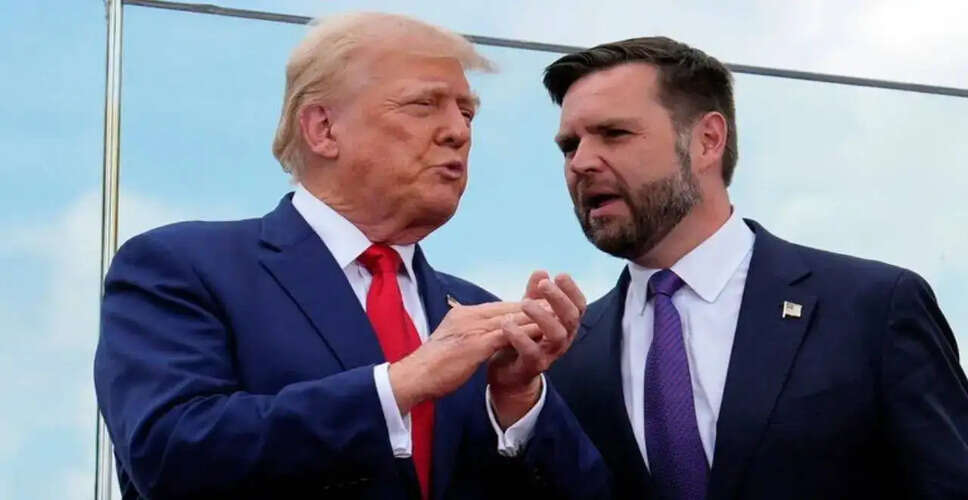

Vice President's Growing Skepticism
Vice President JD Vance has been voicing significant worries regarding Defense Secretary Pete Hegseth's handling of President Donald Trump’s military engagement with Iran, as reported by various senior officials within the administration. According to sources, Vance, at 41, has become doubtful about the Pentagon's reports on the effectiveness and consequences of the ongoing military operations. He has directly alerted President Trump about the alarming depletion of essential missile systems and munitions.
A White House representative noted that Vance is known for his probing inquiries into strategic planning, indicating his active involvement in evaluating the war efforts.
Clarification on Intentions
Advisors to Vance clarified that his concerns are not aimed at accusing Hegseth or Joint Chiefs Chairman Gen. Dan Caine of misleading the president. They emphasized that Vance is not attempting to create discord within Trump’s national security team but is focused on ensuring that the administration has an accurate understanding of the situation.
Pentagon spokesperson Sean Parnell strongly defended the relationship between Hegseth and Vance, stating that they share a strong working rapport based on mutual respect. He characterized the internal discussions as responsible teamwork and asserted that the Pentagon provides Trump with a complete and honest overview of the situation.
White House Press Secretary Karoline Leavitt added that Trump holds Secretary Hegseth in high regard, praising his leadership of the Department of War and labeling him a crucial and trusted member of the president’s inner circle.
Discrepancies in Assessments
The tension arises from a disparity between public declarations and private intelligence evaluations. Hegseth has consistently stated that the U.S. military operations have achieved overwhelming success, claiming that Iran’s naval capabilities have been entirely dismantled — a sentiment echoed by Trump.
However, a recent CBS News report, referencing U.S. officials familiar with intelligence, presented a more concerning reality:
- Approximately half of Iran’s ballistic missile stockpiles and launch systems remain operational since the ceasefire commenced on April 7.
- About 60% of the Iranian Revolutionary Guard Corps’ naval forces, including fast-attack boats, are still functional.
- Iran maintains around two-thirds of its air force.
Moreover, the Center for Strategic and International Studies indicated that the U.S. has already expended over half of its prewar stock of four critical munitions, which would be vital in any future confrontations with major powers like Russia or China. This contradicts Trump’s previous assertion that America’s advanced weaponry stockpile is virtually limitless.
Divergent Perspectives
Both Vance and Hegseth have military experience from the Iraq War, yet they possess contrasting views on military engagement. Hegseth adopts a more aggressive stance, criticizing restrictive rules of engagement and advocating for assertive actions like extrajudicial strikes on suspected drug trafficking vessels. In contrast, Vance has consistently maintained a more isolationist and cautious perspective regarding prolonged U.S. involvement in foreign conflicts.
Sources suggest that Hegseth’s background in television has made him adept at communicating with Trump in a manner that resonates with the president, which may explain why his optimistic evaluations often prevail in public discourse. Vance’s office has not yet responded to requests for comments. This reported tension arises as negotiations to conclude the Iran conflict seem to be at a standstill. Iran’s Foreign Minister Abbas Araghchi recently met with Russian President Vladimir Putin, while Trump has canceled planned discussions involving his envoys Steve Witkoff and Jared Kushner.
As the conflict extends into its ninth week, the vice president's internal concerns underscore increasing uncertainties within the administration regarding the actual costs — both in terms of munitions and strategic positioning — of Trump’s military actions in Iran.