
Colombia's Presidential Election: Abelardo de la Espriella Leads Ivan Cepeda in Tight Race

Election Results Overview
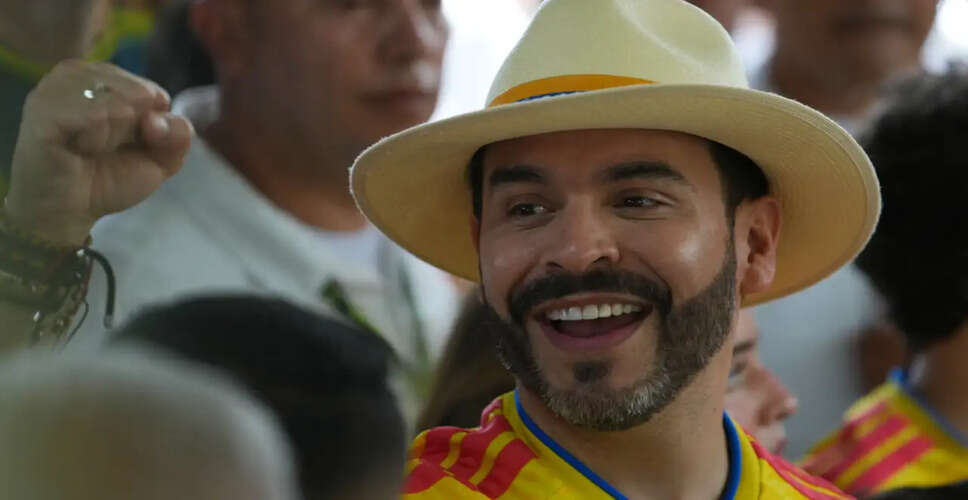
In the recent presidential election in Colombia, right-wing candidate Abelardo de la Espriella has taken a narrow lead over his leftist opponent, Ivan Cepeda, with nearly all votes counted. As per the national registrar's data, De la Espriella garnered 49.7% of the votes, while Cepeda followed closely with 48.7%, translating to a difference of about 248,000 votes. Out of over 41 million eligible voters, more than 26.2 million participated in the election, with around 420,000 casting blank ballots as a form of protest. The incoming president will face significant challenges, including managing high public debt and navigating a divided Congress that may hinder reform efforts.
Profile of Abelardo de la Espriella
Abelardo de la Espriella, a lawyer without previous political experience, has centered his campaign on promises to combat crime and rejuvenate Colombia's economy. He has been critical of President Gustavo Petro, attributing the country's deteriorating security and economic situation to his leadership. De la Espriella has committed to halting peace negotiations with rebel and criminal factions, expanding the oil and gas sector, reducing taxes, and decreasing the size of the government by up to 40%. Nevertheless, he intends to uphold some of Petro's popular initiatives, such as a 23% increase in the minimum wage and various social programs. Supporters expressed their enthusiasm for his lead, with one supporter, Viviana Olivos, stating, "It is a victory for Colombia — a change after four lost years with no clear direction."
Political Trends in South America
The election in Colombia reflects a wider political shift in Latin America, where recent elections in countries like Chile, Argentina, Costa Rica, and Ecuador have resulted in the rise of right-wing leaders. Bolivia transitioned from two decades of leftist governance last year with the election of center-right President Rodrigo Paz. In Peru, conservative candidate Keiko Fujimori is also in contention for the presidency as vote counting progresses. Many of these elections, including Colombia's, have been influenced by voter concerns regarding escalating crime rates and sluggish economic growth. In Colombia, President Petro's peace initiatives have struggled to yield tangible results, while armed groups and drug trafficking organizations have increased their control in various regions, leading to heightened violence and extortion.
Trump's Influence in the Election
Former US President Donald Trump played a notable role in the Colombian election campaign, openly endorsing De la Espriella earlier this month. Trump, who has had a contentious relationship with Petro, described the election's outcome as "very important to the future of Colombia and its relationship to the United States." This endorsement aligns with Trump's strategy to enhance US influence in Latin America and foster cooperation among conservative governments through initiatives like the "Shield of the Americas." Meanwhile, Cepeda's supporters remain optimistic that the final ballot verification process could narrow the margin or change the election result. President Petro has also shared videos on social media alleging fraud and has called for a thorough verification of the votes before a final decision is made. As Colombia awaits the conclusion of the vote-counting, the closely contested election is under significant scrutiny.