
China's Strategic Meeting with Taiwan's Opposition Leader Amid Global Distractions
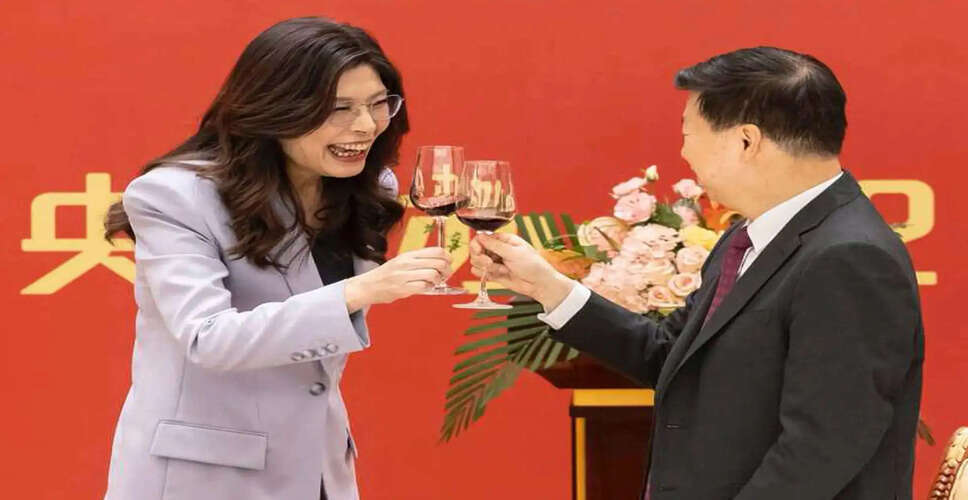

A Significant Meeting in Beijing
Recently, while global attention was focused on the Middle East conflict, Chinese President Xi Jinping conducted a meticulously orchestrated meeting in Beijing with Cheng Li-wun, the chair of Taiwan's main opposition party, the Kuomintang (KMT). The brief 14-second handshake in the grand East Hall of the Great Hall of the People was a notable moment. This encounter was not merely a photo op; it symbolized Beijing's strategy to gradually assert its influence over Taiwan without resorting to military action, particularly as Washington's focus is diverted.
The differences between this meeting and the previous one in 2015 were stark. Back then, KMT leader Ma Ying-jeou met Xi in Singapore, and both parties used neutral titles, aiming to convey a sense of equality. In contrast, this recent meeting lacked such pretenses. Cheng was welcomed in the core of Beijing's political arena, under ornate ceilings and strict state protocols, resembling more of a subordinate's visit than an equal negotiation. Beijing presented what it termed a '10-point gift package,' which included promises to revive tourism, relax trade restrictions, and enhance economic relations. Many observers interpreted this as a landlord offering temporary concessions rather than a sincere compromise.
Exploiting Global Distractions
The timing of this meeting is significant, as the US is currently focused on the situation in Iran. This distraction appears to have provided China with an opportunity to further its agenda regarding Taiwan. Jason Hsu, a former Taiwanese legislator and current senior fellow at the Hudson Institute, suggests that Xi's actions were deliberate. By hosting KMT leader Cheng Yu-Hsiang, China aims to portray Taiwan as a fragmented society rather than a unified democracy resisting Chinese pressure, showcasing factions willing to engage with Beijing on its terms.
While Xi and Cheng were engaged in their handshake, Taiwan's Defense Ministry reported that 16 Chinese warplanes had crossed the median line in the Taiwan Strait, underscoring that military pressure continues alongside China's diplomatic overtures.
Internal Divisions within the KMT
This visit has also brought to light significant divisions within the Kuomintang. The party is divided between a pro-US faction that recognizes the importance of strong ties with Washington and a traditional pro-China faction that views dialogue with Beijing as advantageous. Given the current reality of Chinese warships frequently operating near Taiwan, many question whether the KMT's longstanding strategy of 'dialogue for stability' remains effective. Critics argue that this approach now gives Beijing undue leverage, allowing China to dictate the terms of 'peace.'
The situation is particularly sensitive as Taiwan's legislature, influenced by the KMT, has been slow to approve a substantial $40 billion defense spending package.
Strategic Implications for China
For Xi, this meeting serves a dual purpose: it lays the groundwork for a potential future visit by US President Donald Trump to Beijing. By fostering the appearance of cross-strait dialogue, China aims to bolster its position in any broader discussions regarding Taiwan's future. Although no one in Washington considers Cheng Li-wun the official representative of Taiwan's government, the imagery of her extended handshake with Xi has sparked concerns about Taiwan's internal cohesion and determination. Beijing's message is clear: while the US is preoccupied, China is methodically working to reshape the political dynamics in its region, one handshake at a time.