
China's Strategic Maneuvers Amid US-Israel Strikes on Iran
China's Response to the Conflict
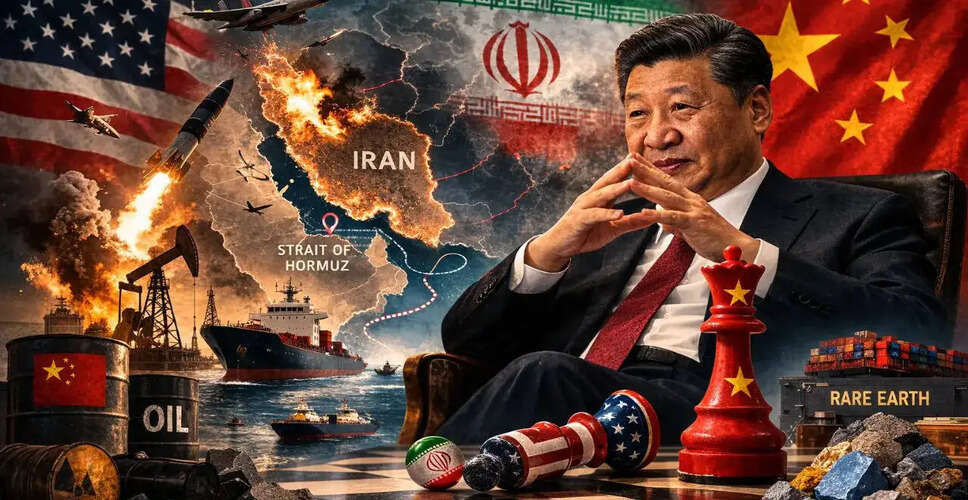
In the wake of the US-Israel military actions against Iran, China has not engaged in direct conflict but has instead condemned the strikes, evacuated its citizens, and initiated diplomatic communications through its foreign minister. Since the onset of Operation Epic Fury on February 28, China has strategically positioned itself to benefit economically and geopolitically. This is not mere conjecture; evidence of these maneuvers is reflected in both data and diplomatic activities.
As the largest oil importer globally, China relies heavily on oil imports from Iran and Venezuela, which accounted for about 17% of its total imports in 2025, as noted in a research paper from the American Action Forum. The recent military actions have disrupted these crucial supply lines. However, even if Iranian and Venezuelan oil exports were to cease entirely, China would not face an immediate crisis. Instead, it would undermine the pricing structure that supports various sectors of its economy, particularly small independent refineries that constitute roughly a quarter of its oil refining capacity.
Despite this vulnerability, China appears to be prepared. A report from Bloomberg indicates that a significant amount of Iranian oil is currently stored on tankers at sea, along with increasing inventories onshore in China, which will provide a buffer for the world's largest oil importer. According to OilPrice.com, China has been stockpiling at least 1 million barrels of oil per day over the past year, effectively building a reserve. This strategic accumulation raises questions about China's motivations—whether they stem from caution or a calculated approach to leverage its position in the global oil market.
For context, the Strait of Hormuz has been nearly closed due to Iranian threats against the safe passage of vessels. As of March 8, both the United Arab Emirates and Kuwait began reducing oil production in response to the situation, prompting similar actions from other OPEC nations, including Iraq and Saudi Arabia. Although the Iranian military has stated that the strait remains open, it is not accessible to US or Israeli ships. US Energy Secretary Chris Wright has claimed that energy flows will resume through the strait, citing the passage of a large oil tanker without incident.
On March 8, a Chinese-owned bulk carrier successfully navigated the Strait of Hormuz, having loaded its cargo from the Mina Saqr port in the UAE on March 5. This vessel marked the second Chinese ship to traverse the strait this week, indicating China's efforts to ensure safe passage amidst rising tensions.
Economic Implications of the Conflict
The Discount Game
The economic dynamics are particularly intriguing. A report from the Carnegie Endowment for International Peace reveals that both Iran and Russia offer oil to China at substantial discounts due to US sanctions that have sidelined most other buyers. With the disruptions in the Strait of Hormuz pushing global oil prices above $100 per barrel, China's previously discounted stockpiles have gained significant value. As logistical challenges arise for Middle Eastern oil, both India and China are likely to increase their reliance on Russian crude supplies. China, which had recently moderated its intake of Russian oil, may abandon this restraint if the conflict persists.
China's Diplomatic Efforts
The Rare Earth Card and Trump Visit
China's control over more than 90% of the global refined rare earth output gives it a significant advantage. These elements are crucial for military technologies, including Tomahawk missiles and F-35 fighter jets. Beijing has already restricted the export of rare earth elements for military applications, complicating the US's ability to replenish its military resources. Ahead of Trump's anticipated visit to Beijing, the US is reportedly considering asking China to reduce its oil purchases from Iran and Russia in exchange for concessions such as Boeing aircraft and agricultural products.
China's Role as a Mediator
China is also positioning itself as a diplomatic mediator. China's foreign minister, Wang Yi, has expressed that the conflict in the Middle East should never have occurred, adopting a conciliatory tone with the US. He has engaged in discussions with leaders from Russia, Iran, and other nations in the region, emphasizing China's commitment to mutual respect in US-China relations. Furthermore, China is reportedly negotiating with Iran to ensure safe passage for crude oil and LNG vessels through the Strait of Hormuz.
China's Strategic Positioning
The 2023 Precedent
In March 2023, China successfully brokered a deal between Saudi Arabia and Iran, two nations that had not maintained diplomatic ties for years. This development signals China's growing diplomatic influence in the Middle East, a role historically dominated by the US. The ongoing conflict in Iran provides China with a significant platform to assert its interests, particularly through the Belt and Road Initiative, which connects East Asia to Europe.
Challenges in China's Approach
However, China's role as a peacemaker is not without limitations. While it has criticized US and Israeli actions, it has refrained from providing military support to Iran. Analysts suggest that China is cautious about escalating tensions with the US, prioritizing stability in bilateral relations over direct confrontation.
US Perspectives on the Situation
What the US Is Observing
From the US perspective, the strikes on Iran have placed China in a challenging position. Some officials believe that the conflict undermines China's strategy to foster alliances with nations like Russia and Iran. However, the US's own actions have disrupted its allies' LNG supplies, leading to increased gas prices in Europe and affecting countries that are not adversaries of the US.
China's Position in the Conflict
While China is not emerging victorious in the Iran conflict, it has not suffered a complete loss either. It retains significant stockpiles, leverage over rare earth elements, and a diplomatic offer on the table. As it prepares for a summit with Trump, the question remains whether the US will recognize China's strategic positioning in this evolving situation.