
China's Push for Renminbi as a Global Currency Gains Momentum

China's Currency Strategy
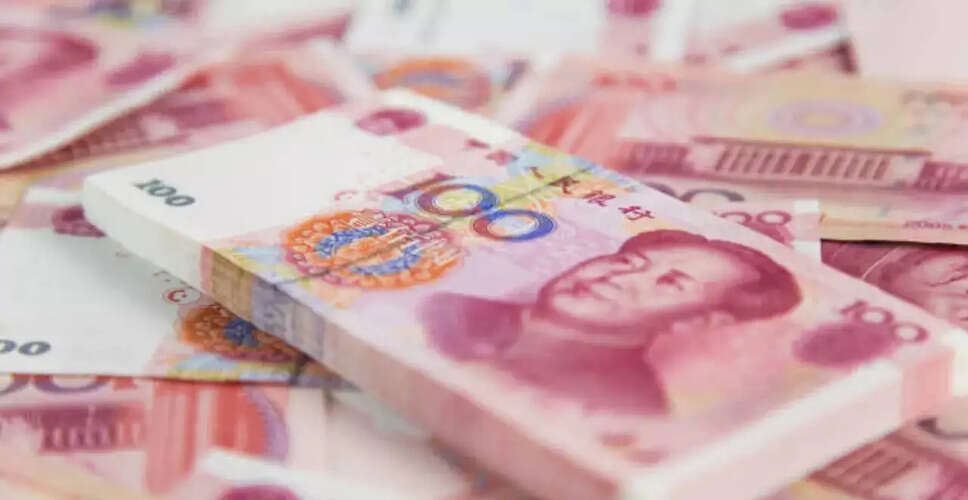
In Hong Kong's Museum of History, an exhibit showcases neatly arranged Chinese banknotes alongside models of military aircraft and rare-earth metal samples. This display underscores China's ambition to elevate the renminbi to international currency status, which is now viewed as crucial for national security. Despite its economic prowess, China remains reliant on a global financial framework largely influenced by the US dollar. Beijing aims to enhance the renminbi's global acceptance to facilitate trade on its own terms and diminish America's financial dominance, as reported by various sources.
The urgency of this initiative has intensified due to ongoing conflicts in Ukraine and Iran. Sanctions have compelled nations under US pressure to seek alternatives to the Western financial system, with many turning to the renminbi. For nearly two decades, China has been laying the groundwork for its currency to gain global traction, and recent developments indicate that this effort is beginning to bear fruit, particularly among countries looking to circumvent the dollar.
China's financial strategy is responding to the increasing demand for de-dollarization from nations wishing to maintain trade relations with countries like Iran, according to experts. Since World War II, the dollar has dominated as the primary reserve currency, facilitating most global trade and granting the US significant power, including the ability to impose crippling sanctions.
Recent geopolitical tensions have demonstrated the renminbi's potential as an alternative currency. Maritime intelligence reports indicate that at least two vessels paid Iran in renminbi to secure safe passage through the Strait of Hormuz. Data shows that payments through China's financial network surged nearly 50% last month as countries sought to purchase Iranian oil. Additionally, Russia, which has faced extensive financial isolation since its invasion of Ukraine, now conducts most of its trade with China using the renminbi.
In March, the Chinese Communist Party's ideological journal Qiushi highlighted a speech by President Xi Jinping advocating for the renminbi's broader use in international trade and its eventual recognition as a reserve currency. However, the dollar continues to lead in global transactions due to its liquidity and convenience, with the renminbi accounting for only about 3% of worldwide payments, similar to the Canadian dollar.
One significant hurdle for the renminbi's global acceptance is China's stringent capital controls, which regulate the flow of money in and out of the country. This regulation makes foreign investors cautious about holding substantial amounts of the currency. Nevertheless, China does not necessarily aim to completely replace the dollar; having a viable alternative can already diminish America's financial influence, according to analysts.
To safeguard against economic shocks, China has amassed substantial reserves of oil, gas, and essential materials, even maintaining a strategic pork reserve. In line with this strategy, it has spent years developing a parallel financial system independent of the dollar. Since the 2000s, Beijing has established currency swap agreements totaling around $600 billion with numerous central banks, allowing trading partners to access renminbi directly without relying on the dollar.
In 2015, China introduced its payment network, CIPS, as a counter to the Western-dominated SWIFT system. Following the exclusion of Russian and Iranian banks from SWIFT, the number of institutions connected to CIPS nearly tripled, increasing from 75 to almost 200. The use of China's financial network has surged, particularly after the closure of the Strait of Hormuz, with average daily payments rising from $86 billion to over $131 billion between February and March.
Experts acknowledge that significant challenges remain. For the renminbi to achieve true global status, China would need to relax its strict capital flow controls, a move it has been hesitant to make due to concerns over exchange rate stability. Without a more substantial circulation of renminbi outside of China, trading partners have limited options beyond using it for purchasing Chinese goods. Currently, there is no deep, liquid market for renminbi assets comparable to US Treasury bonds.
Nonetheless, the recent increase in renminbi usage indicates a strong global demand for alternatives to the dollar. As noted by a professor at Cornell University, there is a pressing desire worldwide to break free from the dollar-centric financial system.