
Impact of Global Conflicts on China's Energy Costs

China's Energy Challenges Amid Global Conflicts
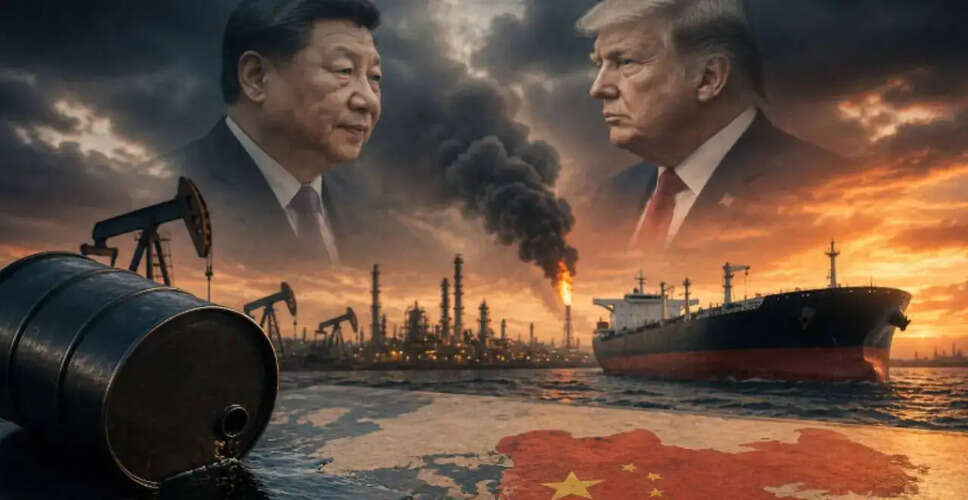
As US President Donald Trump prepares to visit Beijing on May 13, Chinese President Xi Jinping is likely reflecting on the economic repercussions stemming from the ongoing conflicts in Iran and Venezuela. These military interventions, while distinct in nature, have both adversely impacted China's economy. Currently, China, recognized as the world's manufacturing hub and the second most populous country after India, is facing unprecedented energy costs. Its strategic oil reserves, estimated at 1.3 to 1.4 billion barrels, are depleting despite still being substantial.
Historically, China imported around 500,000 barrels of oil daily from Venezuela at a mere $30 per barrel, primarily to manage loan repayments owed to Beijing. However, following the recent US military actions and the ousting of Venezuelan President Nicolas Maduro, imports have plummeted by 67%. Although China has turned to Russian oil as a substitute, the prices per barrel have surged significantly.
The situation with Iran has proven even more detrimental. Prior to the conflict, China sourced approximately 13% of its crude oil from Iran, amounting to 1.3 to 1.4 million barrels daily, benefiting from discounts of $8 to $10 per barrel, which translated to annual savings of $3.5 to $5 billion. The shift to Russian and Saudi oil, which lacks such discounts, has resulted in additional daily costs ranging from $12 to $15 million. Brent crude prices have escalated from around $70 to over $110 per barrel since the onset of the war, meaning that for China's daily import of 11.6 million barrels, even a $1 increase equates to an additional $11.6 million in expenses. A $40 rise could lead to a staggering $460 million daily increase.
Logistical challenges compound these financial strains. The cost of war risk insurance for oil tankers has surged from 0.1% to 5% of the vessel's value due to threats in the Strait of Hormuz, where shipping has faced sporadic attacks and mine risks. Consequently, freight costs have risen, and with the Strait of Hormuz largely closed, tankers must navigate longer, costlier routes. Additionally, transactions are increasingly conducted in dollars rather than the Chinese Yuan, presenting further complications.
Beyond financial implications, the war has disrupted China's industrial sector. Refining operations have decreased, and the petrochemical and plastics industries are feeling the strain. Transportation systems are under pressure as well. Previously, China's strategic petroleum reserves could cover 100 to 110 days of imports, but this is changing. In response, China is increasingly turning to coal and renewable energy sources. As these challenges unfold, the architect of the Iranian conflict will be in Beijing.