
Historic Reikado Hall in Japan Destroyed by Fire, Eternal Flame Preserved
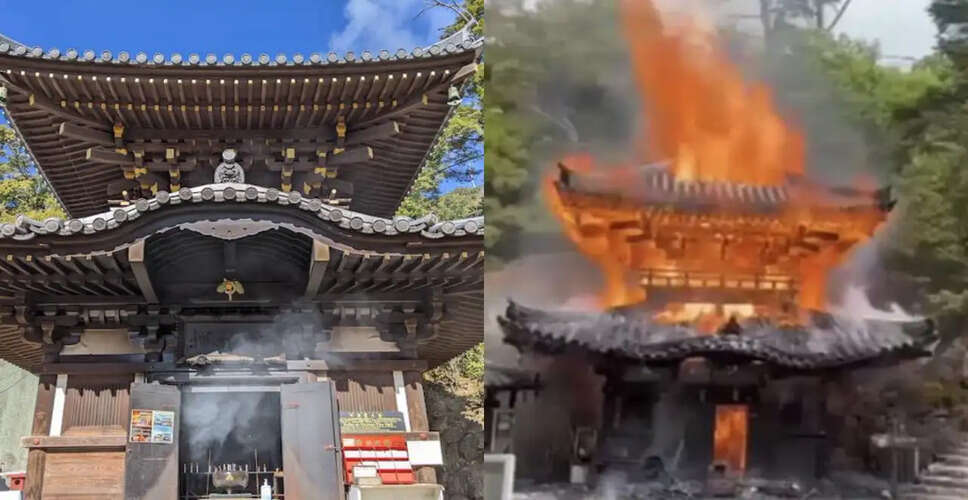

Devastating Fire at Reikado Hall
A significant fire has ravaged the historic Reikado Hall located within the Daisho-in temple complex on Miyajima Island, Hiroshima Prefecture, turning the ancient wooden structure into ashes. This incident has reignited concerns regarding the safety of Japan's historic religious sites. The fire spread rapidly through the hall and surrounding trees until firefighters were able to contain it. Fortunately, there were no reported injuries.
1,200-yo temple burns down in JapanA fire destroyed Reikado Hall near Hiroshima, home to a Buddhist ‘eternal flame’ said to have burned continuously for over 1,200 years, NYT reportsThe flame has been saved and moved to another place pic.twitter.com/hcEbo98o4e
— RT (@RT_com) May 21, 2026
🔥🇯🇵 The Reikado Temple on #Japan’s Miyajima Island has burned down. The temple housed the so-called “eternal flame,” which, according to legend, had been burning continuously for more than 1,200 years. pic.twitter.com/36gkXVEZLY
— Jack Straw (@JackStr42679640) May 21, 2026
The hall was home to a revered ‘eternal flame,’ known as the ‘unquenchable fire,’ which, according to temple lore, has been burning for over 1,200 years. This flame was originally ignited in 806 by the Buddhist monk Kukai, also referred to as Kobo Daishi, during his ascetic practices on Mount Misen. Fortunately, temple officials confirmed that the sacred flame was preserved separately from the hall and thus survived the fire.
This ‘eternal flame’ carries profound spiritual and national importance in Japan. A portion of it was previously used to light the ‘Flame of Peace’ at the Hiroshima Peace Memorial Park, connecting it to Hiroshima’s identity of peace and remembrance following World War II.
The destruction of Reikado Hall has sparked renewed discussions about the vulnerability of Japan's traditional wooden architecture, which remains susceptible to fire, earthquakes, and typhoons, despite modern disaster prevention measures. Notably, the hall had previously suffered a fire in 2005 and was rebuilt in 2006, highlighting the ongoing threats to historic structures across the nation.
Authorities are currently investigating whether the sacred flame or any related equipment may have played a role in the recent fire. Japan is home to thousands of ancient temples and shrines, primarily built from wood using traditional methods. Experts have long cautioned that maintaining the historical accuracy of these sites, which are crucial to the country's cultural identity and tourism, complicates modern fireproofing efforts.
This latest incident underscores the ongoing challenge of balancing heritage preservation with disaster safety at some of Japan's most cherished religious landmarks.