
China Protests Japan's Support for Hague Ruling on South China Sea
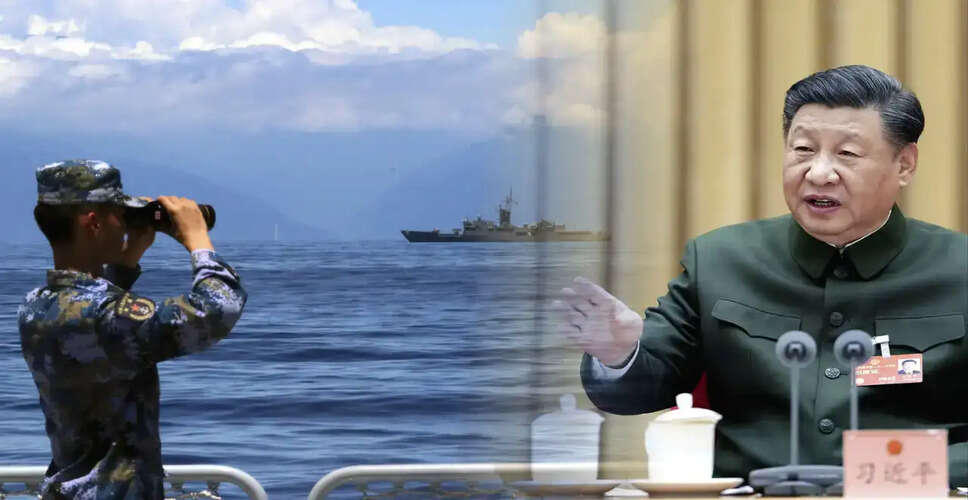

China's Diplomatic Response to Japan
In a recent diplomatic move, China summoned Japan's top envoy in Beijing following Japan's alignment with a coalition of 14 nations that reaffirmed the pivotal 2016 Hague tribunal ruling. This ruling dismissed China's extensive claims in the South China Sea. This protest from Beijing reflects its ongoing efforts to counter the rising international backing for the tribunal's decision, which China continues to reject, despite its legal validity under international law.
According to statements from China's Foreign Ministry, officials expressed what they termed "solemn representations" and voiced "strong dissatisfaction and protest" regarding Japan's stance, accusing it of meddling in regional matters and jeopardizing peace and stability. This diplomatic clash coincides with the tenth anniversary of the Permanent Court of Arbitration's ruling in favor of the Philippines, which determined that China's so-called "nine-dash line" lacks legal foundation under the United Nations Convention on the Law of the Sea (UNCLOS).
The following statement was released by the Governments of Japan, Australia, Canada, Estonia, Germany, Italy, Latvia, Lithuania, New Zealand, the Philippines, Romania, Slovenia, the United Kingdom, and the United States of America, on the occasion of the tenth anniversary of the…
— MOFA of Japan (@MofaJapan_en) July 12, 2026
Japan's Stance on the Hague Ruling
Japan Defends Hague Ruling
Japan, along with 13 other nations—including the United States, United Kingdom, Australia, Canada, Germany, Italy, New Zealand, and the Philippines—has reiterated its support for the tribunal's findings. The coalition characterized the 2016 ruling as "a significant milestone" that is "final, legally binding, and definitive" concerning the maritime claims assessed by the tribunal. Japanese Foreign Minister Toshimitsu Motegi emphasized that China's ongoing refusal to acknowledge the ruling contradicts the principle of peaceful dispute resolution and undermines the international legal framework.
The joint statement advocated for the resolution of maritime disputes through peaceful means in accordance with international law and condemned the use of military forces, coast guard vessels, and maritime militia to intimidate other claimants in contested waters. Additionally, the European Union referred to the tribunal's ruling as a "landmark decision in the peaceful settlement of disputes."
China's Rejection of International Criticism
Beijing Rejects International Criticism
China has dismissed both the joint statement and Japan's comments, with the Foreign Ministry accusing Tokyo of supporting what it termed an "illegal award" and asserting that Japan lacks legitimate standing in the dispute. In statements reported by Chinese state media, Beijing accused Japan of attempting to interfere in the South China Sea under the pretense of being a regional stakeholder.
Furthermore, the ministry alleged that Japan's actions evoke memories of its wartime expansionism and warned against what it described as a "neo-militarism agenda." China has consistently refused to acknowledge the tribunal's jurisdiction, asserting that its sovereignty over the South China Sea "has never changed." Officials have again dismissed the ruling as "a piece of waste paper," labeling it illegal, invalid, and non-binding. To reinforce this stance, the Foreign Ministry released a video titled "What the South China Sea Waves Tell Us," depicting the disputed waters as an inseparable part of Chinese civilization and history.
Significance of the South China Sea
Why The South China Sea Matters
The South China Sea is one of the most strategically vital maritime routes globally, facilitating approximately one-third of the world's maritime trade annually. China claims the majority of the sea through its contentious nine-dash line, which overlaps with claims from the Philippines, Vietnam, Malaysia, Brunei, and Taiwan. The arbitration case initiated by the Philippines in 2013 concluded that China has no historical rights to resources within the nine-dash line and that many of Beijing's actions contravene UNCLOS.
Although the ruling is legally binding for the involved parties, Beijing has refused to accept it and has continued to enhance its military, coast guard, and maritime presence in the disputed waters. This latest diplomatic confrontation indicates that the legal and geopolitical struggle over the South China Sea is far from resolved, with Beijing showing no inclination to soften its stance despite increasing international support for the Hague ruling.