
Challenges of Pilot Recovery in Hostile Territories: A Look at Recent US Incidents in Iran
Recent Shootdowns Highlight Pilot Recovery Risks
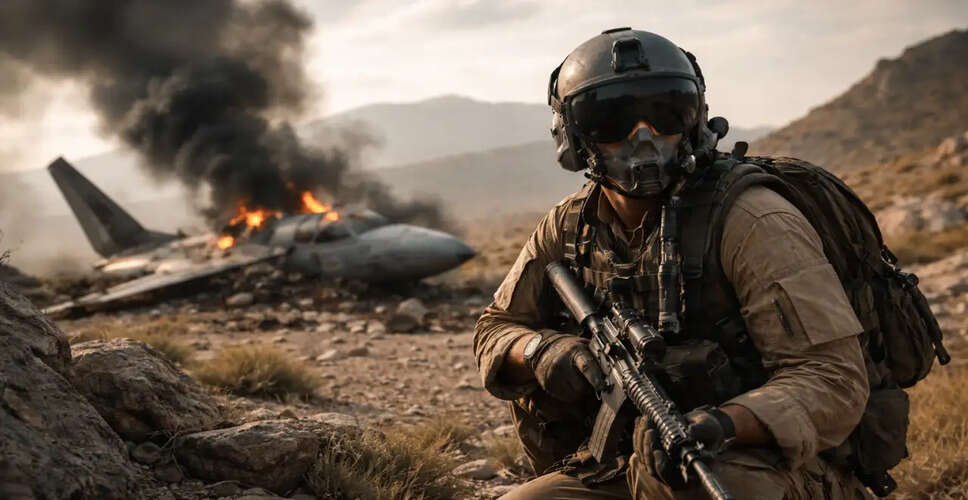
The recent downing of two US military aircraft in Iran has underscored a perilous aspect of warfare: the plight of a pilot stranded in enemy territory. As both Iranian and US search-and-rescue teams race against time, the survival of the missing pilot hinges on their training, instincts, and resilience. Just days prior, President Trump had claimed that Iran's missile and drone capabilities had been significantly diminished. However, an F-15E Strike Eagle was shot down over Iranian soil, resulting in one crew member being rescued while another remains unaccounted for. Additionally, Iranian state media reported that an A-10 attack aircraft was also struck, escalating tensions in an already precarious situation. This incident marks the first time in over two decades that US military aircraft have been downed by enemy fire, a rare event for a military accustomed to air dominance.
Understanding S.E.R.E Training for Pilots
'S.E.R.E': How US pilots are trained to survive hostile territory
When a pilot ejects from their aircraft, an automatic distress signal is sent to the military, initiating a critical recovery operation. Until assistance arrives, the pilot's survival relies on a specialized training program known as S.E.R.E., which stands for Survival, Evasion, Resistance, and Escape. This program equips pilots for the worst-case scenario of being isolated and pursued in enemy territory. In high-risk environments like missions over Iran, pilots experience heightened alertness to incoming threats. Once ejected, the principles of S.E.R.E. training kick in almost instinctively.
Typically, crew members carry survival kits that accompany them during ejection, which may include communication devices to reach US forces. The most crucial information is the crew's location and strategies to avoid detection. Experts warn that enemy forces often attempt to mislead rescue efforts by providing false information about the crew's whereabouts.
The Complexity of Rescue Operations
And it doesn't just end with being located
A search and rescue operation for incidents like those in Iran typically involves a team of 10 to 20 personnel. The HH-60W helicopter is specifically designed for such missions. However, the escape process can be complicated. Once a crew member is located, a comprehensive 'rescue package' is assembled, which includes various equipment and personnel, all dependent on environmental and situational factors for a successful extraction, as explained by Major General Thomas Kunkel. Electronic jamming aircraft may also be deployed to provide cover during the operation.
During the mission, an A-10, known for its heavy armor and ground attack capabilities, can offer protective fire if enemy forces threaten the extraction. The precision of rescue operations is critical, as any misstep could reveal the crew member's location. Nighttime operations can provide additional cover.
Another vital factor is the mobility of the stranded crew member, influenced by both physical condition and environmental circumstances. In some cases, a tool called a force penetrator may be utilized to hoist a crew member onto a helicopter without requiring it to land.
The Importance of Resistance Training
If a rescue attempt fails and the pilot is captured, resistance training becomes essential. This training prepares personnel for the harsh realities of captivity, including extreme stress, abuse, and interrogation. Much of this survival training remains classified, particularly the sensitive techniques designed to help individuals withstand enemy pressure. Despite the recent US-Israeli airstrikes targeting Iranian leadership, the Iranian military continues to pose a formidable challenge. The last comparable incident occurred during the 2003 Iraq War when an A-10 Thunderbolt II was downed, but its pilot successfully ejected and survived.