
Challenges in US-Iran Relations: Insights from Ian Bremmer
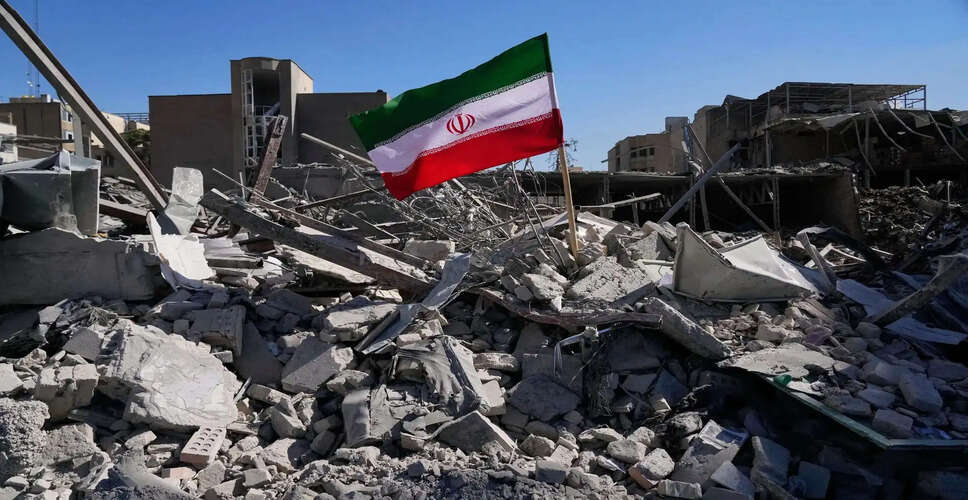

US-Iran Negotiations Face Significant Obstacles
According to Ian Bremmer, a political scientist and President of the Eurasia Group, the United States is unlikely to agree to the unfreezing of Iranian assets, despite ongoing discussions with Tehran. In an exclusive interview, he highlighted this as a significant barrier to transforming a temporary ceasefire into a sustainable peace agreement. Bremmer expressed skepticism about President Trump's willingness to unfreeze Iranian assets, especially given the years of criticism directed at former President Obama regarding this issue.
Iran has stated that the unblocking of its assets is a prerequisite for advancing peace talks with the United States, with Iranian parliament speaker Mohammad Baqer Qalibaf emphasizing this demand on social media. Additionally, Foreign Minister Abbas Araqchi has called for an end to Israeli airstrikes in Lebanon, a sentiment echoed by various sources.
On the situation in Lebanon, Bremmer noted that the outcomes may heavily rely on the United States' actions. He remarked on Trump's potential influence in the region, questioning whether the President would be willing to leverage it. He also pointed out that Israel might seek stronger commitments from Lebanon and could establish a buffer zone to address its security concerns.
Bremmer further discussed the domestic political implications of the conflict in the U.S., stating that the war is largely unpopular among the American public, which could have repercussions for Trump in the upcoming midterm elections. However, he acknowledged that Trump's core political support remains largely stable.
Regarding Iran's stance, Bremmer indicated that engagement in negotiations does not necessarily imply a willingness to compromise. He expressed doubt that Iran would fully abandon its nuclear enrichment program or its ballistic missile initiatives. Nevertheless, he considered the ongoing talks to be significant, noting that direct engagement between the U.S. and Iran, facilitated by Pakistan, is a positive development.
While Bremmer suggested that a ceasefire might hold temporarily as the U.S. seeks a way out, he cautioned that numerous unresolved issues—including nuclear activities, regional proxies, and control over vital shipping routes—cast doubt on the prospects for lasting peace.
Watch the full interview here: