
Ceasefire in the Strait of Hormuz: Analyzing the Aftermath of Trump's Decision

Current Situation in the Strait of Hormuz
The ceasefire has been in effect for two days, yet the Strait of Hormuz remains largely inaccessible. Sultan Ahmed Al Jaber, CEO of Abu Dhabi National Oil Company, emphasized on Thursday that access to the strait is still being restricted. As of April 9, there were no indications that Iran was lifting its blockade, with vessels still facing obstacles in the strait. Meanwhile, the US and Israel have been accused of breaching the ceasefire with ongoing military actions in Lebanon. Formal discussions are scheduled to commence tomorrow in Islamabad, with Iran confirming its participation. The White House has dispatched a delegation led by Vice President JD Vance, Special Envoy Steve Witkoff, and Jared Kushner. The outcome of these talks is uncertain, raising concerns for markets, tanker operators, and governments reliant on Gulf energy. A pressing question remains: why did Trump choose to withdraw when he did?
Domestic Factors Influencing Trump's Decision
President Donald Trump's approval ratings, which had stabilized around 40%, have recently declined for the first time during his second term. Gas prices have surged past $4 per gallon, and a Pew Research poll from mid-March indicated that 60% of Americans disapproved of Trump's approach to Iran, including 30% of Republicans. Additionally, a CNN poll conducted in late March revealed that Trump's approval rating regarding the economy has plummeted to 31%. The loss of thirteen American service members has further complicated the situation. According to Time magazine, White House Chief of Staff Susie Wiles conveyed a clear message: prolonged conflict could jeopardize Republican prospects in the upcoming midterm elections. A senior administration official noted that there is a limited timeframe to address these issues.
The Illusion of Victory
Trump has proclaimed a "total and complete victory," yet the reality tells a different story. The terms of the ceasefire highlight how Iran leveraged its control over the Strait of Hormuz to gain significant influence over the global economy. The conditional nature of the ceasefire, reliant on Iran reopening the strait, underscores Tehran's power. As reported by CNN, energy expert Samantha Gross from Brookings stated that Iran does not require extensive military capabilities to disrupt the global economy. The original objectives of the conflict—containing Iran, overthrowing its regime, and eliminating its nuclear threat—remain unfulfilled. The Iranian regime persists, with its new supreme leader firmly in control, and the IRGC maintaining its influence. Steven A. Cook from the Council on Foreign Relations noted that there has been no regime change in Iran, and the current leadership is as radical as its predecessors. Iran continues to pose a threat to its neighbors and has retained control over the Strait of Hormuz, a significant shift since the war's inception.
Nuclear Concerns Persist
The International Atomic Energy Agency (IAEA) reports that Iran possesses approximately 400 kilograms of highly enriched uranium, sufficient for around ten nuclear weapons. Trump has insisted on its removal, but Iran has shown no willingness to comply. Iran's ten-point proposal demands acceptance of its nuclear enrichment program, contradicting Trump's public stance that there will be no uranium enrichment. The regime's determination to maintain this material has likely intensified, as it has survived the largest American military operation in the Middle East since 2003, reinforcing the notion that nuclear deterrence is a form of security. While the war may have damaged Iran's infrastructure, it has arguably strengthened its resolve to pursue nuclear capabilities.
Consequences of the Conflict
Beyond the economic and political ramifications domestically, the war has depleted America's weapon stockpiles, alienated traditional allies, and instilled fear in regional partners. UK Prime Minister Keir Starmer stated unequivocally that the Iran conflict would not be a NATO mission, while Germany asserted that the war had no connection to NATO. Spain closed its airspace to US aircraft, and Italy denied landing rights. The alliance that Trump had urged to contribute more refused to support him in a conflict he initiated unilaterally, with Israel taking the lead. Iranian Supreme Leader Mojtaba Khamenei declared that Iran would transition the management of the Strait of Hormuz into a new phase, expressing Tehran's intent to seek retribution. After forty days of bombardment, Iran emerged with its regime intact, demonstrating its energy leverage to the world, and is already labeling the ceasefire a "victory."
Pakistan's Role: Diplomatic Channel or Messenger?
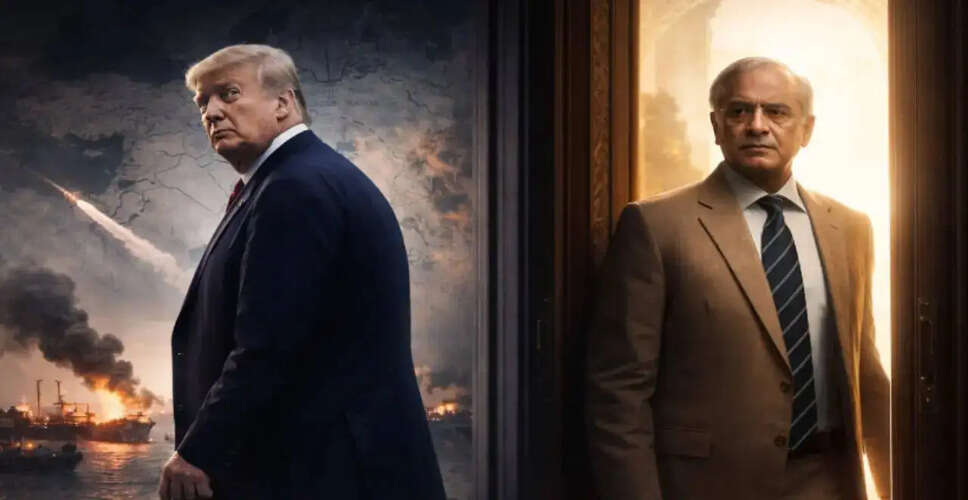
Pakistan's involvement in facilitating the ceasefire has been portrayed as a diplomatic success for Islamabad, but the reality is more nuanced. Reports indicate that the White House pressured Pakistan to convey the US proposal to Iran, positioning Islamabad as a convenient conduit rather than a neutral mediator. The rationale behind Pakistan's involvement stemmed from the belief that Iran might be more receptive to a US-backed offer if it came from a neighboring Muslim-majority state. This arrangement was inadvertently revealed when Prime Minister Sharif shared his ceasefire appeal on social media, with the subject line "Draft — Pakistan's PM Message on X" visible, indicating that the White House had reviewed and approved the post prior to its public release. Trump himself acknowledged the arrangement, stating that he agreed to the ceasefire based on discussions with Prime Minister Shehbaz Sharif and Field Marshal Asim Munir, who had requested him to refrain from military strikes. Pakistan was not leading the diplomatic efforts; it was delivering Washington's message—using Washington's language and with Washington's endorsement—to a neighbor with which it shares a lengthy border. The ceasefire represented Trump's exit strategy from the Iran conflict, with Pakistan serving as the exit door. Trump sought to withdraw from the Iran war and found a way out. However, he left behind an unresolved nuclear issue, a more assertive Iran, a strait that can be weaponized, and ongoing talks in Islamabad where both parties claim victory. This situation is a reminder that every withdrawal from an unwon war carries consequences, and this instance will be no exception.