
Bangladesh Garment Workers Clash with Police Amid Wage Protests: What’s at Stake?
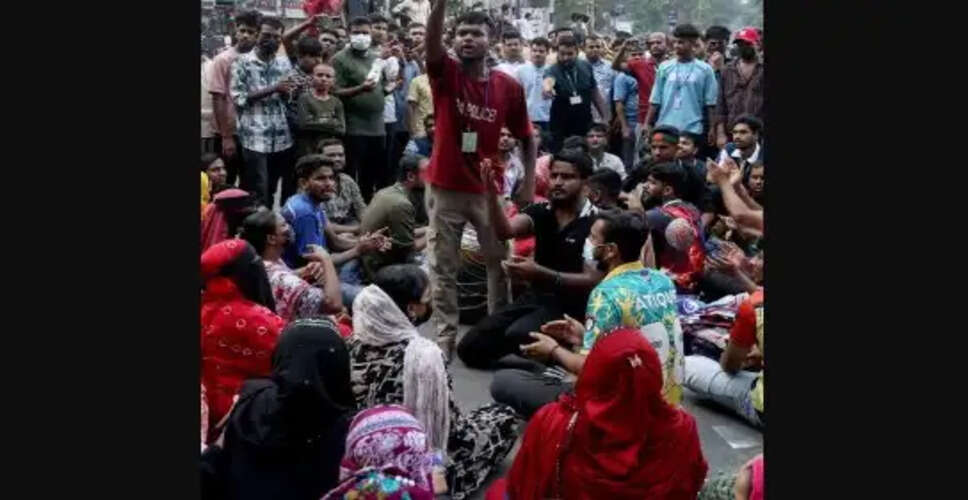

Protests Erupt in Dhaka Over Wage Demands
Dhaka: On Tuesday, clashes between police and garment workers in Bangladesh resulted in injuries to two individuals as protests demanding increased minimum wages resumed after a brief hiatus. Authorities responded by deploying additional security forces to the area.
The protests reignited after a pause, including during government holidays, with workers from various factories across the nation halting work to voice their demands, despite having reported for duty earlier in the day.
Tensions escalated when workers obstructed the Baipail-Abdullahpur Road in the Ashulia industrial zone, located approximately 17 kilometers from Dhaka, as reported by a local newspaper.
Initially, police attempted to negotiate with the protesters to clear the road, but the situation deteriorated when demonstrators allegedly threw bricks and stones, leading to confrontations between the two groups.
In response, law enforcement used tear gas and sound grenades to disperse the crowd.
Two workers sustained injuries during the altercations and were taken to Ashulia Women and Children Hospital for treatment.
Harun-or-Rashid, the hospital's operations manager, indicated that the injuries were likely caused by rubber bullets.
One worker suffered a head injury and was transferred to Dhaka Medical College Hospital (DMCH), while the other received initial treatment and was discharged.
However, Mohammad Mominul Islam Bhuiyan, the superintendent of Ashulia Industrial Police-1, stated that the worker at DMCH was injured by a brick and is recovering well, according to local reports.
In light of the ongoing labor unrest, authorities have announced the indefinite closure of all factories operated by New Age Group in Ashulia starting Tuesday.
This unrest is part of a larger movement among garment workers advocating for higher minimum wages, which has disrupted operations in Bangladesh's crucial export sector.
Workers are demanding an increase in the monthly minimum wage from 12,500 taka (approximately INR 9,507) to 30,000 taka (around INR 23,000), citing rising costs of living including food, housing, transportation, and healthcare.
A wage board has agreed to implement a revised pay structure starting in December, with the first salaries under the new scale expected in January, though the specifics of the increase remain undecided.
Meanwhile, Border Guard Bangladesh (BGB) has deployed 36 platoons in key industrial regions of Dhaka, Gazipur, and Narayanganj to maintain order and prevent further disturbances, as reported by a state-run news agency.
According to a BGB statement, 14 platoons are stationed in Savar and Ashulia, with additional forces in Mirpur, Narayanganj, and various industrial areas of Gazipur.
Special patrols are also being conducted in Narayanganj and surrounding areas.
The BGB headquarters is actively monitoring the security situation using live footage from drones and body-worn cameras, in collaboration with local authorities and police.
These protests occur at a pivotal moment for Bangladesh's ready-made garment industry, which employs around four million workers and contributes over 80% of the country's export earnings.
As the world's second-largest garment exporter after China, Bangladesh supplies major international brands like H&M, Zara, and Gap.
Manufacturers have cautioned that prolonged disruptions during the peak production season for spring and summer orders could lead to shipment delays, jeopardize buyer confidence, and result in order cancellations.
The garment sector in Bangladesh faces mounting pressure from rising production costs, inflation, and fierce competition in global markets. Workers argue that their wages have not kept pace with the cost of living, which is currently experiencing inflation rates around 8%.