
Bab el-Mandeb: The Next Potential Flashpoint in Global Trade Amid Rising Tensions
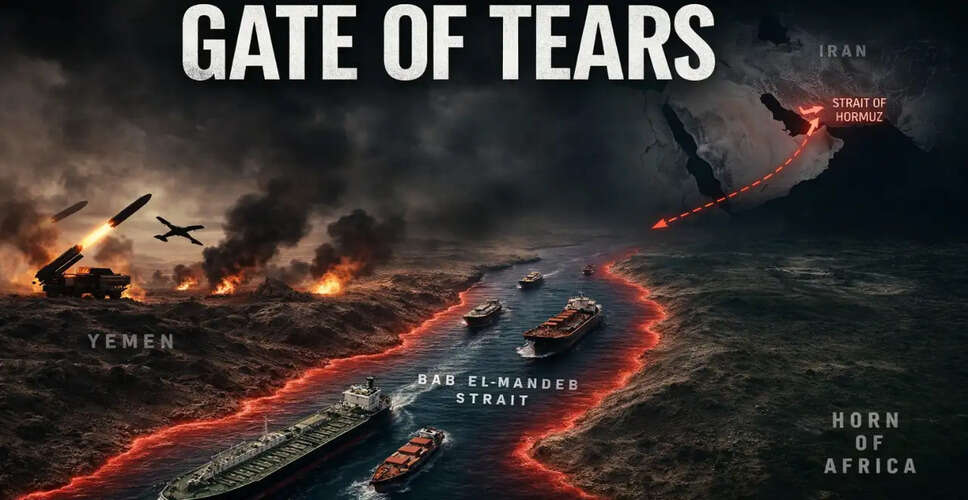
Iran's Control Over Key Maritime Routes
In 2011, a commander from Iran's Islamic Revolutionary Guard Corps claimed that shutting down the Strait of Hormuz would be as simple as drinking water. Fast forward to 2026, and this has become a reality as Iran has effectively blocked this crucial oil passage, leading to soaring fuel prices and significant disruptions in the global economy. With the Iran-backed Houthis joining the escalating conflict involving the US and Israel, the Bab el-Mandeb Strait at the southern end of the Red Sea is emerging as a potential new battleground.
Understanding Bab el-Mandeb
What is Bab el-Mandeb?
The Bab el-Mandeb, which translates to "Gate of Tears" in Arabic, is a narrow strait linking the Red Sea to the Gulf of Aden and the Indian Ocean. This strait is a critical trade route connecting the Mediterranean Sea to the Indian Ocean via the Red Sea and the Suez Canal. According to the US Energy Information Agency, approximately 12% of the world's seaborne oil trade passes through this strait. It is essential for vessels navigating to the Suez Canal, especially since the Strait of Hormuz is currently closed.
Potential Threats to Bab el-Mandeb
Why Bab el-Mandeb Could Be The Next Choke Point if Iran War Escalates?
The Houthis, who are supported by Iran, have recently intensified their involvement in the ongoing conflict in the Middle East, launching missile attacks against Israel. They have indicated a willingness to target shipping in the Bab el-Mandeb Strait if the situation escalates further. The strait is only 29 kilometers (18 miles) wide at its narrowest point, making large container ships particularly susceptible to attacks. Nabeel Khoury, a former US diplomat, noted that the Houthis' missile strikes against Israel are merely symbolic at this stage, but if they fully engage in the conflict, they could effectively block the Bab el-Mandeb using boats, mines, or missiles.
Khoury emphasized that the Houthis are signaling their presence and readiness to escalate their involvement if the conflict intensifies against Iran. A few targeted attacks on vessels could lead to a halt in all commercial shipping through the Red Sea, according to a former deputy chief of mission in Yemen.
Implications for Global Trade
Is There an Alternative to Bab el-Mandeb?
Unlike the Strait of Hormuz, there is an alternative route for ships traveling between Asia and Europe, which involves navigating around Africa. However, this option comes with significant logistical challenges. Muyu Xu, a senior crude oil analyst at Kpler, explained that rerouting around the Cape of Good Hope would extend the journey considerably. For example, a trip from Rotterdam to Singapore via the Suez Canal and Bab el-Mandeb takes about 27 days, while going around Africa would take approximately 40 days. This extended route would complicate oil trade, particularly for Saudi Arabia, as it would take nearly 50 days to transport oil to China, more than double the time required through Bab el-Mandeb.
Historical Context of Bab el-Mandeb
The Bab el-Mandeb Threat is Not New
Similar to the Strait of Hormuz, Bab el-Mandeb has been a chokepoint for maritime traffic. The Houthis have previously attacked over 100 merchant vessels with missiles and drones from November 2023 to January 2025, in retaliation for Israel's military actions in Gaza following the attacks on October 7, 2023. These assaults ceased after a US-brokered ceasefire between Israel and Hamas in October 2025.
The Hormuz Lesson For The World
As tensions rise in the US-Israel-Iran conflict, President Donald Trump has faced backlash for his shifting stance on the Strait of Hormuz. Iran has effectively restricted access to this strait for its adversaries while allowing ships from allied nations to pass. Trump initially warned Iran to reopen the strait within 48 hours or face severe consequences. He later extended this deadline, citing positive discussions with Iranian officials, and expressed hope for a resolution. However, he has also indicated that if a deal is not reached soon, the US may escalate its military response.