
Andy Burnham Takes Office as UK Prime Minister Amid Political Shift
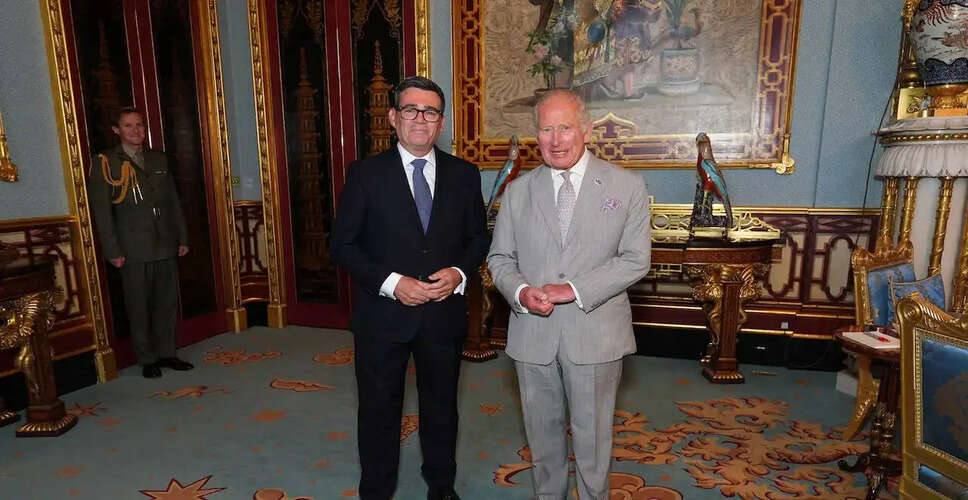

Andy Burnham Becomes the New Prime Minister of the UK
Andy Burnham has officially assumed the role of Prime Minister of the United Kingdom, marking the seventh change in leadership within a decade. This transition follows Keir Starmer's resignation on Monday after his audience with King Charles III at Buckingham Palace. Burnham, who previously served as the mayor of Greater Manchester and is now the leader of the Labour Party, is the 59th individual to hold the office of Prime Minister in the UK.
Burnham made a notable return to Parliament in June, winning a challenging special election, and was sworn in as a member on July 12, just hours after Starmer announced his resignation after a brief two-year term. Starmer traveled from Downing Street to Buckingham Palace to formally resign, a move that was accepted by King Charles III, as confirmed by Buckingham Palace.
Following this, the 56-year-old Burnham arrived at the palace and accepted the King's invitation to form a government, a ceremonial moment referred to as "kissing hands."
Burnham's Rapid Ascent to Leadership
Burnham Wasn't Even in Parliament a Month Ago
To challenge Starmer for the leadership of the Labour Party, Burnham had to take significant political risks. He first needed to secure a seat in Parliament and gather enough support to mount a challenge against Starmer. As pressure mounted for Starmer to resign in May, Labour lawmaker Josh Simons from Makerfield stepped down, prompting a special election. This was no easy feat, as the anti-immigration Reform UK party had recently made significant gains against Labour in local elections, intensifying calls for Starmer's resignation.
However, Burnham, who enjoys considerable popularity in his constituency, successfully won the election on June 19. His swearing-in on June 22 was met with cheers from numerous Labour lawmakers. Following Starmer's resignation, Burnham faced no opposition in his bid to become the party leader.
Meeting with King Charles III
Burnham Meets King Charles III
Known for his casual style, often seen in dark T-shirts and jeans, Burnham opted for a more formal appearance on Monday, wearing a dark suit, white dress shirt, and blue tie for his meeting with King Charles III at Buckingham Palace to receive the official approval to become Prime Minister.
Andy Burnham is Officially the Prime Minister
Andy Burnham is Britain’s New Prime Minister
After his meeting with King Charles III, Burnham formally accepted the invitation to form a government. Buckingham Palace shared a photograph of the handshake between the two, symbolizing the transfer of power from Starmer to Burnham. Last week, Burnham succeeded Starmer as the leader of the Labour Party.
Starmer's Resignation Explained
Why Starmer Resigned Without A General Election
Burnham was selected as the Labour Party leader by 379 fellow lawmakers after Starmer's resignation. Since Labour holds a majority in Parliament, its leader automatically becomes the Prime Minister. In the UK’s parliamentary democracy, governing parties can change leaders midterm, allowing the new leader to assume the role of Prime Minister without necessitating a general election.
Prime ministers can be replaced if their party leader resigns or is ousted through a leadership challenge. It is not uncommon for British prime ministers to ascend to power without a general election; in fact, four of the last six prime ministers have taken office through internal party leadership contests rather than public votes.
Conclusion
With inputs from various sources