
American Scholar's Arrest in China Sparks Concerns Over Myanmar Relations
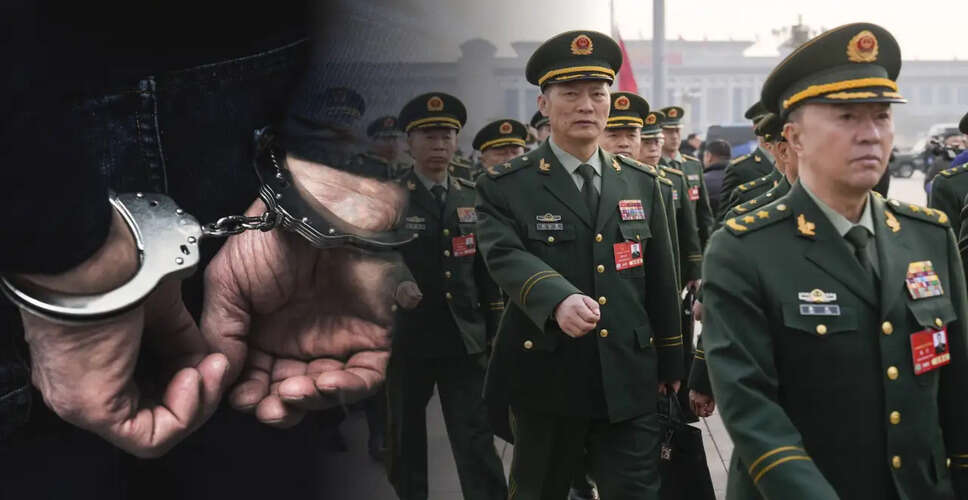

Overview of the Arrest
An American academic detained by Chinese officials on espionage suspicions may have been targeted due to his research highlighting China's expanding influence in conflict-ridden Myanmar, according to sources familiar with the matter. Min Zin, a US citizen and Executive Director of the Institute for Strategy and Policy-Myanmar based in Thailand, vanished on June 3 while attending a state-sponsored conference in Kunming, China. His arrest has ignited discussions regarding Beijing's strategic interests in Myanmar and whether Min Zin's findings posed a significant threat to Chinese authorities. As his detention surpasses a month, reports suggest that formal charges could be forthcoming under Chinese law, although the specifics remain uncertain. Kunming, where he was invited to present, is a crucial center for China's operations in Southeast Asia and is integral to its ambitions for enhanced access through Myanmar. The Chinese embassy in Washington has not commented on the situation, leaving the espionage claims and the rationale behind Min Zin's detention under increasing scrutiny.
Motivations Behind the Arrest
Why Did Chinese Authorities Arrest Min Zin?
Laura Harth from the human rights organization Safeguard Defenders emphasized the need to question the timing and target of the arrest. A source with insight into the situation suggested that there are multiple reasons for China's interest in sidelining Min Zin in Myanmar, although they requested anonymity due to media restrictions. They indicated that Min Zin's activities were complicating China's strategic objectives in the region. Notably, Min Zin's arrest was announced just three days prior to Myanmar's President Min Aung Hlaing's inaugural state visit to Beijing on June 15, following his first trip to India since the military coup in 2021. These visits are significant for Myanmar, which is navigating the interests of two powerful neighboring nations.
Myanmar's Ties to China
Myanmar Remains 'Tethered' To Beijing's Influence
An analysis by ISP-Myanmar explored the delicate balance of Myanmar's foreign relations, particularly in light of Min Aung Hlaing's recent trips to India and China. The findings revealed that while Myanmar's government is increasingly seeking political and military support from New Delhi, it remains heavily influenced by Beijing. The report, titled “Between Two Giants: How China and India Maneuver in Myanmar for Security, Economy and Influence,” noted that numerous agreements were signed during the Chinese visit, highlighting Beijing's focus on securing Myanmar's cooperation with its various global initiatives. Joshua Kurlantzick, a Senior Fellow at the Council on Foreign Relations, asserted that China's dominance in Myanmar is growing, and the military government relies on Beijing for its survival, with no other external power likely to challenge China's position.
Min Zin's Research Focus
Min Zin's Work Tracked China In Myanmar
Min Zin has extensively documented China's economic and strategic interests in Myanmar, particularly the rise of illegal rare earth mining following the 2021 coup. Chinese enterprises are significantly involved in this sector, which is part of a broader competition for vital resources and China's influence over Myanmar. The work of ISP-Myanmar has also monitored the political and military dynamics within a conflict that has been likened to the situation in Syria. This context is crucial for understanding the theories surrounding Min Zin's arrest, as Myanmar is not merely another participant in China's Belt and Road Initiative; it is a key player in the China-Myanmar Economic Corridor (CMEC), a major geoeconomic project for Beijing. The corridor provides strategic access to Kyaukpyu port on the Indian Ocean, which is vital for reducing China's reliance on the Strait of Malacca. Former American diplomat Dan Swift has linked this project to what is termed “China's Malacca panic,” reflecting Beijing's concerns over US-controlled maritime chokepoints.