
Afghanistan Conducts Air Strikes on Alleged Militant Bases in Pakistan
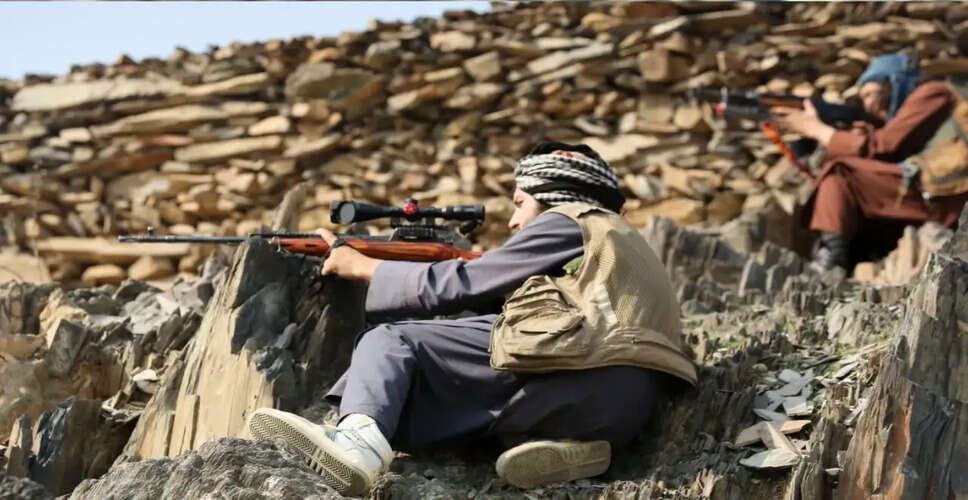

Escalation of Tensions Between Afghanistan and Pakistan
In a significant escalation of hostilities, Afghanistan has reported conducting air strikes targeting supposed militant hideouts within Pakistan. This action raises concerns about the stability of the already fragile ceasefire between the two nations. The Afghan Defence Ministry stated that the strikes occurred on Thursday night, focusing on locations in Pakistan's Balochistan and Khyber Pakhtunkhwa provinces, which share a border with Afghanistan. Kabul alleges that these sites were utilized by ISIS-Khorasan (ISIS-K) militants, who were allegedly collaborating with 'hostile intelligence circles' to orchestrate attacks against Afghanistan.
The ministry claimed that one of the targeted sites was frequently used by high-ranking ISIS-K leaders, asserting that several 'important targets' were successfully struck. However, details regarding the damage inflicted or the specifics of the operation were not disclosed.
In response, Pakistan swiftly dismissed these claims as 'false' and accused Afghanistan of disseminating misinformation. Islamabad contended that various terrorist groups, including ISIS and other militant factions, continue to operate from areas under Taliban control.
This incident marks the latest escalation in a long-standing conflict that has flared up along the Afghanistan-Pakistan border since the Taliban regained power in Kabul in 2021. Both nations have consistently accused each other of harboring militant groups responsible for cross-border violence.
Relations between the two countries deteriorated significantly earlier this year following a series of retaliatory military actions. A ceasefire established in March quickly fell apart, with both sides blaming each other for violations. Mediation attempts led by China have yet to yield a sustainable peace agreement.
Pakistan has repeatedly accused Kabul of permitting the Tehreek-e-Taliban Pakistan (TTP) to operate from Afghan soil, launching deadly assaults within Pakistan. The Taliban government has consistently refuted these allegations, asserting that Pakistan's security issues are internal matters.
The recent Afghan military operation is particularly noteworthy as it represents one of Kabul's most significant offensive actions in recent months. Although Afghanistan lacks fighter jets, military experts indicate that the Taliban has control over several aircraft and helicopters acquired after the withdrawal of foreign forces in 2021, along with an expanding fleet of drones previously utilized in confrontations with Pakistan.
The renewed hostilities come shortly after Pakistan executed air strikes within Afghanistan, which Taliban officials claimed resulted in the deaths of at least 13 individuals, including 11 children. Islamabad stated that these strikes targeted militants responsible for recent attacks in Pakistan's northwest, claiming to have killed 26 fighters.
The escalating violence has severely impacted civilians, with the United Nations reporting that cross-border clashes resulted in at least 372 Afghan civilian deaths and nearly 400 injuries during the first three months of 2026 alone.
In a strongly worded statement, Afghanistan's Defence Ministry emphasized that the country would employ all available means to counter threats originating from beyond its borders. 'Afghanistan will no longer tolerate any threat to its security and stability,' the ministry declared, vowing to continue neutralizing threats 'at their source.'
As both sides adopt increasingly rigid stances and diplomatic initiatives show little promise, there are growing concerns that these latest strikes could instigate a new cycle of retaliation, further destabilizing one of South Asia's most volatile borders.