
Diwali 2026: Celebrating Six Days of Festivities from Dhanteras to Bhai Dooj
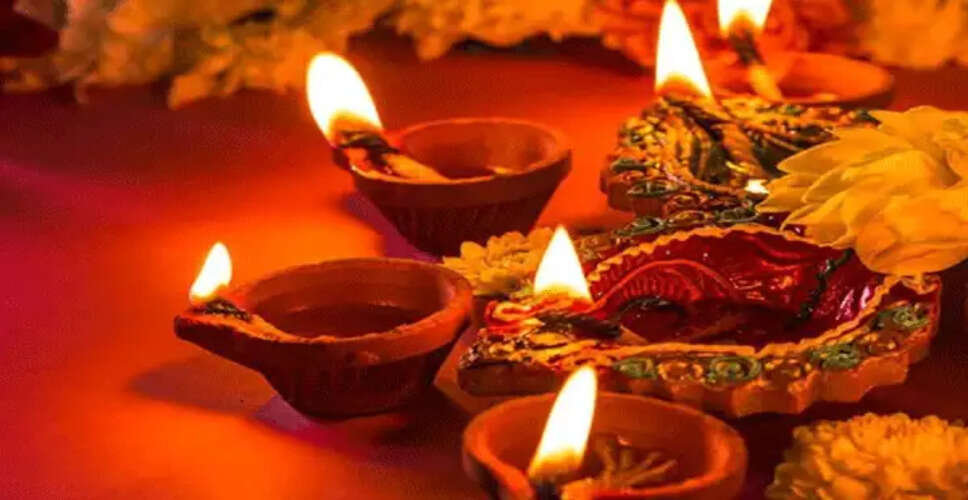

Overview of the Six-Day Diwali Celebration
Jaipur. This year, the grand festival of lights, Diwali, will be celebrated over six days due to unique astrological alignments and changes in dates. Traditionally lasting five days, this year's festivities will commence on November 6 with Dhanteras and conclude on November 11 with Bhai Dooj. The celebrations will include Narak Chaturdashi, Roop Chaturdashi, and Hanuman Jayanti on November 7, followed by the main Diwali celebrations on November 8, where special prayers will be offered to Goddess Lakshmi and Lord Ganesha. The festivities will continue with Rama-Shyama on November 9, Govardhan Puja and Annakoot on November 10, and finally, Bhai Dooj on November 11.
The principal Diwali celebration will take place on November 8, coinciding with the new moon day of Kartik month, during which special prayers will be conducted for Goddess Lakshmi and Lord Ganesha. According to religious beliefs, worshipping Goddess Lakshmi during a stable zodiac sign is particularly auspicious. This year, Govardhan Puja will be observed on November 10, reflecting the unique sequence of dates.
Complete Schedule for the Six-Day Diwali Festival 2026
The six-day Diwali celebration will kick off on November 6 with Dhanteras. The following day, November 7, will feature Narak Chaturdashi, also known as Choti Diwali and Roop Chaturdashi, along with Hanuman Jayanti as per North Indian traditions. On November 8, homes and temples will be adorned for the Mahalakshmi Puja. The next day, November 9, will be dedicated to Rama-Shyama, where people exchange Diwali greetings. On November 10, Govardhan Puja and Annakoot will be celebrated, culminating with Bhai Dooj on November 11.
November 6: Dhanteras Marks the Beginning of Diwali
The first significant festival of Diwali, Dhanteras, will be celebrated on November 6, also referred to as Dhan Trayodashi. According to religious beliefs, Lord Dhanvantari emerged with the nectar during the churning of the ocean. He is revered as the deity of Ayurveda, health, and wellness, leading to special prayers on this day. Additionally, worshipping Lord Kuber, the symbol of wealth, is customary.
Purchasing gold, silver, vehicles, brass, and other metal items on Dhanteras is considered auspicious. It is believed that acquiring new items on this day enhances prosperity and wealth. Markets will be bustling as people buy jewelry, utensils, and household items according to their means.
Trayodashi Date: The auspicious time for Trayodashi begins at 10:30 AM on November 6 and lasts until 10:48 AM on November 7.
This day also features the conjunction of the Hasta constellation and Venus, deemed favorable for shopping and religious activities.
November 7: Narak Chaturdashi, Roop Chaturdashi, and Hanuman Jayanti
Narak Chaturdashi, celebrated the day before Diwali, is also known as Choti Diwali and Roop Chaturdashi. A special tradition involves lighting lamps in homes. It is customary to light a four-faced lamp in the evening, known as Yam Deepdaan, in honor of Yama, the god of death. This practice is believed to ward off untimely death and bless family members with prosperity and longevity.
In North Indian tradition, Hanuman Jayanti is also celebrated on this day. According to beliefs, Lord Hanuman was born at midnight on Kartik Krishna Chaturdashi. Devotees visit Hanuman temples to pray for relief from life's challenges and to maintain peace and happiness.
Chaturdashi Date: This date begins at 10:38 AM on November 7 and continues until 11:29 AM on November 8.
The day is also marked by the conjunction of the Chitra constellation.
November 8: Special Worship of Goddess Lakshmi and Lord Ganesha on Diwali
The main Diwali festival will be observed on November 8. The worship of Goddess Lakshmi and Lord Ganesha during the Pradosh period on the new moon day of Kartik holds significant importance. It is believed that performing rituals for Lakshmi and Ganesha on this night brings happiness, peace, prosperity, and wealth into the home.
Worshipping Lakshmi during a stable zodiac sign is particularly auspicious. According to beliefs, the Taurus sign is favorable for householders. Worshipping Goddess Lakshmi during this time is thought to ensure lasting prosperity in the home. People decorate their homes with lamps, rangoli, and attractive decorations. As evening falls, lamps are lit in homes and temples, and special preparations are made to welcome Goddess Lakshmi.
Amavasya Date: The new moon day begins at 11:29 AM on November 8 and lasts until 12:31 PM on November 9.
Key Auspicious Times for Mahalakshmi Puja
The general auspicious time for Lakshmi Puja during the Pradosh period is from 5:36 PM to 8:02 PM. For householders, the stable Taurus sign is favorable from 6:04 PM to 8:01 PM.
Specific auspicious times include from 6:16 PM to 6:28 PM and from 6:52 PM to 7:05 PM. Additionally, the Nishith period with a stable Leo sign is significant from 12:34 AM to 2:50 AM the following day, considered important for special religious and tantric practices.
November 9: Rama-Shyama for Family Gatherings
On November 9, the day after Diwali, Rama-Shyama will be celebrated. The Amavasya date will last until 12:31 PM, after which the Pratipada date will begin. Due to the unique positioning of the dates, this year, the tradition of Rama-Shyama will take precedence over Govardhan Puja.
Rama-Shyama is seen as an opportunity to promote family gatherings and mutual affection. On this day, people visit the homes of relatives, friends, and acquaintances to exchange Diwali greetings. They seek blessings from elders by touching their feet and share joy by embracing one another. A key purpose of this tradition is to foster sweetness and closeness in relationships by putting aside past differences.
November 10: Govardhan Puja and Annakoot Festival
This year, Govardhan Puja will be celebrated on November 10. Typically observed the day after Diwali, the date has been determined based on the Pratipada date's emergence.
Govardhan Puja is linked to the mythological tale of Lord Krishna and the Braj region. According to beliefs, Lord Krishna advised the villagers to worship nature and the Govardhan mountain instead of Indra. Angered, Indra unleashed torrential rains on Braj. To protect the villagers and their livestock, Lord Krishna lifted the Govardhan mountain on his little finger. This event is commemorated each year during Govardhan Puja.
On this day, devotees create a representation of the Govardhan mountain using cow dung in their homes and temples. They worship it and perform circumambulation. Additionally, there is a special tradition of worshipping cows. Temples offer various dishes and delicacies to Lord Krishna, known as Annakoot. Many temples also follow the tradition of offering 56 types of dishes during this occasion. Devotees pray for the prosperity and happiness of their families.
November 11: Conclusion of the Six-Day Diwali Festival with Bhai Dooj
The final celebration of the six-day Diwali festival, Bhai Dooj, will take place on November 11, also known as Yam Dwitiya. This festival symbolizes the love, affection, and unbreakable bonds between brothers and sisters. On this day, sisters invite their brothers to their homes, apply a ceremonial mark on their foreheads, and pray for their long life and happiness. In return, brothers express their affection by giving gifts to their sisters.
According to mythology, on this day, Yamuna invited her brother Yama to her home for a meal. Pleased with her hospitality and affection, Yama granted her a boon. Following this tradition, sisters pray for their brothers' well-being by applying a ceremonial mark on their foreheads. On this occasion, brothers and sisters spend time together, strengthening their bond.
On Bhai Dooj, the worship of Lord Chitragupta and the reverence of writing instruments hold special significance, particularly in the Kayastha community. Thus, with Bhai Dooj, the six-day Diwali festival of 2026 will officially conclude.