
Why is Diljit Dosanjh's Film 'Satluj' Facing Controversy? A Legal Battle Unfolds!
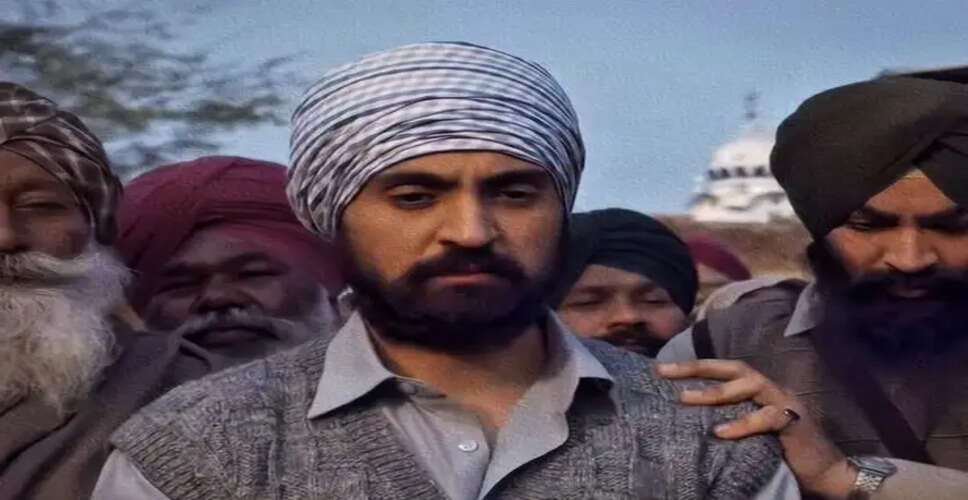

Legal Action Over Film Removal
A public interest litigation (PIL) was submitted to the Punjab and Haryana High Court on Thursday, demanding the reinstatement of the film Satluj, which was taken down shortly after its digital debut on an OTT platform.
The petition argues that the film's removal, which centers on activist Jaswant Singh Khalra's quest to reveal alleged disappearances during the Punjab insurgency, occurred without any public or judicial directive, infringing on the constitutional rights to freedom of expression and access to information.
Sharwan Singh, the petitioner, has listed several parties in the case, including the Central government, the Central Board of Film Certification (CBFC), the Punjab government, Zee Entertainment Enterprises Limited, and ZEE5.
The petition highlights that the film's sudden withdrawal, lacking any legal justification, has not only violated the public's fundamental right to information and artistic expression under Article 19 (1) (a) of the Indian Constitution but has also denied many subscribers access to content they had already paid for.
Concerns have been raised regarding the transparency of the decision to withdraw the film, which is based on documented historical events and the life of a human rights advocate whose case has been previously addressed by constitutional courts.
The petition asserts that Satluj is a biographical film grounded in true events and does not threaten the nation's sovereignty or public order.
In response to the film's removal, the Shiromani Akali Dal (SAD) has announced plans to screen Satluj throughout Punjab, aiming to educate the youth about the tragic events and repression faced by Bhai Jaswant Singh Khalra and other innocent Sikh youths during that era, as stated by Akali Dal President Sukhbir Singh Badal.
Conversely, Union Minister Ravneet Singh Bittu has dismissed claims from certain politicians suggesting that the BJP or the Central government played a role in the film's removal, labeling these allegations as unfounded and misleading. He clarified that the regulations governing film certification primarily pertain to theatrical releases, while satellite and cable broadcasts follow different legal frameworks, asserting that there is no factual basis for linking the film's removal to the BJP or the Central government.