
Unveiling the Complex Life of Elizabeth Holmes: A Deep Dive into 'You Can See Everything'

A Unique Perspective on Elizabeth Holmes
The documentary titled 'You Can See Everything,' helmed by Nathan Fielder and Lance Oppenheim, presents an unconventional exploration of Elizabeth Holmes, the former CEO of Theranos. Over a span of three years, this film chronicles Holmes' life leading up to her imprisonment, offering insights into her personal journey and attempts to redefine her public persona after the downfall of her health tech venture.
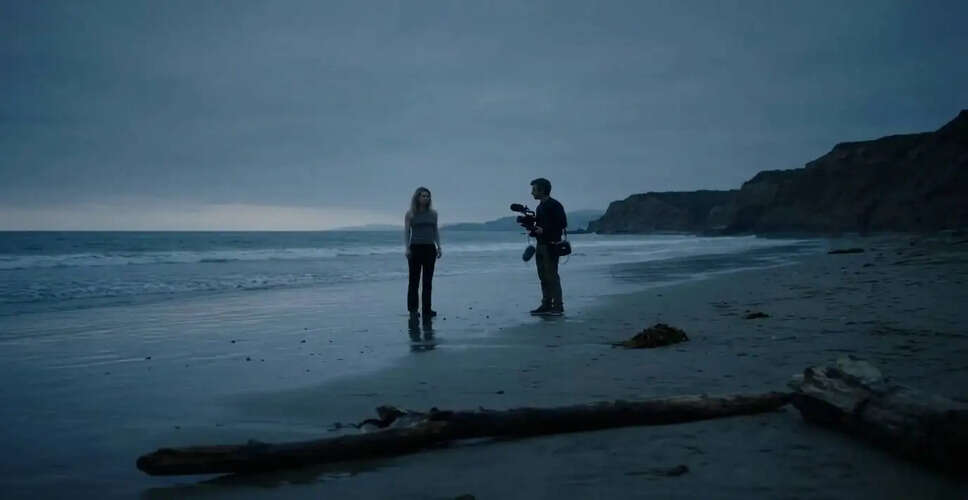
The story kicks off in April 2023, shortly before Holmes is scheduled to start her prison term. Together with her partner, Billy Evans, she invites the filmmakers to capture their everyday experiences at a rented beach house in California. During these early filming sessions, Fielder seeks to delve into the intricacies of the Theranos scandal, while Holmes insists that her actions have been misinterpreted. To bridge communication gaps, the filmmakers employ various methods, including the classic Abbott and Costello routine, 'Who's on First?', to emphasize the challenges in getting straightforward responses.
Shifting Focus: The Role of Billy Evans
As the documentary progresses into its second year, the narrative transitions from Holmes' past to the current influence of her partner, Billy Evans. Fielder's exploration reveals that Evans has taken a pivotal role in shaping Holmes' public image, managing her social media accounts, overseeing the use of her likeness in marketing, and even developing an AI-generated representation of her. The film also uncovers a letter indicating that Evans had negotiated a share of the film's profits, prompting the filmmakers to involve actress Amanda Seyfried—who portrayed Holmes in 'The Dropout'—to help navigate these intricate off-camera dynamics.
A confrontation with Evans regarding these financial arrangements leads to a charged exchange, where he makes threatening comments towards those he believes have wronged Holmes. Later, when Fielder speaks with Holmes, she shares her discomfort with Seyfried's depiction of her and remains vague about her awareness of Evans' financial negotiations. This dynamic compels a shift in the documentary's lens, prompting a critical examination of Fielder's role as an observer.
Exploring the Nature of Documentary Filmmaking
The film's conclusion raises profound questions about the essence of documentary filmmaking. Seyfried points out that Fielder seems to have transcended the role of a neutral documentarian, becoming emotionally involved with his subject. This tension is highlighted by the revelation of previously unreleased footage from the days leading up to Holmes' sentencing. Initially hesitant to swim in the ocean due to his fear of water, Fielder ultimately joins Holmes, suggesting a personal connection that challenges the film's objectivity.
An on-screen update reveals that Evans ultimately gave up his profit-sharing agreement before the film's release. By concluding with this intimate, previously unseen moment, the filmmakers prompt viewers to reflect on the extent to which the documentary serves as an objective account versus a curated narrative, ultimately questioning both Holmes' carefully crafted identity and the filmmaker's influence on the story.