
What Secrets Lie Beneath the Surface of Netflix's The Blue Road? A Gripping Finale Awaits!

The Blue Road: A Deep Dive into Historical Trauma and Crime
The Netflix limited series, The Blue Road, which debuted on November 20, 2026, wraps up its eight-episode journey by weaving together a rich tapestry of historical trauma intertwined with international crime. Directed by Han Jun-hee and adapted from the manhwa by Keishi Edogawa and Kwon Kaya, the plot follows the collaboration between South Korean detective Kim Seok and Japanese investigator Hiroshi Inose. Their inquiry, ignited by a series of horrific murders during the 2002 FIFA World Cup, ultimately reveals a sinister legacy that traces back to 1987.
The storyline reveals that the serial killings were not perpetrated by a single individual but were instead a method passed down from Gráfica, a secret torture unit that was once part of South Korea’s former Agency for National Security Planning. The series uncovers that the villain, Seo Hyun-tae, employed these brutal methods to silence his victims and maintain his power across borders. As the detectives delve deeper, they find that Hyun-tae’s past is closely tied to the personal histories of both investigators, particularly through the tragic narrative of Kim Seok’s family.
Unraveling the Conspiracy and the Climactic Showdown
The Truth Behind the Conspiracy and the Final Confrontation
In the series finale, the role of Hong Du-yeong, the man who took care of Kim Seok after his father's disappearance, is clarified. It is disclosed that Du-yeong was a former operative of Gráfica who was involved in the murder of Seok’s father. Motivated by a complex blend of guilt and the instinct for survival, Du-yeong had embedded himself in Seok’s family under the pretense of mentorship. Hyun-tae, who had spent years operating under various aliases—including the pachinko kingpin Ito Makoto—ultimately killed Du-yeong when the latter began to express remorse.
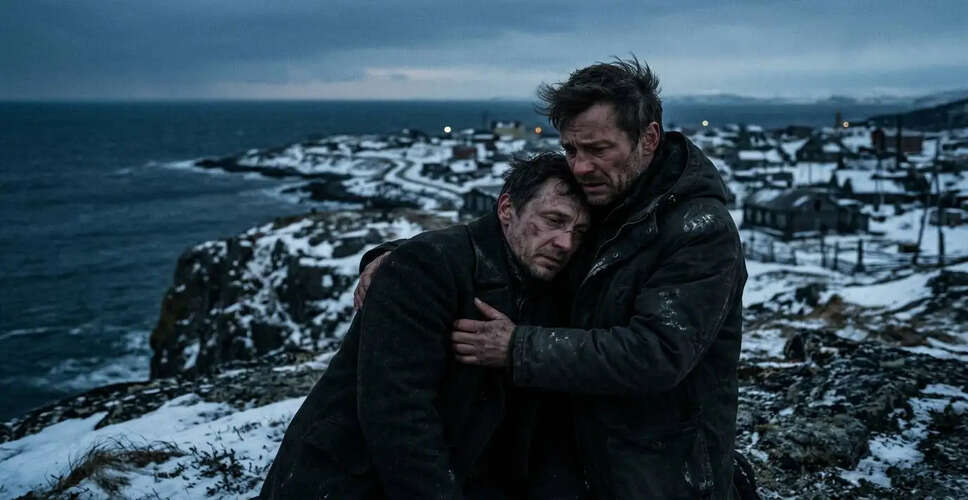
The series reaches its climax in a secluded Russian settlement known as Dandelion Village. In a strategic move to draw Hyun-tae out of hiding, Inose fakes his own death, ultimately arriving to support Seok in a decisive confrontation. This showdown involves NIS agent Yoon Soo-kyung and businesswoman Ri Yoon-ok, who step in to protect Seok’s mother. As the tension escalates, Hyun-tae is injured and cornered by Seok. Despite Inose’s pleas for Seok to act as a law enforcement officer rather than an executioner, a final struggle ensues. Hyun-tae shoots Seok in the abdomen before being fatally wounded by Inose and plunging from a cliff. Seok dies in his partner’s embrace.
The series concludes by reflecting on the lasting repercussions of the case. The term Blue Road symbolizes the tears of Koreans forced into exile, a recurring theme that connects the characters throughout the narrative. Years later, an elderly Inose visits Seok’s grave alongside Anastasia, who has become a police officer. The final scenes poignantly reflect on the weight of the investigation, as Inose reminisces about his partner, emphasizing the show’s exploration of the enduring impact of historical trauma and the price of pursuing justice.