
Theja Rio's 'Angh': A Journey from Nagaland to the Oscars

A Remarkable Cinematic Journey
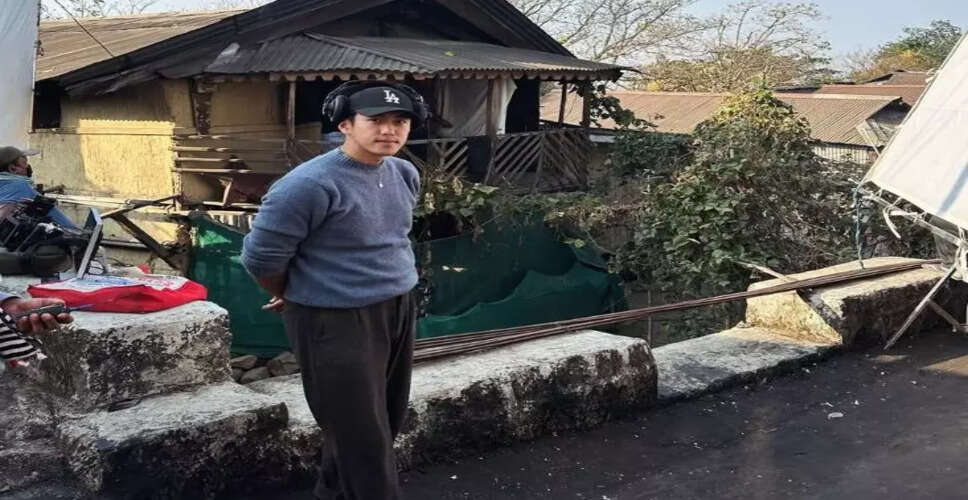
File image of filmmaker Theja Rio. (Photo: Theja Rio/Meta)
New Delhi, Oct 1: Filmmaker Theja Rio reflects on the extraordinary journey of his film Angh, which originates from an industry that is still in its infancy and lacks self-sufficiency. The film, set in Nagaland, has made its way from the hills of his home state to the prestigious Toronto International Film Festival (TIFF) and is now in the running for the 2027 Oscars.
Rio's directorial debut, a 103-minute feature primarily in the Konyak language, secured the Platform Prize at TIFF 2026, granting it a direct path for consideration in the International Feature Film category at the upcoming Academy Awards due to new eligibility criteria.
While Angh is not India's official submission, it stands alongside the country's official entry, the Marathi film Gondhal.
In discussing the film's Oscar prospects, Rio expressed optimism about maximizing this opportunity while also planning to release the film in India. He stated, “We have been given the opportunity, so we will try our best to secure a nomination. We are also looking to release the movie here.”
For Rio, Angh holds significance not only for its international acclaim but also for the narrative perspective it offers. He emphasized, “It follows the perspective of a subject and not that of an explorer. Films are a beautiful window where you can sort of get an insight on how a culture is and who the people are.”
Rio acknowledged the challenges posed by Nagaland's underdeveloped film industry, noting the state has historically lacked filmmaking infrastructure, with only two theaters available, none of which are located in the capital, Kohima.
He reminisced about his early exposure to films, which began with television, followed by pirated DVDs and illegal streaming services. “Angh comes from a film industry that barely exists and that is definitely not self-sufficient... Despite making films that are rooted in our culture, we have to look elsewhere for the audience and validation. That’s where platforms like TIFF and all these film festivals play a role in getting us visibility,” he remarked.
Rio is hopeful that this recognition will pave the way for more filmmakers from Nagaland and the Northeast region. He mentioned, “We have a number of filmmakers like Pradip Kurbah, Rima Das, Lakshmi Priya Devi. The limited filmmakers we have have all been able to find their places in big film festivals around the world.”
Born in Kohima, Rio developed Angh from his award-winning short film of the same name. The feature film tells the story of Anghba, an aging hereditary chief of a Konyak village, and his young son as they navigate significant social and cultural changes.
Set in 1963 and filmed on 16mm, the narrative focuses on a father and son who are among the last in their region to adhere to their ancestral faith as Christianity begins to spread. An American missionary, portrayed by Scottish actor Douglas Henshall, serves as a catalyst for further transformation.
The Konyaks, one of Nagaland's prominent tribes, are primarily located in the Mon district, where traditional village leaders are referred to as Anghs. Rio chose the 1960s as the backdrop for his film, viewing it as a pivotal period of transition for Nagaland.
“We’ve gone from being former headhunters and being very traditional to becoming, very quickly, culturally and lifestyle-wise, gentrified into the modern day that we live in today. So I wanted to set my film in a time where that transition was at its peak,” he explained.
When asked if the film could be interpreted as anti-Christianity, Rio clarified his intention to maintain neutrality in his storytelling. “I like to write about things that I’m conflicted about. I’m not really interested in making films about things I’m sure about. That way, it’s so easy to turn your product into a product of agenda, a product of propaganda,” he stated.
“Nagaland is a state with a lot of cultures and festivals. We’re still dealing with the hangovers of the change that has happened, but it’s the conflict of what to let go and what to hold on to.”
Ultimately, Rio aims for the film to ensure that Naga stories are understood on their own terms. “We don’t want to be just showcased, we want to be understood. Hopefully, when Angh comes out, a lot more people learn more about us and see the world in our perspective as well,” he concluded.
Produced by Nancy Nisa Beso and Rio, Angh features an Indigenous Naga cast alongside Henshall. The film premiered at TIFF and was the only Indian entry selected for the festival’s Platform Competition.