
The Unique Vegetarian Crocodile of Kerala's Padmanabhaswamy Temple

The Fascinating Vegetarian Crocodile
There are many astonishing truths about life that might surprise you. In India, numerous beliefs exist that are known only to the locals.
Today, we will discuss a belief that may seem unbelievable. Typically, animals are carnivorous, and even a large and dangerous creature like a crocodile primarily consumes meat. However, there exists a unique crocodile on Earth that is vegetarian, subsisting solely on offerings.
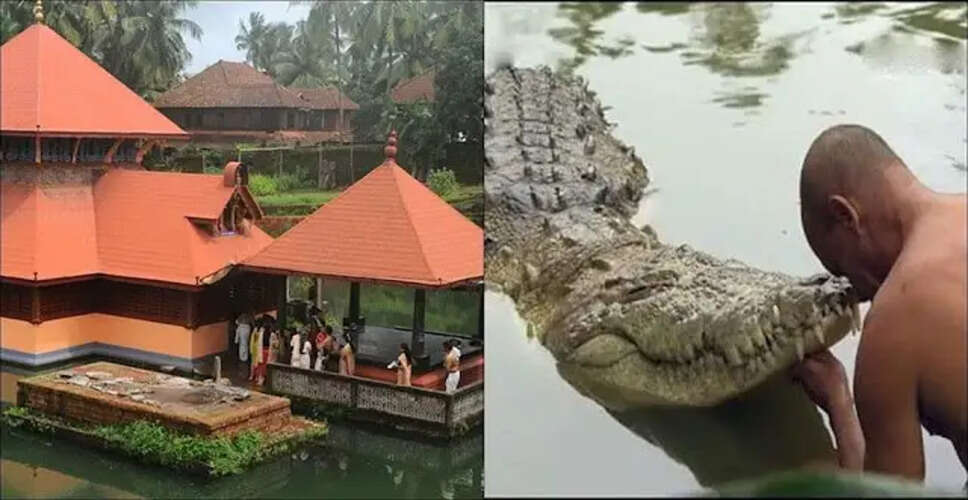
This vegetarian crocodile, known as Babia, resides in a pond located within the famous Padmanabhaswamy Temple in Kerala. This temple is dedicated to Lord Vishnu and is situated amidst a serene lake. Babia is said to guard the temple.
It is believed that whenever a crocodile dies in this lake, another mysteriously appears. After offerings are made at the temple, they are fed to Babia, but only the priests are permitted to do so. Remarkably, Babia does not harm other creatures in the lake.
The Mystery of Babia
Babia has lived in the Ananthapur temple lake for approximately 60 years. Locals recount that the crocodile was shot by the British in 1945, yet it reappeared the very next day. Whether it is the same crocodile or a different one remains uncertain, but it is indeed a remarkable vegetarian.
Padmanabhaswamy Temple, one of the wealthiest temples in India, is renowned for its dedication to Lord Vishnu. It is said that Lord Vishnu resides here in a self-manifested form. Thousands of devotees visit to witness the grand statue of Lord Vishnu in a reclining posture. Legends suggest that even Indra and Chandra have worshipped here. The temple houses 12,008 Shaligrams, and the sacred sounds of bells, conch shells, and mantras resonate throughout, captivating the devotees. It is also recognized as the 108th pilgrimage site for Vaishnavites.
Historical Insights
Some historians believe this temple dates back 5,000 years. An ancient text, the Ananthasyana Mahatmya, written on palm leaves, describes that the temple was established on the 950th day of the Kali Yuga by the Tulu Brahmin, Divakar Muni. The temple has undergone several renovations, the last being in 1733, commissioned by Maharaja Marthanda Varma of Travancore. The golden pillar and intricately carved columns enhance the temple's grandeur.