
The Mummy: A Gripping Tale of Family, Possession, and Unending Horror

A New Take on Horror
Lee Cronin's latest cinematic venture, The Mummy, diverges from conventional horror storytelling, opting instead for a deeply unsettling narrative that examines themes of family and possession. This film shifts away from the action-driven plots of its predecessors, focusing on the psychological terror that arises when a beloved family member returns home transformed. The plot revolves around the Cannon family, particularly their daughter Katie, played by Natalie Grace, who mysteriously reappears eight years after her disappearance in Egypt. Initially celebrated as a miraculous return, her homecoming quickly devolves into a nightmare as her parents, especially her father Charlie, portrayed by Jack Reynor, confront the dark realities surrounding her vanishing.
As Katie fluctuates between periods of silence and violent outbursts, eerie supernatural events begin to unravel the family's cohesion. With the help of Detective Zaki, who was part of the investigation into Katie's initial disappearance, the horrifying truth emerges: Katie has become a host for an ancient demon known as Nasmaranian, a parasitic being referred to as 'the destroyer of families.' This revelation paves the way for a terrifying showdown, not only with the demon but also with the disintegration of familial ties as the Cannons confront the ramifications of Katie's possession.
The film's climax is both brutal and emotionally intense, depicting Katie's body as a battleground for the demon's influence. One of the most shocking revelations is that Katie's skin acts as a barrier for the Nasmaranian. When this barrier is breached, the demon is unleashed. In a brief moment of lucidity, Katie communicates with her father through Morse code, prompting a desperate effort to exorcise the demon. However, this solution comes at a heartbreaking price, as the ritual transfers the demon from Katie to Charlie, making him the new host.
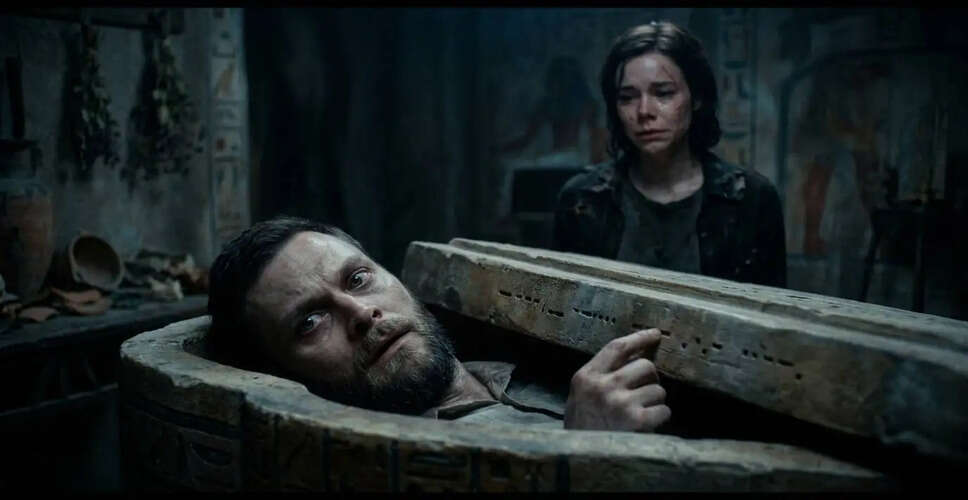
The concluding scenes of The Mummy are hauntingly quiet, with Charlie trapped in a sarcophagus, symbolizing the cycle of possession that has haunted their family. His Morse code message, 'I love you,' indicates that while he is conscious, he is now imprisoned. The film ends with the unsettling realization that the Nasmaranian cannot be eradicated but merely passed along, leaving the Cannons as unwilling guardians of the demon. This cyclical horror suggests that the narrative is far from finished, with the possibility of future transfers looming ominously.
Ultimately, The Mummy avoids providing a conventional resolution, instead offering a narrative rich in consequences. Katie's survival is not a victory but a grim trade, as her father becomes ensnared in the same cycle of horror. The film concludes with a cliffhanger, highlighting that survival does not mean escape; rather, it signifies the demon's new residence within the family. Released in theaters on April 17, The Mummy challenges viewers to reflect on the true cost of survival in the face of relentless evil.