
The Cultural Impact of 'Obsession': A Horror Film That Resonates

A Surprising Success in Horror
In a recent late-night chat with a veteran in the film industry, I was told that Steven Spielberg’s Disclosure Day is not worth the hype. The caller insisted that the film, which premiered on June 12, is an American production, made by Americans for an American audience, and fails to offer anything innovative. I was initially disheartened, having eagerly anticipated its release, but I quickly pivoted and asked, “Have you seen Obsession?” This sparked an hour-long discussion.
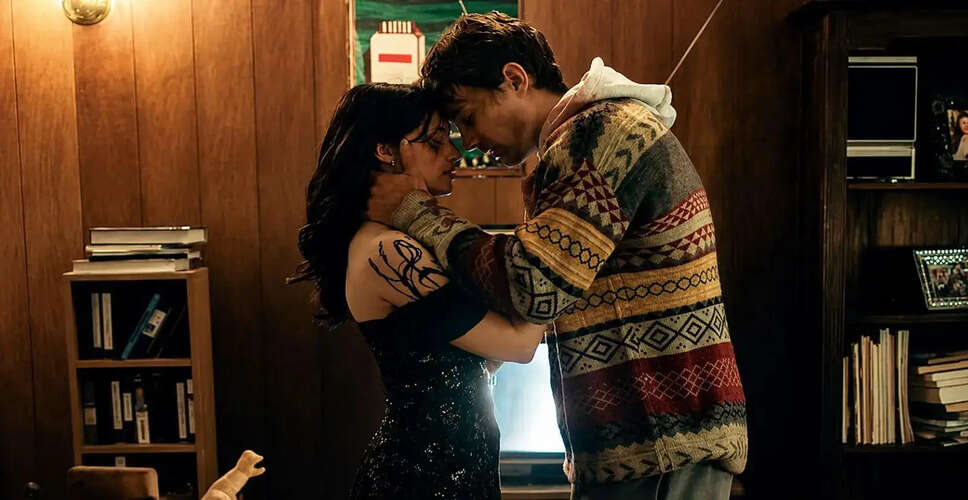
Occasionally, a film emerges that transcends its marketing and star power, becoming a cultural touchstone. In 2026, that film might just be Curry Barker’s Obsession. The fact that Obsession has achieved overnight success is remarkable. It features no A-list actors; instead, the story is carried by Michael Johnson's Bear and Inde Navarrette's Nikki Freeman. Produced on a shoestring budget, it lacks the franchise backing that typically drives modern blockbusters. Yet, against all odds, Obsession has become one of the most discussed films of the year, sparking conversations on social media, college campuses, and theaters worldwide.
More significantly, it has accomplished something increasingly rare in today’s cinema: it has become a cultural phenomenon largely fueled by word-of-mouth. Worldwide, the film has grossed nearly $286.5 million, transforming a modestly budgeted horror film into one of the year's biggest box-office successes. While Spielberg's much-anticipated sci-fi thriller Disclosure Day opened with impressive numbers, earning around $92.9 million globally in its first weekend, the online buzz seems to favor Obsession.
I have yet to see any reels or memes about Disclosure Day; the online chatter is overwhelmingly focused on Obsession. Inde Navarrette’s portrayal of Nikki has turned her into an Instagram sensation, with every look and pose analyzed by millennials as if it were a masterclass in acting. The film itself has captivated audiences, leading to numerous conspiracy theories, including one that suggests Nikki becomes possessed by Bear’s deceased cat (I’ll leave it to you to figure out the ‘why’ behind that).
But the pressing question remains: why? The answer may lie in what each film offers its audience. While Disclosure Day presents a grand spectacle of alien conspiracies and government secrets, Obsession delves into more intimate horrors—relationships that become suffocating and emotionally damaging. The plot of Obsession is deceptively straightforward: a young man named Bear wishes for the affection of Nikki Freeman, but his desire quickly spirals into a terrifying obsession that he cannot escape. What begins as a longing turns into a nightmare with a shocking conclusion. This theme resonates deeply with younger viewers, as it taps into anxieties they are already familiar with.
Pop culture has long romanticized obsession. Films, TV shows, and social media often glorify grand gestures and emotional dependence as signs of love. The more someone pursues another, the more romantic they appear; the more they disregard boundaries, the greater their love seems. Love and obsession have, in a warped sense, become intertwined in popular culture. However, Obsession seeks to dismantle that fantasy. Curry Barker’s horror film poses an uncomfortable question: what if someone loved you more than anyone else? What if they demanded your attention constantly? What if your lives became inextricably linked? The film suggests that the answer is terrifying.
The fascination with Obsession lies in its portrayal of emotional dependency, loneliness, and the unrealistic expectations that modern relationships create. The film reflects contemporary anxieties about attachment and validation in the digital age. Viewers are not merely watching a horror story; they are witnessing a cinematic reflection of real-life experiences. The numbers back this up: Obsession currently boasts an impressive 94-96 percent critics' score on Rotten Tomatoes, with a matching audience approval rating of 94 percent. This is a rarity, as both critics and audiences have praised its ability to blend horror, dark humor, and relationship commentary into an engaging experience.
Obsession has emerged as one of the highest-grossing horror films in recent years, amassing nearly $286 million globally. In India, where Hollywood horror films typically have a niche audience, Obsession has shown remarkable staying power, already grossing over Rs 66 crore. The film, which debuted on May 19 in the US, earned $17,196,655 in its opening weekend, followed by $23,962,340, $27,395,480, $25,389,465, and $19,000,000 in the subsequent weekends. The data indicates that rather than experiencing a typical drop-off after a strong opening, Obsession has maintained momentum through positive audience recommendations and repeat viewings. Weekday earnings have remained robust, with social media buzz continuing to drive theater attendance, and its weekend numbers have consistently grown.
This phenomenon highlights a broader shift in entertainment, where younger audiences increasingly favor authenticity over spectacle. Beneath Obsession’s fantastical premise lies an emotional reality that resonates with viewers, and they seem to respond more to the honesty of its fears than to the visual effects of other contemporary films. This is where Spielberg’s Disclosure Day faces a challenge.
By conventional standards, Steven Spielberg's film is a success, with nearly $93 million in its global opening weekend, marking one of the director's strongest openings in years. However, the film, starring Emily Blunt, revisits familiar themes and narrative territory that Spielberg has explored throughout his career. While this familiarity is not inherently negative, it does lend the film a sense of less urgency. In contrast, Curry Barker’s Obsession feels strikingly relevant, addressing the lived realities of young people grappling with personal demons. The film tackles emotional boundaries, attachment issues, loneliness, and unhealthy relationship dynamics—conversations that are already prevalent on social media.
Barker’s sensibilities echo those of Alfred Hitchcock, who often explored unhealthy desire and fixation. Films like Vertigo and Rebecca center on characters consumed by obsession. Similarly, Barker's Obsession examines the consequences of love morphing into possession and entitlement, exploring a man's desire to be loved and the horrifying aftermath.
Obsession also shares cultural space with films like Gone Girl and shows like You. Audiences are drawn not just because these narratives are frightening, but because they see reflections of their own realities within them. The success of Obsession illustrates that younger viewers are eager to support original storytelling that resonates with their experiences. This is evidenced by the film's rise, which was fueled less by traditional advertising and more by TikTok clips, Instagram reels, online discussions, and audience recommendations. The audience itself has become the film’s most effective marketing tool.
This grassroots momentum is increasingly significant in a cinematic landscape saturated with sequels, reboots, and franchise extensions. So, what does this mean? Ultimately, the fascination with Obsession is not merely about horror; it’s about recognition.
Audiences see their own fears reflected in the film. They recognize the emotional suffocation, blurred boundaries, and desperate quest for validation that characterize many modern relationships. For many men, Obsession serves as a mirror, questioning their inability to articulate feelings or the ego that sustains them. For instance, when Nikki—lucid in her sleep—pleads for freedom in death, Bear, driven by his ego, refuses. Obsession transforms these anxieties into an unforgettable cinematic nightmare.
While Spielberg’s Disclosure Day offers a grand spectacle, it lacks the personal touch. Audiences are less concerned with the world at large; they are drawn to their inner struggles. Obsession provides a narrative that is inherently intimate, and in 2026, that distinction is proving to be crucial at the box office.