
Thalapathy Vijay: From Cinema Icon to Political Leader

The Journey of Thalapathy Vijay
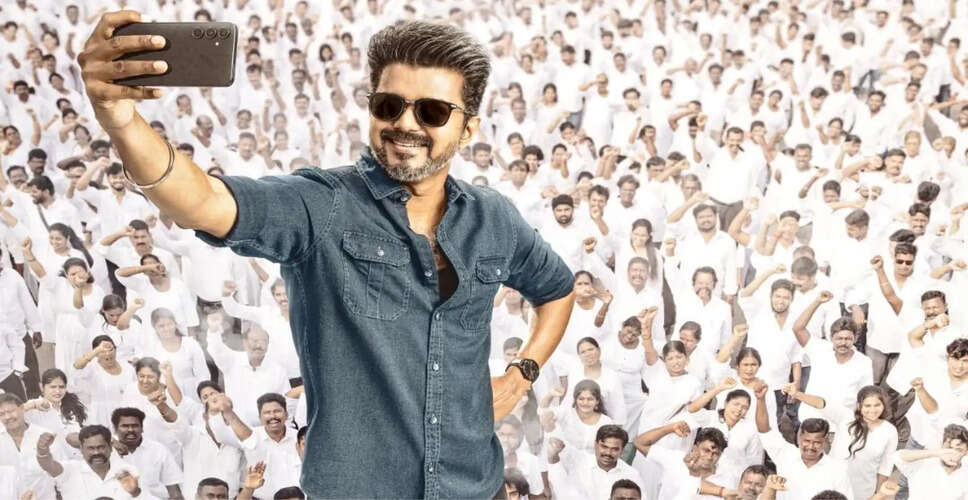
For more than thirty years, Vijay has been a cultural phenomenon in Tamil Nadu. His films transcended mere entertainment, turning into grand events that captivated entire cities. On release days, schools would unofficially close as fans flocked to theaters, celebrating even before the first screening began. Known as Thalapathy, Vijay cultivated an incredibly loyal fan base through his unwavering consistency and remarkable ability to resonate with everyday people. Unexpectedly, he transitioned from the film industry to a much larger arena.
Vijay's journey as a lead actor commenced with Naalaiya Theerpu in 1992 when he was just 18. Despite its poor box office performance and harsh critiques, he persevered. His breakthrough came with hits like Rasigan (1994) and Poove Unakkaga (1996), culminating in a State Film Award for his romantic film Kadhalukku Mariyadhai in 1997. However, romance was merely the beginning of a much grander narrative.
The Rise Of A Superstar
The film that distinctly marked the transition from Vijay to Thalapathy was Ghilli (2004). This movie became the first Tamil film to surpass Rs 50 crore at the domestic box office and enjoyed a remarkable 200-day run in theaters statewide. In this film, Vijay portrayed a kabaddi player embroiled in a perilous rescue mission, showcasing an infectious energy that captivated audiences.
As the 2010s approached, Vijay transformed further. He evolved from the charming romantic lead to a voice for the common man. In Thuppakki (2012), he took on the role of an army officer pursuing a terrorist group, earning admiration for his portrayal of a patriotic hero. Following this, Kaththi (2014) emerged as his most politically charged film to date, where he played dual roles of an activist and a reformed criminal, addressing issues like farmer struggles and corporate exploitation. Upon its release, it became the highest-grossing Tamil film of 2014 and secured the Best Tamil Film Award at the 62nd Filmfare Awards South.
Mersal marked a significant turning point, featuring Vijay in triple roles and tackling the issue of medical corruption. The film not only became a box office success but also ignited political discussions in Tamil Nadu, with some parties opposing its commentary on GST and healthcare. This controversy only heightened public interest, reinforcing the belief that Vijay represented a cause.
Sarkar (2018) took this further, with Vijay portraying an NRI who returns to vote and confronts a corrupt political system. The film faced pre-release controversies, with political factions demanding edits, yet audiences flocked to theaters in record numbers. Vijay's performance garnered critical acclaim, further elevating his status.
In Bigil, Vijay played a football coach battling corruption in sports, with the film grossing over Rs 300 crore globally and celebrating women's empowerment. His 2021 release, Master, debuted during the COVID-19 pandemic when theaters had just reopened, yet it attracted massive audiences, showcasing his undeniable appeal.
The Political Leap
In February 2024, Vijay announced his retirement from acting to enter politics, launching his political party, Tamilaga Vettri Kazhagam (TVK). Many were doubtful, recalling past instances of actors entering politics, such as MGR and Jayalalithaa, but none had challenged the dominance of the DMK and AIADMK quite like him.
On March 18, 2026, Vijay declared that TVK would contest independently in all 234 constituencies, a bold move for a new party. By March 29, he unveiled TVK's manifesto, pledging a drug-free state, job guarantees for youth, collateral-free education loans, and monthly financial support for students.
The election results shocked the nation. TVK secured 108 seats, emerging as the largest party, defeating both the ruling DMK and the opposition AIADMK. Vijay contested from two constituencies, winning both: Perambur in North Chennai by a margin of 53,715 votes and Tiruchirapalli East by 27,416 votes. However, the numbers only tell part of the tale. It was Vijay's passionate fans, who had filled theaters for decades, who turned out in droves at polling stations, transforming their superstar's political aspirations into reality. From a struggling debutant facing harsh criticism at 18 to a superstar who made Tamil Nadu dance for thirty years, and now a political force that disrupted a six-decade duopoly on his first attempt, the Thalapathy Vijay saga is one that even his most devoted scriptwriters could not have envisioned!