
Supreme Court Directs JioStar to Pursue Case in Delhi High Court Over TRAI Regulations
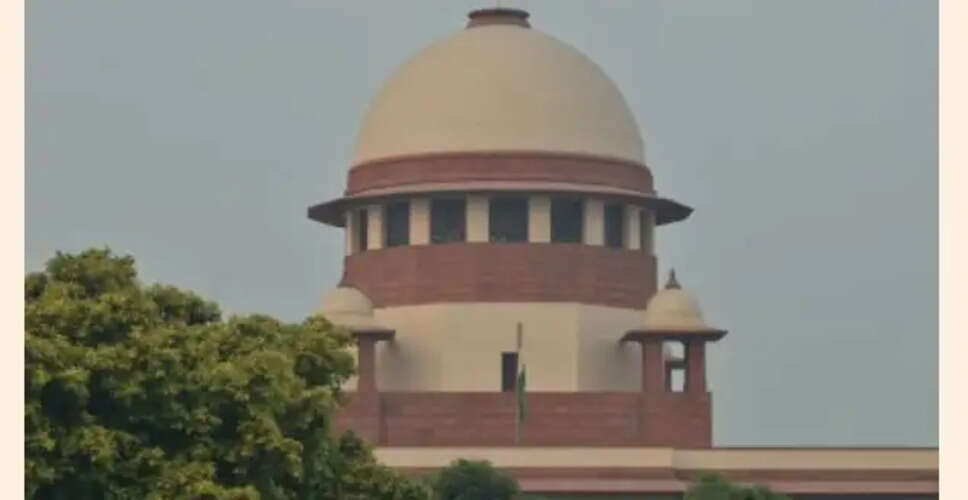

Supreme Court's Guidance for JioStar India Pvt Ltd
New Delhi: On Tuesday, the Supreme Court advised JioStar India Pvt Ltd to take its request to the Delhi High Court, where it is contesting certain aspects of the Telecom Regulatory Authority of India’s (TRAI) framework regarding television channel pricing.
A bench led by Chief Justice Surya Kant, along with justices Joymalya Bagchi and V Mohana, instructed senior advocate Mukul Rohatgi to present the case in the high court, thereby dismissing the transfer petition submitted by JioStar.
The broadcaster sought the Supreme Court's intervention through the law firm Karanjawala and Co.
The bench was reviewing two petitions related to TRAI's regulatory framework, which includes tariff orders, maximum retail price (MRP) limits, and discount structures that affect cable and DTH distribution.
Rohatgi, representing JioStar, contended that the TRAI's regulations and tariff orders are closely linked, despite originating from different legal authorities.
He clarified that regulations are a form of delegated legislation and can only be contested in a high court, while tariff orders are administrative and fall under the jurisdiction of the Telecom Disputes Settlement and Appellate Tribunal (TDSAT).
He explained that both a tariff order and a regulation were issued at the same time, one under legislative authority and the other under administrative authority.
Rohatgi pointed out that the definition of a subscriber in the regulations equates a luxury hotel with numerous televisions to a single-bedroom home for pricing, which he argued is inequitable.
He stated, "If a hotel charges Rs 50,000 per room, there should be a clear distinction between commercial signal usage and residential households. Comparing them is like comparing apples to oranges."
JioStar had previously filed petitions in the Delhi High Court in 2014 and 2015, challenging both the regulations and tariff orders, but these cases remained unresolved due to overlapping issues being considered by the Supreme Court.
He criticized the high court for unnecessarily mandating amendments to the petitions and imposing costs, despite the broadcaster asserting that no changes were necessary.
Rohatgi questioned the imposition of costs, suggesting it indicated the court had already prejudged the petitions.
The bench encouraged the broadcaster to return to the Delhi High Court with its request.
The Chief Justice remarked, "It would be more beneficial for you to return. In light of the interim order, submit an application to the high court indicating that you do not wish to amend your petition."
Rohatgi confirmed that the broadcaster would withdraw the transfer petition and file a suitable application in the High Court, stating, "I do not require any amendment. I will withdraw this petition and proceed with an appropriate application before the learned Judge. I do not intend to abandon my case."