
The Political Journey of Thalapathy Vijay: A Look at Cinema's Influence in Tamil Nadu
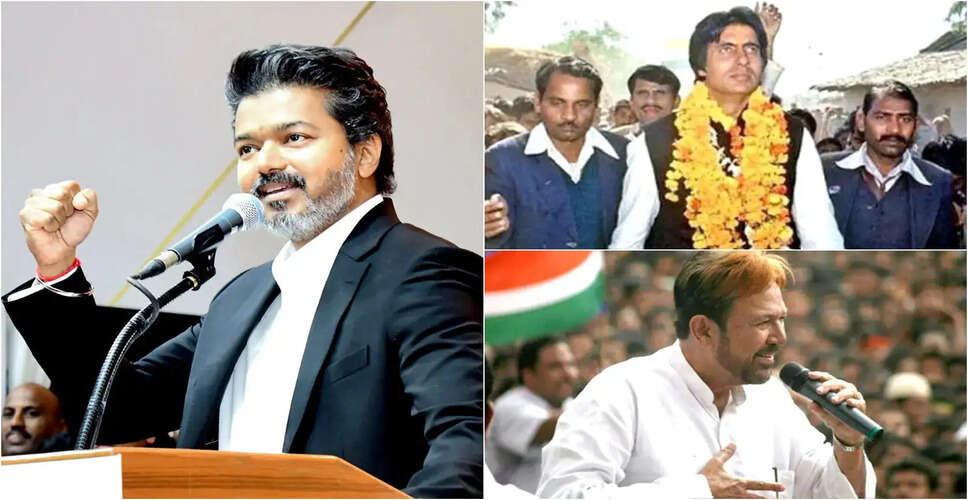

Thalapathy Vijay's Rise to Power
Thalapathy Vijay's transformation from a celebrated star in Tamil cinema to the newly appointed Chief Minister of Tamil Nadu highlights the immense popularity he has garnered over his 40-year career. However, he is not the first actor to venture into politics in India. The connection between the film industry and political life has been a longstanding narrative, particularly in Tamil Nadu, where numerous actors have successfully transitioned into political roles. Notable figures such as N. T. Rama Rao and J. Jayalalithaa paved the way for this trend. In contrast, Bollywood's foray into politics has not yielded the same level of success. While both industries boast larger-than-life personalities, their political paths diverge significantly. The influence of film stars in politics is undeniable, yet many Bollywood actors have struggled to maintain a lasting political presence.
Bollywood's Political Aspirations
Several Hindi film stars have attempted to make their mark in politics, but their efforts often result in fleeting electoral victories or symbolic roles. This disparity points to differences in fan culture, regional identity, and political engagement between North and South India.
1. Amitabh Bachchan
2. Govinda
3. Rajesh Khanna
4. Shatrughan Sinha
5. Dharmendra
While a few Bollywood stars like Kangana Ranaut and Jaya Bachchan have made notable political impacts, the majority have not achieved transformative success.
Why South Indian Actors Thrive in Politics
South India has seen numerous actor-politicians who have risen to significant political positions, with M. G. Ramachandran (MGR) serving as a prime example of this phenomenon. His on-screen persona as a champion for the underprivileged translated into substantial political trust.
N. T. Rama Rao leveraged his mythological roles to ignite a political movement in Andhra Pradesh, while J. Jayalalithaa became a formidable political figure, cultivating deep emotional loyalty among her supporters.
Other influential Tamil actors include Vijayakant, Kamal Haasan, and Sivaji Ganesan, who have all made their mark in politics. Even actors from other South Indian states, like Chiranjeevi and Pawan Kalyan, maintain significant political relevance, showcasing the strong connection between cinema and public identity in the region.
Fandom and Political Loyalty
In Bollywood, fans typically admire actors for their entertainment value, which does not often translate into political allegiance. Conversely, in South India, cinema is intertwined with regional pride and social movements, fostering a deeper emotional connection with audiences.
Fan clubs in Tamil Nadu and Andhra Pradesh often function similarly to grassroots political organizations, engaging in community service and mobilization long before their stars enter politics.
Cultural and Political Dynamics
The political landscape in South India is closely tied to linguistic and cultural identity, allowing actors who embody these traits to gain political influence. In contrast, Bollywood stars often represent a broader, more commercial image, which can dilute their political identity.
Ultimately, the journey into politics is not solely about popularity. South Indian actors typically invest years in building social influence and public service networks before entering the political arena, a strategy that many Bollywood stars have not consistently pursued.