
Shrysh Zutshi Discusses His Intense Role as Babla in the Dhurandhar Franchise
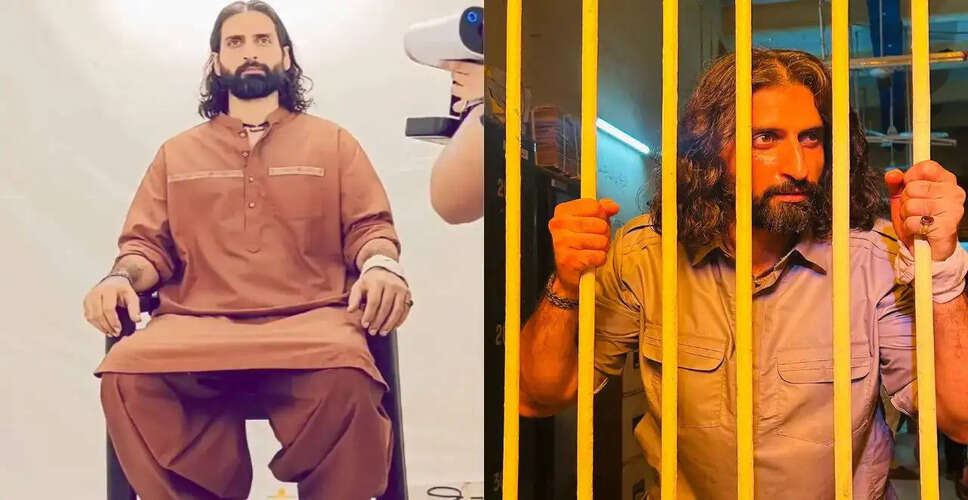
Exploring the Depth of Babla
As the excitement surrounding the Dhurandhar series continues to grow, each character from both installments has made a significant impact, showcasing their distinct traits. Among them, Babla, portrayed by Shrysh Zutshi, stands out due to his intense portrayal. Drawing inspiration from the notorious gangster Baba Ladla, Babla transcends the typical henchman role, adding substantial depth to the film's gritty storyline. In an exclusive interview, Zutshi, who hails from a Kashmiri Pandit background, shares insights into the creation of Babla, the physical and mental challenges of the role, and the immersive experience of being part of Rehman Dakait’s gang.
Crafting Babla: Beyond a Typical Gangster
Zutshi emphasizes that embodying Babla was not merely about playing a typical gangster; it required a deep understanding of his mindset. 'Babla is the right-hand man of Rehman Dakait and was a figure of fear in Lyari. My research revealed that he was involved in numerous crimes, and his death was met with relief by the locals,' he explains, highlighting the character's formidable nature. To effectively convey this fear, Zutshi focused on both external changes and internal complexity. 'I worked on his speech, behavior, aggression, and loyalty to his boss. There’s a psychological aspect that needs to be developed,' he notes. The role demanded a significant physical transformation, including weight gain, alongside an extensive character study. 'You can't fake such roles; you have to truly live them,' he adds.
Immersing in the Character
Zutshi's preparation extended beyond the set. He adopted Babla's lifestyle, including his clothing and mannerisms. 'I began to live like him, even imagining how he would eat or speak,' he shares. 'However, once on set, you must forget all the preparation and perform instinctively; that's the real challenge.'
High-Stakes Action and Filmmaking Precision
A standout aspect of Zutshi’s performance is showcased in the film's action scenes, particularly a thrilling car fight with Ranveer Singh. 'It was physically demanding yet incredibly fun,' he recalls. 'We rehearsed for days, choreographing every movement, from drawing the gun to stopping the car.' The filming process had its risks; during one rehearsal, a prop gun accidentally struck Ranveer Singh, causing a minor injury. 'I was quite concerned, but he handled it like a pro,' Zutshi remembers. The film's grand scale required a blend of real stunts and advanced visual effects. 'For a scene where my head is chopped off, they performed a full 3D mapping of my face and body, which took about 30–40 minutes to capture before combining it with VFX and a dummy body,' he explains.
Collaborating with Talented Actors
Working alongside stars like Ranveer Singh and Akshaye Khanna enriched Zutshi’s experience. 'Ranveer brings incredible energy, pushing you to elevate your performance,' he states. His interactions with Akshaye Khanna were characterized by a quiet intensity. 'He remains fully in character; you address him by his character's name, which enhances the immersion on set.' This commitment to character helped maintain the film's tone. 'Even when we were apart, we would exchange gestures, greeting each other with a salaam instead of breaking character.' Zutshi also connected with director Aditya Dhar over their shared Kashmiri roots, often conversing in Kashmiri on set. He fondly recalls, 'After wrapping up the Punjab schedule, we celebrated together, which helped strengthen our bond as a team.'
Understanding the Universe of Dhurandhar
Zutshi's role required around 8–9 months of shooting across various locations, including Mumbai and Punjab, demanding both consistency and endurance. 'What appears on screen for mere seconds can take days to film,' he explains. 'There’s extensive rehearsal, technical setup, and post-production involved.' One of his key takeaways was the director's clarity of vision. 'He had a clear picture of everything. Even when actors had doubts, he could articulate exactly how the final scene would appear.'
‘This Is Cinema, Not Propaganda’
While Dhurandhar has sparked discussions, with some labeling it a 'propaganda' film, Zutshi has a different perspective. 'Propaganda restricts audience thought, presenting a fixed narrative. This film allows for interpretation,' he asserts. He believes the discourse often arises from perception rather than craftsmanship. 'This is not just content; this is cinema, with structure, choreography, and a profound understanding of filmmaking behind it.'
A Character That Resonates
At its essence, Babla is a character defined by violence, loyalty, and fear—qualities Zutshi strived to portray authentically. 'Every role imparts a lesson,' he reflects. 'With Babla, it was about comprehending darkness without passing judgment.' As Dhurandhar continues to create waves, Zutshi’s performance serves as a reminder that even within a spectacle-driven narrative, it is the depth of individual characters that leaves a lasting impression.
In closing, Zutshi advises aspiring actors, 'Don’t pursue this field solely for money or fame, as it can lead to burnout. Instead, view it as a journey rather than a struggle. If you stay dedicated, your time will come. Never give up.'
Shrysh Zutshi’s Two-Decade Journey in Film
Shrysh Zutshi, born into a Kashmiri Pandit family, faced displacement due to migration from Kashmir. After relocating to Jammu and studying pharmacy in Pune, he unexpectedly entered the entertainment industry when a friend submitted his application for the Grasim Industry India pageant. Selected as a finalist, he moved to Mumbai with just Rs 900, marking the start of his journey. He began as a model before transitioning to acting, landing his first film, Keerthi Chakra, with Malayalam director Major Ravi. He later collaborated with Ravi again in Kurukshetra, portraying the lead antagonist opposite Mohanlal. Around the same time, he was cast in Shoojit Sircar’s ambitious project Johnny Mastana, featuring Amitabh Bachchan, Jimmy Shergill, and Nawazuddin Siddiqui, although the film was never released. He subsequently appeared in Notebook, directed by Nitin Kakkar, and in Amaran, where he played a lead antagonist alongside Sivakarthikeyan. Additionally, he founded his production house, Dramaturge Pictures, in Jammu, producing short films. His journey, spanning over 20 years in the film industry, reflects persistence and steady growth. Meanwhile, Dhurandhar Part 1, released on December 5, 2025, reportedly grossed around Rs 1200 crore globally, while Dhurandhar Part 2, released on March 19, 2026, collected approximately Rs 1500 crore worldwide, breaking multiple box office records.