
Oscars 2026: A Night of Glamour and Political Commentary
Oscars 2026: A Blend of Celebration and Urgent Issues
The Oscars 2026 unfolded with two significant themes: a culmination of the awards season and an underlying political discourse amidst the glitz of Hollywood. While many winners focused their speeches on the art of filmmaking, several artists seized the opportunity to highlight pressing global issues, including conflicts, gun violence, and political leadership. This blend of celebration and serious dialogue reaffirmed the Oscars' role as both a showcase for cinematic achievements and a platform for social commentary.
Javier Bardem's Bold Statement
Javier Bardem’s “No War, Free Palestine” Call
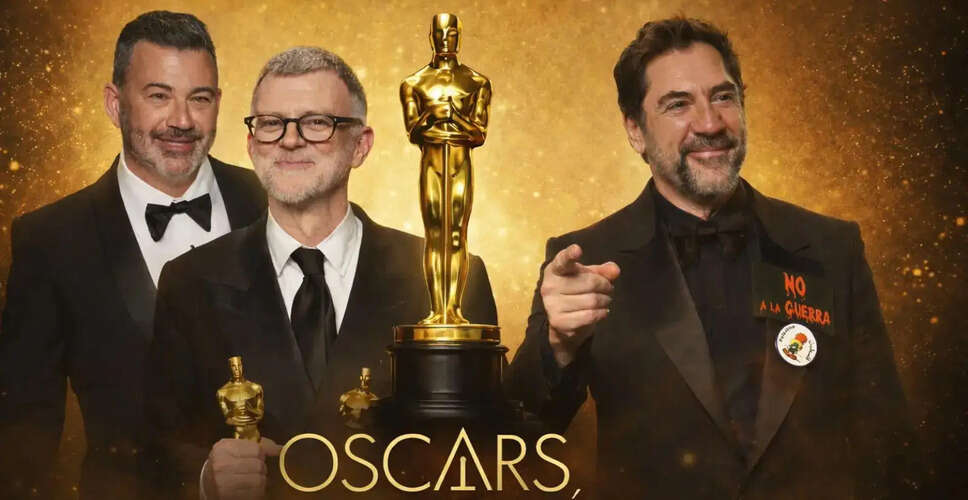
One of the standout moments featured Spanish actor Javier Bardem, who presented the Oscar for Best International Feature Film alongside Priyanka Chopra. Before announcing the winner, Bardem made a poignant statement: “No to war and free Palestine.” His choice of attire included a pin referencing protests against the Iraq War, emphasizing his reputation as a politically engaged figure in Hollywood.
The award was claimed by 'Sentimental Value,' directed by Joachim Trier, who continued the political theme in his acceptance speech. He paraphrased James Baldwin, urging responsibility for children affected by conflict, particularly in regions like Palestine, Ukraine, and Sudan.
Documentaries Highlight Gun Violence
Documentary Winners Turn Spotlight On Gun Violence
The political narrative was further emphasized through the documentary winners, particularly with 'All the Empty Rooms,' directed by Joshua Seftel. This film chronicles a project documenting the untouched bedrooms of children lost to school shootings. During his speech, Seftel honored the memory of four children featured in the film, transforming the moment into a poignant tribute.
Jackie’s mother, Gloria Cazales, shared her heartbreaking experience of losing her daughter in a school shooting, emphasizing the alarming rise of gun violence as a leading cause of death among children in the U.S.
A Film on Russia's War Machine
A Film About Russia’s War Machine
The political tone persisted with the Best Documentary Feature award going to 'Mr. Nobody Against Putin,' which follows a Russian teacher documenting the transformation of his school into a recruitment center during the invasion of Ukraine. Co-director David Borenstein warned against political complacency, stating, “You lose your country through countless small acts of complicity.”
He urged for an end to wars, emphasizing the need for peace for future generations.
Humor Meets Politics
Jimmy Kimmel’s Political Jabs
Humor also played a role in the evening's political commentary, with host Jimmy Kimmel making light of global restrictions on free speech. He joked about leaders who suppress free expression, subtly referencing North Korea and former President Trump.
Paul Thomas Anderson's Reflection
Paul Thomas Anderson's Political Hint
The night’s biggest winner was 'One Battle After Another,' which took home six Oscars, including Best Picture. Directed by Paul Thomas Anderson, the film addresses themes of rebellion against authoritarianism. In his acceptance speech, Anderson reflected on the world his children will inherit, expressing hope that they will bring about positive change.
Conan O'Brien's Early Warning
Conan O’Brien’s Warning Early On ‘Things Could Get Political’
Host Conan O'Brien hinted at the potential for political commentary during his opening monologue, suggesting that those uncomfortable with such discussions could opt for an alternate Oscars hosted elsewhere. He acknowledged the chaotic times we live in while celebrating the international representation of films at the ceremony.
In retrospect, the Oscars 2026 may have been more politically charged than initially perceived.