
Main Vaapas Aaunga: A Heartfelt Exploration of Love Amidst Displacement

A Journey Through Grief and Redemption
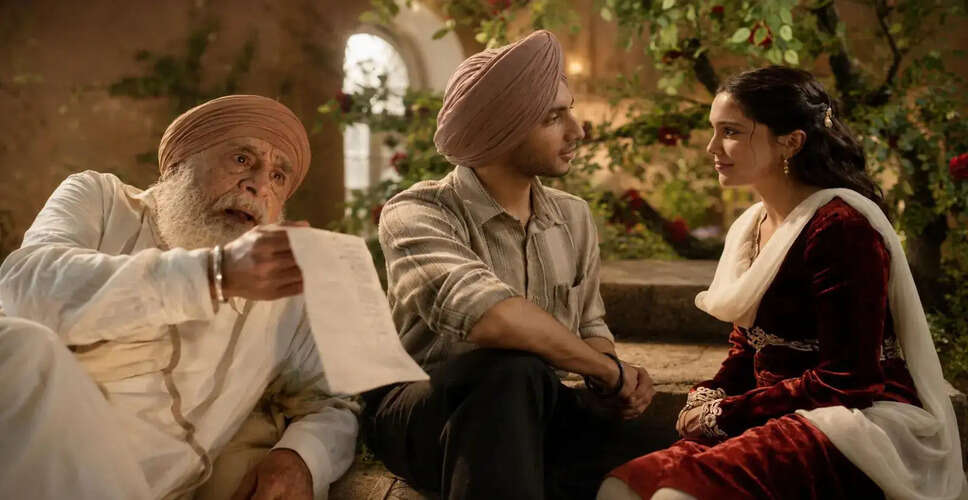
“Main Jaoon?” - Some sorrows leave behind fleeting wounds, while others demand to be revisited daily. In Imtiaz Ali’s film, Main Vaapas Aaunga, Keenu (played by Vedang Raina and Naseeruddin Shah) faces a punishment worse than death: the burden of survival in a world that has moved on. Keenu is ensnared in a moment of profound loss, unable to release the grip of his past. However, as the film draws to a close, a chance for redemption emerges. As he confronts death, he seeks permission to let go, a haunting echo that lingers in the viewer's mind long after the film ends. While history often highlights the political divisions that birthed nations, it frequently overlooks the myriad love stories disrupted by these very separations. Main Vaapas Aaunga serves as a poignant reminder that the partition of India and Pakistan was not just a political upheaval but a tragedy that tore apart lovers, families, and friendships, leading to the plight of the Displaced. This film is, above all, a haunting love ballad for those who have been uprooted.
Love Before Borders
Before the existence of borders, visas, and checkpoints, life was simply lived. Vibrant streets thrived with shared communities, friendships that transcended religious divides, and young dreamers unburdened by the weight of consequences. In this setting, a Sikh boy named Keenu falls for a Muslim girl, Jiya. Imtiaz Ali masterfully captures the fleeting moments of first love, filled with innocent excitement yet oblivious to the impending changes in their world. Neither Keenu nor Jiya are political figures or revolutionaries. They are just two ordinary individuals lost in their love story. Yet, history has a cruel way of intruding upon their dreams. As tensions escalate and Partition looms, their romance becomes increasingly strained. As their reality intertwines with a rapidly changing world, the future they envisioned together becomes fodder for chaos.
The Heartbreak of Partition
In a poignant scene, Keenu, illuminated by the night sky, stands alone on a coal bunker of a train heading to Hindustan, shouting into the void ‘Main Vaapas Aaunga’ – his anguish resonating in the silence around him. Unlike many films that depict the violence of Partition, Main Vaapas Aaunga takes a different approach. It focuses not on the political machinations that led to Partition but on the emotional devastation it inflicted on those displaced. The narrative centers on individuals striving to live their lives when history abruptly alters their fate. For Keenu and Jiya, Partition becomes the ultimate thief, robbing them of their future, families, and the possibility of togetherness. The division of India and Pakistan does not merely separate land; it tears apart souls intertwined in love.
The Refugee's Unending Pain
As a middle-aged man living in a foreign land, forever displaced and trying to belong, Main Vaapas Aaunga offers a nostalgic embrace. The film excels in portraying displacement as a lifelong wound rather than a mere inconvenience. Keenu’s separation from Jiya is not just a life event; it is a haunting that time cannot heal. Naseeruddin Shah’s portrayal of the older Keenu, filled with heartbreaking vulnerability, is accompanied by fading memories and moments of clarity. Despite the passage of time, one thing remains clear: his love for Jiya. His memories transport him back to the home he was forced to leave and the woman he lost. Time may have altered the world, but the chaos of broken hearts and unfinished love persists. In this way, Ali’s film transcends a simple romance, evolving into a meditation on exile.
Memory as Resistance
One constant remains: Ali’s title – Main Vaapas Aaunga. For those displaced, the dream of returning becomes an act of resistance against loss. Even when return seems impossible, the desire endures. And if return does occur, the changed world offers little solace, as memories resist fading. Survivors of Partition preserve a world that no longer exists through their memories. Keenu’s love for Jiya exists within this warped reality. By remembering her, he refuses to let their shared past vanish. The film suggests that memory itself can be an act of love. Each recollection of Jiya is Keenu’s way of returning to her, keeping alive a world that history attempted to erase.
Love Beyond Politics
Keenu and Jiya’s love story resonates universally because it transcends political boundaries. Both Vedang and Sharvari beautifully embody the innocence of first love. The film does not compel its audience to take sides; instead, it highlights a fundamental truth: emotional vulnerability knows no nationality. Both India and Pakistan bear the scars of Partition, having lost homes and loved ones. Imtiaz Ali, by focusing on two lovers caught in the crossfire of history, humanizes an event often discussed through political lenses. Main Vaapas Aaunga offers a deeply empathetic portrayal of lives irrevocably changed by choices beyond their control.
A Timeless Tale
As I left the theater, I was struck by the film's relevance today. The world continues to witness displacement due to wars, conflicts, and political upheavals. The emotions felt by refugees in 1947 remain painfully familiar in 2026, making Keenu and Jiya's story timeless. At its core, Main Vaapas Aaunga poses a profound question: What happens when history forces people to abandon everything they cherish? The answer is evident in Keenu’s longing – a lifelong yearning for his roots, love, and memories. While people may leave places behind, memories often remain.
An Ode to the Displaced
By the film's conclusion, Main Vaapas Aaunga evolves from a love story into an ode for the displaced. Ali’s narrative speaks to anyone who has been separated from a loved one by fate. It reflects the experiences of refugees who carry keys to homes that no longer belong to them, grandparents reminiscing about villages across borders, and generations inheriting stories of loss. In Keenu and Jiya’s love story, Ali captures the essence of the Partition. Their love song becomes a lament for a lost world and a tribute to those who spent their lives yearning for what remains only as memory, erased by the politics of history. Long after borders were drawn, love endures, preserving the memories of those forced to leave their homes but who never stopped looking back.