
Kumud Mishra: The Versatile Actor Embracing Complex Roles in Bollywood
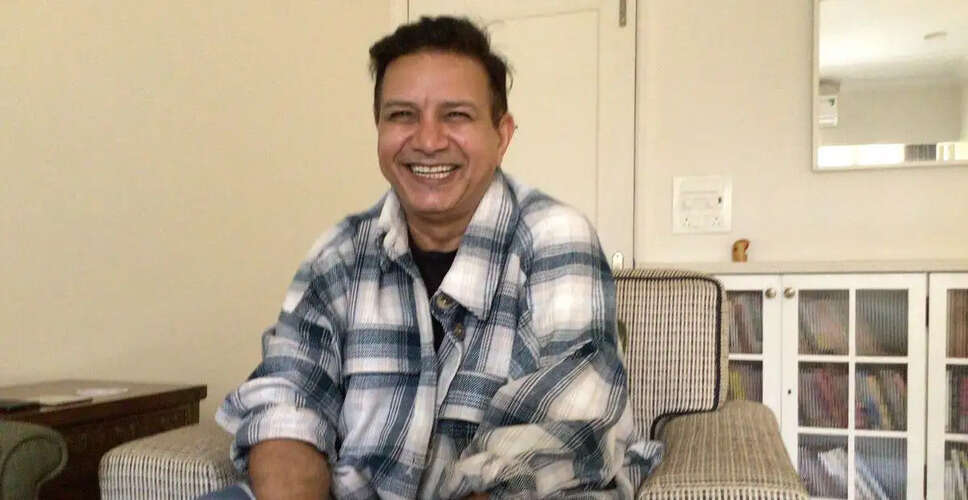

A Glimpse into Kumud Mishra's Life and Career
Located just a short boat ride from the bustling Versova fishing village in Mumbai's Andheri suburb, the island of Madh is home to several Bollywood stars, including the talented Kumud Mishra, who is 58 years old.
Having relocated to Madh eight years ago, Mishra sought a quieter life to support his growing family, which includes his wife, actress Ayesha Raza Mishra. He describes the distance from Mumbai's chaos as both a physical and mental escape.
Since the late 2000s, Mishra's career choices reflect a deliberate and thoughtful approach, leaving a lasting impression in every role he undertakes, regardless of the film's overall quality. His expressive face conveys a range of emotions, complemented by the rich timbre of his voice.
One of Mishra's unique talents is his ability to shift expressions unexpectedly, often transitioning from a smile to a grimace, which adds depth to his performances. This unpredictability is a hallmark of his craft, honed during his time at the National School of Drama.
Notable performances include his roles in Anubhav Sinha's films like Mulk (2018), Article 15 (2019), and Thappad (2020). His latest project, Assi, features him in a pivotal role.
In Assi, Mishra portrays Kartik, a widower grappling with his past as he becomes embroiled in the trial of a brutal gang rape involving his colleague's wife. The harrowing events force Kartik to confront his own tragic history, leading him to a moral crossroads.
The film also stars Kani Kusruti as the survivor, Mohammed Zeeshan Ayyub as her husband, Taapsee Pannu as her lawyer, Revathy as the judge, and Satyajeet Sharma as the defense attorney for the rapists. Assi is set to hit theaters on February 20.
Mishra recently shared insights about his collaboration with Anubhav Sinha, his early experiences, and his acting philosophy. He describes himself as 'lazy,' yet his dedication to his craft and engaging conversations reveal a different story.
How did your collaboration with Anubhav Sinha begin?
We first crossed paths during the film Abhi To Party Shuru Hui Hai, which had a fantastic script. Although there were three main roles, I opted for a smaller part.
Looking back, I can't pinpoint my reasoning—perhaps it was fear of a larger role or the challenge it presented. Anubhav later completed Mulk and wanted me to play a judge. However, after seeing Saurabh Shukla's performance in Jolly LLB, I felt I couldn't take on that role.
Upon reading the script for Mulk, I was even more convinced not to proceed, as the character initially seemed like a typical Hindi film judge. I believed the judge's ruling should resonate personally with the audience.
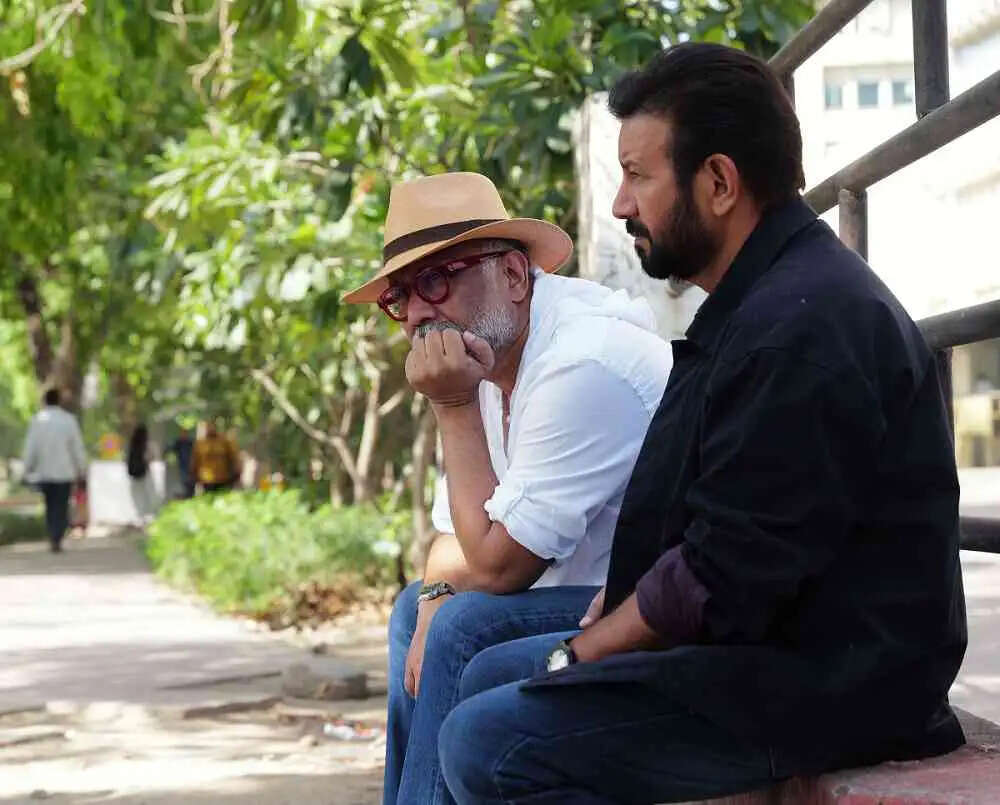
Anubhav is an exceptional director who crafts beautiful scenes. After Mulk, he continued to cast me in challenging roles, which I appreciate.
How do you approach Anubhav Sinha's thought-provoking dramas?
Every film is rooted in human emotions, even in genres like science fiction. Anubhav's strength lies in addressing intellectual debates while grounding them in fundamental human experiences, whether it's caste issues in Article 15 or domestic violence in Thappad.
As actors, we must navigate these themes and express them authentically. Awareness of social, political, and economic contexts is crucial. Anubhav and his team foster a curious environment, encouraging actors to engage with the material deeply.
When portraying a character like Kartik, personal feelings about societal issues can enhance the performance. Anubhav's films spark necessary discussions, enriching the art form.
How would you describe your acting journey?
My choices have always been limited, and they remain so. I accept roles that resonate with me, even if my financial situation compels me to take on projects I'm not passionate about, as long as they aren't politically or socially objectionable.
Some opportunities arise unexpectedly, like Nitin Kakkar's Ram Singh Charlie or Anurag Kashyap's films.
Reflecting on my performance in Anurag's That Girl in Yellow Boots, I felt out of sync during the climax. I realized later that I was trying too hard to impress him.
Anurag is an actor's director, understanding our craft intimately. My experience with Nishaanchi was smooth, despite initial concerns.
Have you ventured into comedies as well?
Nitin Kakkar is another director I've known for years. After working with him on Filmistaan, I took on Jawaani Jaaneman (2020). He encouraged me to lose weight for the role, and I managed to shed nearly 20 kilos, making it one of my most rewarding experiences.
Did you also lose weight for Assi?
Yes, I lost 17 kgs for the role of Kartik in Assi by maintaining a strict diet and walking extensively.
What were your early years like?
My family hails from Rewa in Madhya Pradesh, where my father served as a havildar in the Indian Army. His job required us to move frequently, and I spent seven years at a military school in Belgaum, Karnataka.
The school had a diverse student body and offered excellent extracurricular activities, including theatre.
After relocating to Bhopal, I studied political science, history, and English literature, though theatre was my true passion. My father, who performed in Ramleela, never pressured me to pursue a conventional career. Ironically, Bhopal felt like a culture shock for me, and I had no friends. My father enrolled me in a theatre workshop at Bharat Bhavan, which was pivotal for my development.
I also cleared the Combined Defence Services examination as a backup but ultimately chose to attend the National School of Drama from 1991 to 1994.
Did you have exposure to cinema during your training?
My exposure to quality cinema began in school, where I watched films like Paar featuring Naseeruddin Shah. We primarily viewed Indian New Wave films, along with occasional commercial releases.
At NSD, the cultural environment was vibrant, offering a wealth of experiences for those interested.
When did you move to Mumbai?
I arrived in Mumbai in December 1994 after meeting Pandit Satyadev Dubey at NSD, who invited me to audition for the lead role in The Making of the Mahatma directed by Shyam Benegal.
Although I didn't land the role due to my limited English skills, I later acted in Benegal's Sardari Begum, which was a fortunate opportunity.
Many of my acting classmates also moved to Mumbai, and I settled in Jogeshwari East, determined never to return. The city felt familiar, and I believed it offered the freedom to pursue both theatre and television.
What distinguishes acting in theatre from acting in cinema?
I observed many seniors transition from theatre to film during a time when cinema still retained elements of Parsi theatre. Their performances felt natural and fitting.
When I began working in television, I was fresh from drama school and hadn't yet developed a distinct performance style, making the transition seamless.
The key is to remain honest and authentic. Even commercial films can evoke strong emotions when the underlying thought is conveyed effectively.
Has any particular role significantly impacted your career?
My journey has been one of gradual accumulation. Following Rockstar, I was fortunate to secure supporting roles in successful films.
I aspire to tackle challenging roles and avoid repetition, striving to portray each character uniquely, whether a policeman or a politician. Ultimately, it's about embodying a person authentically. A compelling script can elevate any role.
That said, I've taken on subpar scripts for financial reasons, but I've also embraced challenging roles like Ramsingh Charlie and Nazar Andaz.
Have you ever considered writing or directing?
No, I once thought about keeping a diary but never progressed beyond the first page. I prefer voice notes over typing.
One of my regrets is not pursuing writing or music training.
Are there any dream roles you wish to play?
I don't have specific dream roles. I believe in portraying any character to the best of my ability, regardless of its length or significance.
Actors often mistakenly believe they can only succeed in author-backed roles. Even brief appearances can be impactful if executed truthfully.
For instance, in Thappad, I struggled to portray a caring father. After my first scene with Ratna Pathak Shah, I found my footing. I also take pride in my work in Airlift and Jolly LLB 2.
Looking back at Ram Singh Charlie, I see flaws in my performance, but one scene where I painted my face stands out. The preparation that went into that moment was significant.
If asked to recreate it, I doubt I could. However, the essence of that achievement will resonate in future performances, illustrating the continuity of acting.
Who do you perform for – the filmmaker, the audience, or perhaps a mentor?
Primarily, I act for myself, seeking to understand my own experiences. Subconsciously, I also seek the director's approval, avoiding extra takes if they are satisfied with my performance.
There are individuals whose opinions I value, and I welcome constructive criticism. I believe in being open to feedback, whether it's praise or critique.
Actors often become defensive about their performances, but a genuine actor recognizes their shortcomings and accepts them. It's essential to enjoy the process, regardless of the film's quality.
As an actor married to Ayesha Raza Mishra, do you discuss your work with each other?
During our dating days, Ayesha attended one of my plays, which was poorly received. She left during the intermission, and I admired her honesty.
When I expressed interest in performing in an English play, she wisely pointed out that my focus on language could detract from my performance. She was right.
I don't advise her on her roles; she is an exceptional actor with immense potential, as evidenced by her memorable performances in films like Dil Dhadakne Do.
Have you fully realized your potential as an actor?
I can't say for certain what my full potential is. Each role presents its own challenges, and I've faced failures along the way. However, I believe there is still great potential to explore.
We often equate potential with the length of a role, but for me, it's more fluid. My interpretation of a character evolves with age and societal changes.
Ultimately, the essence of a character lies in its portrayal, whether in a brief scene or an extended performance. The impact of a single, well-timed reaction can be magical.
How do you handle the pressures of being an actor in Hindi cinema?
It's crucial not to measure your life against others' standards. While I own my apartment, aspiring for a larger home could lead to dissatisfaction. Jealousy over missed roles can be detrimental.
When I see a great performance, I feel a healthy jealousy but also happiness for the actor. I have never been in a race for success; my primary responsibility is to my family.
For a time, I felt unhappy taking on projects I didn't believe in, but I realized that I shouldn't presume to understand cinema entirely.
My focus is on being as competent as possible, avoiding the temptation to adopt someone else's context. Finding happiness within myself and concentrating on my journey is paramount.