
How In-Flight Entertainment is Transforming Air Travel: A Look at the Future

The Evolution of In-Flight Entertainment
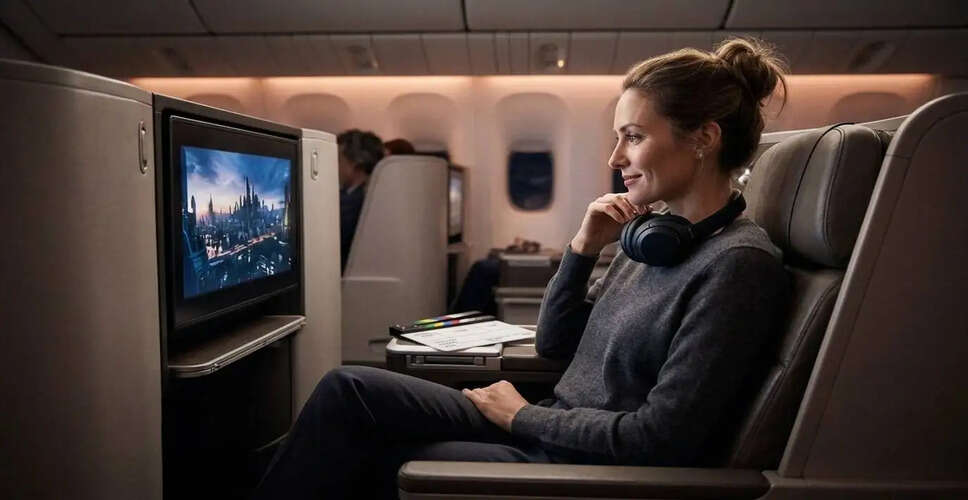
The realm of in-flight entertainment has significantly changed, shifting from communal screens to a highly personalized experience that competes with traditional cinema. By 2025, global air travel is expected to reach around 4.97 billion passengers, nearly paralleling the 4.98 billion movie tickets sold globally, highlighting the aviation sector's importance to Hollywood.
A Professional Approach to Content Curation
Terry Steiner, the president of Terry Steiner International, an independent distribution company, emphasizes that both airlines and film studios now approach this market with a high level of professionalism. Since the early 1990s, when in-flight entertainment was limited to a single shared screen, advancements in technology have transformed seatback displays into extensive media centers that provide films, TV shows, music, and interactive games.
Tailoring Content for Airline Passengers
Steiner's company plays a crucial role in connecting content to around 100 airlines and other non-theatrical venues like cruise ships and hospitals. He points out that understanding each airline's unique character is essential for success. While many travelers look for recent box-office hits they missed, others prefer familiar favorites that they enjoy watching repeatedly during long flights.
The Growing Market for In-Flight Entertainment
The in-flight connectivity and entertainment market is anticipated to reach $9.5 billion this year, a significant rise from $2.85 billion in 2015. This growth is primarily driven by wireless technology, enabling passengers to access content on their personal devices. Despite the popularity of streaming services, Steiner argues that in-flight entertainment remains a unique and resilient medium, as it offers access to new releases not yet available on home platforms.
Choosing the Right Content
When selecting content for flights, careful thought is given to passenger comfort and sensitivities. Steiner notes that certain genres, especially horror or films featuring plane crashes, are typically avoided. The focus is instead on comedies, romantic comedies, and dramas. However, the market can be unpredictable; while major box-office hits are common, they may not always be appropriate for in-flight viewing due to concerns about violence, sexual content, or sensitive themes.
The Future of In-Flight Viewing
As the industry evolves, in-flight viewing has emerged as a cultural subgenre, with various publications now providing curated recommendations for travelers. Whether passengers are catching up on the latest blockbusters or revisiting beloved classics, the in-flight experience remains a vital aspect of modern air travel. Looking forward, Steiner is optimistic about the sector's future, noting that the demand for high-quality, curated entertainment at cruising altitude continues to grow.