
What Makes Christopher Nolan's 'Interstellar' a Sci-Fi Masterpiece?

The Evolution of 'Interstellar'
Christopher Nolan's 'Interstellar' has gained recognition as one of the most acclaimed science fiction films of the past decade, celebrated for its groundbreaking narrative and breathtaking visuals. Co-created with his brother Jonathan Nolan, the film is particularly praised for its scientifically accurate depiction of intricate space phenomena, including wormholes. Notably, the project was originally set to be directed by Steven Spielberg, who was involved before Nolan took over the direction. Spielberg's exit allowed Nolan's unique vision to take center stage.
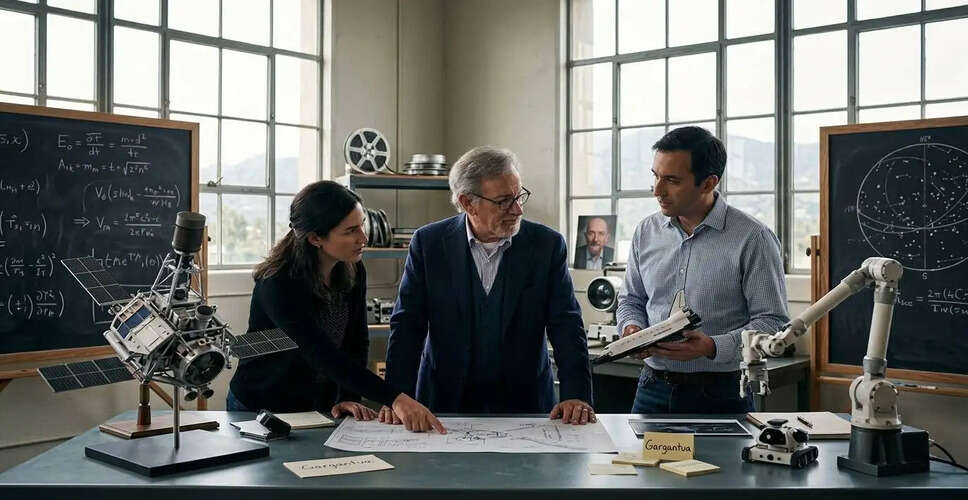
In a recent conversation with Empire, Spielberg reflected on his year-long participation in 'Interstellar,' during which he worked alongside producer Lynda Obst and theoretical physicist Kip Thorne. Thorne played a crucial role as a scientific advisor, significantly influencing the film's conceptual design. Spielberg noted, “I spent a lot of time at the [Jet Propulsion Laboratory] in Pasadena, California, engaging with scientists and aerospace engineers,” emphasizing his thorough involvement with the scientific community during the film's initial stages.
Initially slated to direct 'Interstellar' in 2006, Spielberg enlisted Jonathan Nolan to write the screenplay. However, as Spielberg redirected his attention to other ventures, he eventually withdrew from the project. Jonathan Nolan, anticipating his brother Christopher's interest, remarked, “If you decide not to proceed with this film, I can assure you who will take it on. He’s been eager about it. That’s my brother Chris.” This prediction proved to be correct, as Christopher Nolan swiftly assumed control of the project after Spielberg's departure.
During a Q&A session in March 2026, Christopher Nolan reminisced about the film's development, mentioning that Jonathan had collaborated with Spielberg following 'The Dark Knight.' He stated, “It had remarkable concepts and went through various iterations, but it never gained momentum until Steven was ready to proceed.” Once the project became available, Nolan expressed his intention to blend his ideas with Jonathan's original vision, resulting in a collaborative effort that ultimately defined the film.
'Interstellar' premiered to widespread acclaim, achieving significant box office success and receiving eight Academy Award nominations, including a win for Best Visual Effects. Set in a bleak future where Earth is on the brink of agricultural collapse, the film follows a group of astronauts on a mission to discover a new home for humanity. Featuring a stellar cast that includes Anne Hathaway, Matthew McConaughey, Jessica Chastain, and Bill Irwin, 'Interstellar' exemplifies the fusion of visionary filmmaking and scientific exploration.