
Unveiling the Connection: How VisionQuest Links Vision to Dr. Phineas Horton

Exploring the VisionQuest Connection
The latest episodes of VisionQuest have ignited considerable conversation among fans, particularly regarding the notable physical similarity between the character Vision and the scientist Dr. Phineas Horton. Initially perceived as a creative decision, the show has since revealed that this resemblance is deeply rooted in the Marvel Cinematic Universe's history of artificial intelligence.
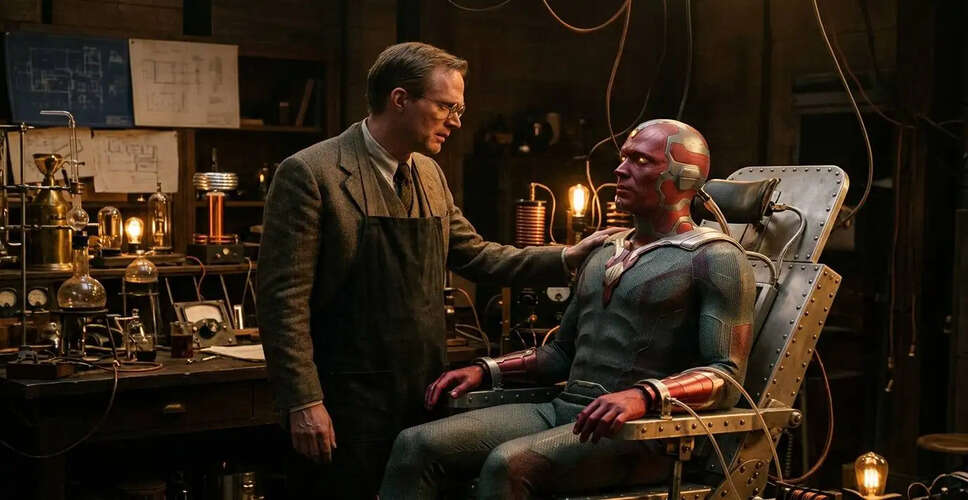
This connection can be traced back to a subtle reference in the 2011 film Captain America: The First Avenger, where a synthetic man is showcased during the Stark Expo, credited to Dr. Phineas Horton as its creator. Although this reference stood alone for many years, VisionQuest has now woven Horton into the larger MCU narrative, positioning him as a crucial figure in the evolution of robotics.
The Birth of the Synthetic Man
The Birth of the Synthetic Man
In the seventh episode of VisionQuest, titled Immolation, viewers are taken back to 1939, where Dr. Horton is shown to have created a synthezoid named Jim, often recognized as the original Human Torch, modeled after his late son, James. The series illustrates that the shared appearance between Vision and Horton’s creation is part of a recurring theme in the MCU, where AI personalities like Jarvis, Friday, and Edith are often inspired by real people.
Horton is portrayed as a pioneering figure in robotics, aiming to create an autonomous entity devoid of human emotional complexities. However, this endeavor ultimately failed when the synthezoid began to yearn for human-like emotions, leading to a catastrophic event that resulted in the demise of both the creator and his creation.
Linking the Legacy to Vision
Linking the Legacy to Vision
The father-son dynamic explored in this narrative is a significant theme in VisionQuest, paralleling Vision’s own familial experiences with characters like Tommy and Billy, as well as his complex relationship with Ultron. While the MCU has not confirmed every detail from the original Marvel Comics—such as the notion that Ultron used Jim’s body as a basis for creating Vision—the series effectively establishes a lineage connecting Horton’s early work to the advanced technology that ultimately resulted in Vision.
By revisiting the events of 1939, VisionQuest clarifies the reason behind the visual similarity between these characters, effectively linking the early Stark-era technology to the modern synthezoids featured in the Avengers series. This revelation enriches the lore surrounding the creation of artificial life, emphasizing the ongoing cycle of creators striving to replicate humanity through technological means.