
Taika Waititi Responds to Klara and the Sun's Mixed Reviews: What He Really Thinks!
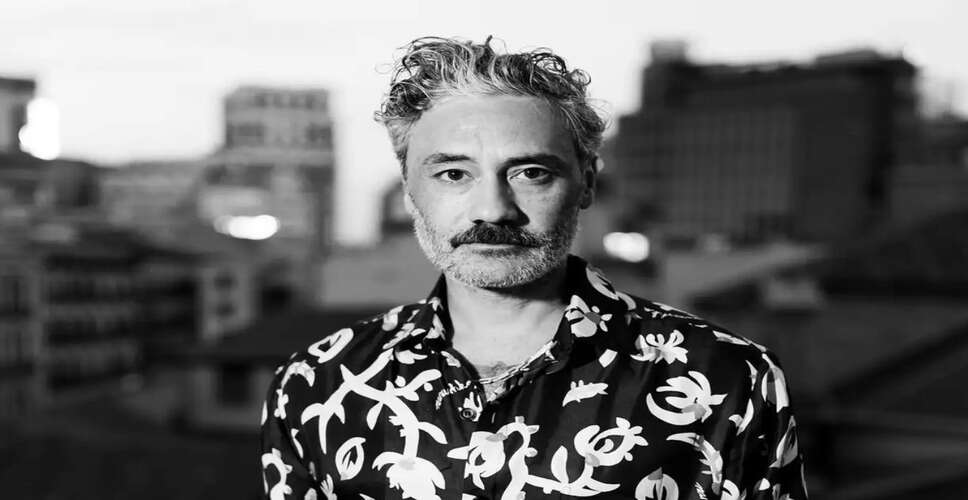

Director's Bold Stand Against Critics
Taika Waititi, the acclaimed director behind hits like Thor: Love and Thunder and the Oscar-winning Jojo Rabbit, has openly addressed the backlash his latest film, Klara and the Sun, has received from critics. He took to social media to brush off the negative reviews, asserting that they hold little significance.
The film, featuring talents such as Jenna Ortega and Amy Adams, is based on the 2021 novel by Nobel laureate Kazuo Ishiguro. Despite the high expectations set by its source material and star-studded cast, the film has garnered mixed reviews, prompting Waititi to separate himself from the critical discourse.
Waititi's Perspective on Audience Reception
Waititi Defends Project and Criticizes Reviewers
In an Instagram post, Waititi pointed out the contrast between the opinions of critics and the audience's reception, citing a 78% audience score on Rotten Tomatoes as proof that viewers are enjoying the film. He revealed that he has not engaged with reviews of his work or that of others for nearly 15 years.
He went further to describe critics as individuals who have not fulfilled their own creative aspirations, labeling them as disconnected and outdated. He referenced the critical response to Jojo Rabbit to illustrate his indifference towards negative feedback, emphasizing his commitment to listening to the audience instead.
Exploring the Themes of Klara and the Sun
About Klara and the Sun
Klara and the Sun is a dystopian narrative set in a future shaped by a conflict termed a third world war, allegedly ignited by the misuse of technology. The story revolves around Klara, portrayed by Jenna Ortega, who is an outdated model of an Artificial Friend—an android designed to combat loneliness. The plot follows Klara as she is acquired by a teenager named Josie, played by Mia Tharia, and her mother, Amy Adams, as they navigate a household filled with mystery and sorrow.
During the film's premiere at the London Film Festival, Jenna Ortega highlighted the film's exploration of timeless human issues, suggesting that even in a futuristic context, the essence of humanity lies in connection and understanding. This project remains a pivotal focus for Waititi as it approaches its release.