
Kim Novak: The Hollywood Legend Who Defied Beauty Norms and Studio Control
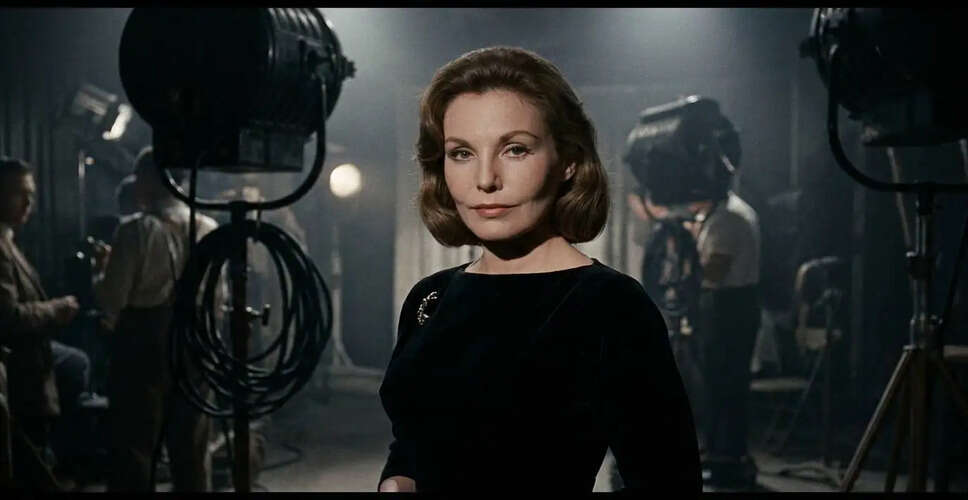

Challenging Hollywood's Beauty Standards
Long before the current discussions about unrealistic beauty ideals, Kim Novak, a Hollywood legend, was already confronting the stringent expectations imposed by film studios on their leading actresses. Throughout the 1950s, she consistently resisted the pressure to fit into a manufactured mold, prioritizing her individuality over the demands of the studio system.
In a recent conversation with PEOPLE regarding the documentary 'Kim Novak’s Vertigo,' the 93-year-old actress reflected on a significant moment from her early career that highlighted her independence. She recounted an experience where the studio's makeup team altered her look to such an extent that she felt unrecognizable, particularly due to excessive lipstick and unnatural eyebrow styling that clashed with her true self.
Taking Charge of Her Image
Taking Control of Her On-Screen Image
Instead of yielding to the production team's demands, Novak decided to take control. Without a private dressing room, she found refuge in a restroom where she removed the makeup she deemed forced upon her. When she returned to the set, she looked more like her authentic self, surprising the crew. By the time they noticed the change, filming had already commenced, and they had to continue with the new look.
Looking back, Novak recognized that her actions stemmed from a desire to safeguard her identity. Over time, she realized that audiences were attracted to her precisely because she did not conform to the polished, artificial image typical of stars during that era. This authenticity endeared her to viewers who valued a more genuine aesthetic.
Identity and Performance in Novak's Career
The Intersection of Identity and Performance
Novak's defiance against Hollywood's beauty standards was not a one-off incident; it was a hallmark of her career. The struggle between her personal identity and external expectations resonated with the themes of her most famous role. In Alfred Hitchcock’s 1958 psychological thriller 'Vertigo,' she played two contrasting characters, Madeleine Elster and Judy Barton, in a story that explored obsession and the transformation of a woman into an idealized version of another. Novak later acknowledged the irony of the film's themes reflecting her own battles with studio control.
Her acting style was further influenced by her training with a drama coach who employed the Stanislavski method. This approach allowed her to break free from the rigid behavioral guidelines prevalent at the time, encouraging her to infuse her performances with her personality and respond authentically to the scenes, a philosophy that helped her maintain her artistic integrity throughout her career.