
Could the Xenomorph from 'Alien' Be the Real Hero? A Fresh Take on Two Iconic Films
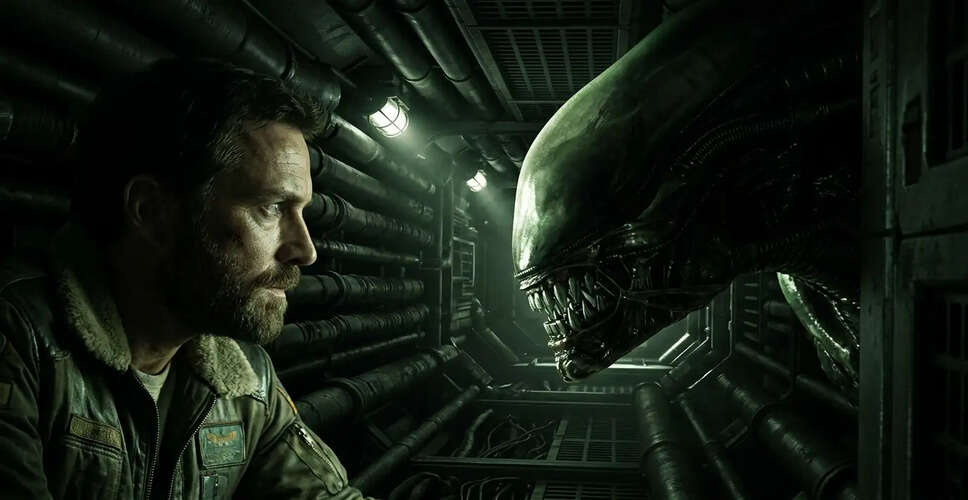

A New Perspective on 'Alien' and 'Die Hard'
A recent post that went viral on social media has ignited a new discussion regarding Ridley Scott's legendary 1979 sci-fi horror film, 'Alien'. An X user suggested an intriguing theory: viewing the film through the lens of the xenomorph reveals unexpected parallels with the classic action film 'Die Hard'. The post boldly claimed, "From the perspective of the xenomorph, '79 Alien is basically Die Hard," drawing attention from film buffs.
The connections between 'Alien' and 'Die Hard' are more significant than they might first appear. In 'Die Hard', the main character, John McClane, finds himself trapped in the Nakatomi Corporation building, navigating through air ducts while avoiding armed foes. In a similar vein, the xenomorph in 'Alien' is confined aboard the Nostromo, skillfully moving through vents to protect itself from a crew determined to eliminate it. Both stories unfold in tight spaces, highlighting the fight for survival against formidable challenges.
The corporate elements further enhance this comparison. The Nostromo is operated by the Weyland-Yutani Corporation, a British-Japanese collaboration, while the Nakatomi Corporation in 'Die Hard' is also linked to Japan. This shared corporate backdrop adds depth to the narratives, as both films portray characters struggling within corporate-controlled settings, intensifying the stakes of their conflicts.
Another fascinating aspect of this theory is the portrayal of the bearded villains in both films. In 'Alien', Arthur Dallas, played by Tom Skerritt, poses a primary threat to the xenomorph, much like Hans Gruber, portrayed by Alan Rickman, challenges McClane in 'Die Hard'. From the xenomorph's viewpoint, Dallas is a major hurdle, echoing the dynamic between McClane and Gruber.
This reimagining of the xenomorph as a misunderstood figure prompts intriguing questions about narrative perspective. The creature's presence on the Nostromo was instigated by the crew's actions, framing it as a being reacting to external dangers rather than a natural monster. While this reinterpretation does not change 'Alien's' status as a horror masterpiece, it serves as a reminder that every story can be examined from various angles, uncovering new insights into well-known narratives.