
Francis Ford Coppola: The Timeless Journey of a Creative Student
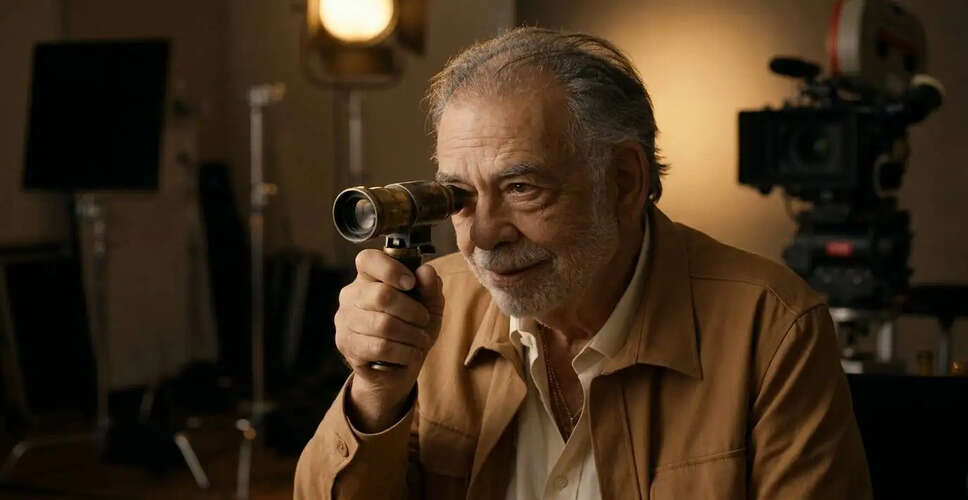

A Visionary's Perspective on Creativity
Renowned director Francis Ford Coppola, celebrated for masterpieces like The Godfather, has shared insightful thoughts on sustaining a long-lasting career and fostering creative evolution. With a career that spans several decades and is filled with monumental achievements, Coppola emphasizes that his current aspiration is to embrace the mindset of a learner once again.
His philosophy revolves around the belief that genuine creative energy stems from an ongoing journey of exploration. Instead of solely depending on past triumphs or established knowledge, Coppola encourages artists to approach their craft with a fresh sense of curiosity. He believes this perspective can help rekindle the passion that initially inspired them, effectively eliminating the complacency that often accompanies extensive professional experience.
The Importance of Lifelong Learning
The Philosophy of Lifelong Learning
In a 2012 discussion with The Rumpus, Coppola expanded on this creative philosophy, expressing that the thrill of discovery often surpasses the joy of external accolades. For him, returning to a student-like state is not about going back to school but about staying receptive to new concepts, questioning one’s own beliefs, and accepting the vulnerability that comes with exploring the unknown. He contends that the pressure to be an authority can hinder creativity, while a readiness to learn—and even to stumble—fuels a vibrant career.
This mindset serves as a vital reminder that professional development is an ongoing process. Whether in filmmaking, shifting careers, or exploring new hobbies, the pursuit of knowledge helps prevent the stagnation that can arise from routine. Coppola’s insights suggest that the best way to progress is often to reconnect with the foundational curiosity that ignited one’s journey in the first place.
A Legacy of Continuous Growth
A Legacy Built on Constant Evolution
Born in Detroit in 1939, Coppola grew up in a family immersed in creativity, with his father, Carmine, being a musician and composer. This artistic environment laid the foundation for his future in storytelling. After pursuing theatre studies at Hofstra University, he refined his skills at the University of California, Los Angeles, focusing on writing and visual storytelling.
His career in the 1960s, marked by early films like You're a Big Boy Now and The Rain People, culminated in his landmark success with The Godfather in 1972. Following this, projects such as The Conversation, The Godfather Part II, and Apocalypse Now cemented his legacy in cinema and garnered him numerous Academy Awards. Despite these honors, Coppola has continued to innovate and experiment with his craft in his later years, embodying the very principle of lifelong learning he champions today. By persistently challenging himself, he exemplifies the notion that curiosity is the driving force behind a sustained creative life.