
Exploring the Gap Between Books and Their Film Adaptations

The Discrepancy Between Literature and Cinema
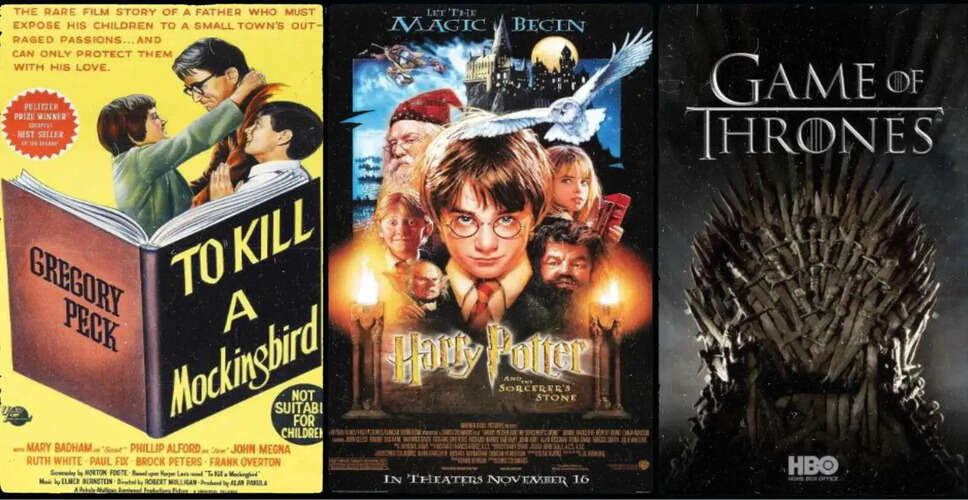
My journey with JK Rowling’s Harry Potter began long before the films graced the theaters. While the cinematic adaptations were enjoyable, I often felt a sense of dissatisfaction, as if something essential was missing. This feeling resurfaced on World Book Day while I was browsing through notable books that have made their way to the silver screen, reigniting a long-standing discussion: why do cherished novels frequently lose their essence in film adaptations? From Harry Potter (with attempts to rectify this) to Game of Thrones by George RR Martin (a glaring example) to classics like Kill a Mockingbird, the trend is evident. Even the most lauded adaptations—whether critically acclaimed (The Shining, 1980), commercially successful (I Am Legend, 2007), or culturally significant (The Great Gatsby, 2013)—often fail to encapsulate the emotional richness of their original texts. The complexity of this issue lies not in the superiority of books, but in the inherent differences in how each medium conveys human experiences.
Books vs. Cinema: The Emotional Mechanisms
At the heart of this divide is a fundamental truth: literature and visual storytelling engage different emotional mechanisms. Books excel in exploring the inner lives of characters. Through prose, authors provide readers with direct access to a character’s thoughts, fears, and evolving perceptions. This internal exploration often holds the deepest emotional resonance. For instance, in the Harry Potter series, readers delve into Harry’s internal conflicts—his loneliness, moral dilemmas, and struggles with identity. While the films capture the overarching narrative, they inevitably lose much of this inner complexity. Subtle reflections, such as Harry’s thoughts on Cedric Diggory’s death or his conflicted feelings towards Snape, are often condensed or omitted, resulting in a narrative that prioritizes plot over psychological depth.
The Role of Time in Storytelling
Another significant factor is the concept of time. Novels unfold at a pace dictated by the reader, allowing for deep reflection and gradual emotional buildup. In contrast, films and television are constrained by specific runtimes, leading to necessary compression of subplots and character arcs. A prime example is Game of Thrones. Initially, the series closely followed Martin’s books, balancing plot and character development. However, as the show progressed, it began to rush through character motivations, leaving viewers feeling disconnected. The books, however, dedicate extensive pages to these transitions, allowing readers to fully engage with the characters' lives and choices.
Imagination vs. Interpretation
One of the strengths of literature is its capacity for interpretation. A book provides a framework, but the reader completes the experience, imagining characters and scenes in their own way. In contrast, film adaptations present a singular interpretation, which can limit emotional engagement. For example, Harper Lee’s To Kill a Mockingbird is narrated through Scout Finch’s perspective, offering a unique emotional texture. Readers experience events through her eyes, while the film adaptation shifts this to an observational tone, altering the emotional dynamics.
Language as an Emotional Medium
The nuances of language play a crucial role in conveying emotion. While cinema excels in visual and auditory storytelling, it cannot replicate the emotional precision of written language. Dialogue in films must be concise, often sacrificing the emotional weight carried by prose. This is particularly evident in adaptations of stylistically rich literary works. In F. Scott Fitzgerald’s The Great Gatsby, the prose conveys a sense of longing that is deeply tied to the language itself, which is often lost in film adaptations.
Ambiguity and Silence in Storytelling
Books thrive on ambiguity, allowing for personal interpretation, while cinema often demands clarity. Although some films embrace ambiguity, mainstream adaptations tend to favor explicitness, which can dilute emotional impact. In literature, what remains unsaid can resonate powerfully, while films may struggle to convey this depth. Not all films fail in this regard; for instance, Mike Nichols' 1966 film Who's Afraid Of Virginia Woolf? effectively uses pauses and silences to create a compelling narrative.
The Experience of Reading vs. Watching
Finally, the manner in which each medium is consumed plays a significant role. Reading is typically a solitary act that requires focus and emotional investment, fostering a deep connection between the reader and the text. In contrast, watching a film or series is often a more passive experience, which, while engaging, does not demand the same level of participation.
Adaptations as Transformations
It is essential to view adaptations not as failures but as transformations that reinterpret stories in different formats. Some adaptations succeed brilliantly on their own terms, even if they diverge from the emotional experience of the original material. The lasting appeal of adaptations like Harry Potter, Game of Thrones, and To Kill a Mockingbird lies in their ability to introduce stories to new audiences, visualize previously imagined worlds, and reignite interest in the original texts.