
Exploring the Dark Humor of 'No Other Choice': A Tale of Desperation and Capitalism
A Corporate Life Turned Upside Down
In a gripping narrative, a seasoned executive in the paper industry, celebrated as the 'Pulp Man of the Year,' seems to have it all: a devoted spouse, two kids, two dogs, two cars, and a grand family estate. However, his world is shaken when his company is acquired by American investors, leading to his unexpected dismissal.
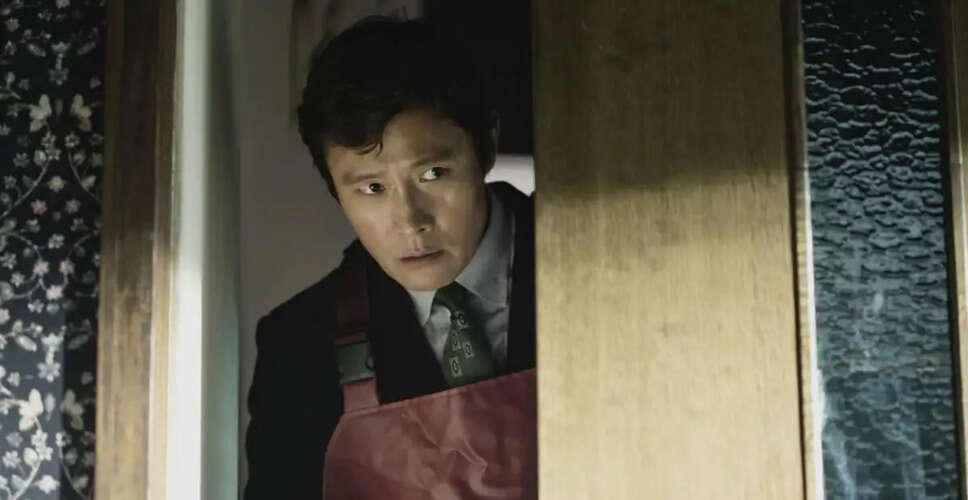
Faced with the loss of everything he equates with success, Man-su (played by Lee Byung-hun) assures his wife Mi-ri (Son Ye-jin) that he will return to the paper sector within three months. Unfortunately, the job market offers no opportunities for him. In a desperate bid to outmaneuver his competition, he contemplates a drastic solution.
A Unique Cinematic Experience
Directed by Park Chan-wook, 'No Other Choice' (2025) is an adaptation of Donald E. Westlake's novel 'The Ax.' This film invites viewers to empathize with Man-su as he embarks on a morally ambiguous journey to eliminate his rivals. While his actions are ruthless, the film balances dark humor with poignant moments, portraying a deeply human story amid harsh realities.
Available on MUBI, 'No Other Choice' was surprisingly snubbed at the Oscars, alongside other notable films. This latest work from Chan-wook stands out as a significant cinematic achievement.
A Reflection on Capitalism
'No Other Choice' is a compelling blend of humor and tragedy, addressing the harsh impacts of rampant capitalism. Its tone is reminiscent of Bong Joon-ho's 'Parasite' (2019), capturing the struggles of a family torn apart by job loss, similar to Kiyoshi Kurosawa's 'Tokyo Sonata' (2008).

Visual Storytelling at Its Best
The film showcases Park Chan-wook's signature style, combining sharp wit with graphic violence and tender moments. The characters navigate through intricately designed sets, with disorienting camera angles that reflect their chaotic lives. The pacing may test viewers' patience, but it effectively illustrates Man-su's gradual transformation from a laid-off worker to a lethal adversary.
The supporting characters are equally well-developed, contributing to the narrative without falling into clichés of self-pity.
A Standout Performance
Lee Byung-hun delivers a remarkable performance, embodying the physical and emotional turmoil of Man-su. His portrayal captures the essence of a man distorted by external pressures, highlighting how corporate environments can dehumanize individuals.
In every interaction, Man-su perceives a competition, even in a dance scene. As he navigates his challenges, the film culminates in a powerful critique of inhumane corporate practices.