
Exploring the Cinematic Journey of Ramayana: From Silent Films to Modern Adaptations
Introduction to Ramayana's Cinematic Legacy
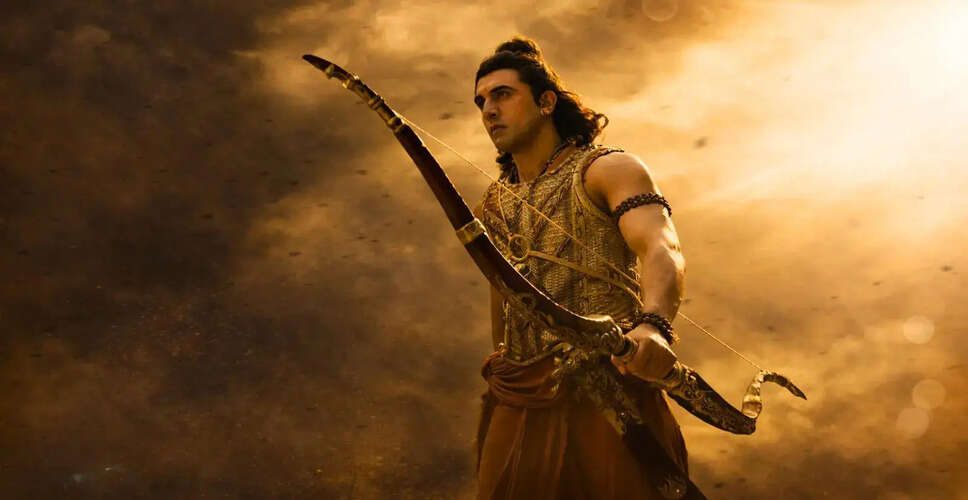
The highly anticipated teaser for Namit Malhotra’s Ramayana, featuring Ranbir Kapoor as Lord Rama, has made its debut on social media platforms. Directed by Nitesh Tiwari, this film also stars Sai Pallavi as Sita and Yash as Ravana, the formidable antagonist. The visual effects by DNEG promise to recreate the enchanting world of Lord Rama. Scheduled for release during Diwali 2026, this film marks another chapter in the cinematic portrayal of Lord Rama, a figure that has long captivated audiences. The Ramayana, attributed to Sage Valmiki, has been a source of inspiration across various media, transcending language and culture, and has been adapted into numerous films, television shows, and animations.
The Early Days of Ramayana in Cinema
Ramayana’s Foray Into Cinema
The Ramayana made its cinematic debut with the advent of Indian filmmaking. The silent film 1917's Lanka Dahan, created by Dadasaheb Phalke, depicted Hanuman’s journey to Lanka, setting a precedent for mythological storytelling. Following this, 1931's Chandrasena, a silent film by V Shantaram and Keshavrao Dhaiber, illustrated an episode where Hanuman aided in rescuing Rama and Lakshmana. The 1940 Telugu film Bhookailas focused more on Ravana than on Lord Rama. Throughout the 1920s and 1930s, various silent and early talkie films explored segments of the epic, concentrating on specific characters rather than the overarching narrative.Ramayana Becomes a Cinematic Staple
Ramayana A Staple In Cinema
By the mid-20th century, films based on the Ramayana had become a significant part of Indian cinema, with filmmakers eager to adapt the epic. Notable films such as 1942's Bharat Milap and Vijay Bhatt's Ram Rajya (1943) achieved great success, with the latter reportedly being viewed by Mahatma Gandhi. Vijay Bhatt later produced 1954's Ramayan, featuring Prem Adib and Shobhana Samarth as Rama and Sita, focusing on their sons Luv and Kusha. Regional cinemas, including Tamil, Telugu, Bengali, Kannada, and Malayalam, also contributed their unique interpretations.Evolution of Ramayana in Cinema
Ramayana In Later Years
During the 1960s and 1970s, filmmakers began to delve deeper into the psychological aspects and moral complexities of the Ramayana. The 1967 Ram Rajya, once again directed by Vijay Bhatt, merged Valmiki's Ramayana with Tulsidas' Ramcharitmanas and Bhavbhuti's Uttar Ramcharit. The 1976 Tamil film Dasavatharam featured the avatars of Vishnu, including a segment on Lord Rama. Animated adaptations emerged over the years, culminating in Ramayana: The Legend of Prince Rama (1993), a significant Indo-Japanese collaboration that introduced the epic to international audiences. Among the recent adaptations, 2023's Adipurush, starring Prabhas, Saif Ali Khan, and Kriti Sanon, faced criticism for its screenplay and visuals.In total, there are estimated to be between 50 to 70 films that directly adapt the Ramayana in India, while those that reinterpret the epic could exceed 200, focusing on characters like Hanuman, Ravana, and Sita, offering fresh perspectives on the traditional narrative.