
Exploring the Absurdity of 'Happy Patel: Khatarnak Jasoos'

A Comedic Journey with Happy Patel
Happy Patel: Khatarnak Jasoos features a blend of genuinely funny moments alongside those that the creators find amusing. The film, co-created by and starring Vir Das, revolves around a British spy of Indian descent, infused with a sense of hope.
Happy, portrayed by Das, is adopted as a baby and grows up in London, completely unaware of his Indian heritage until he discovers it later in life.
This film is an absurdist comedy filled with nonsensical scenarios and unexpected twists. Happy is enlisted to save a kidnapped British inventor who has developed a groundbreaking fairness cream. After a crash course in espionage, which humorously includes the lesson that Indians don’t use spoons, he arrives in a clichéd version of India.
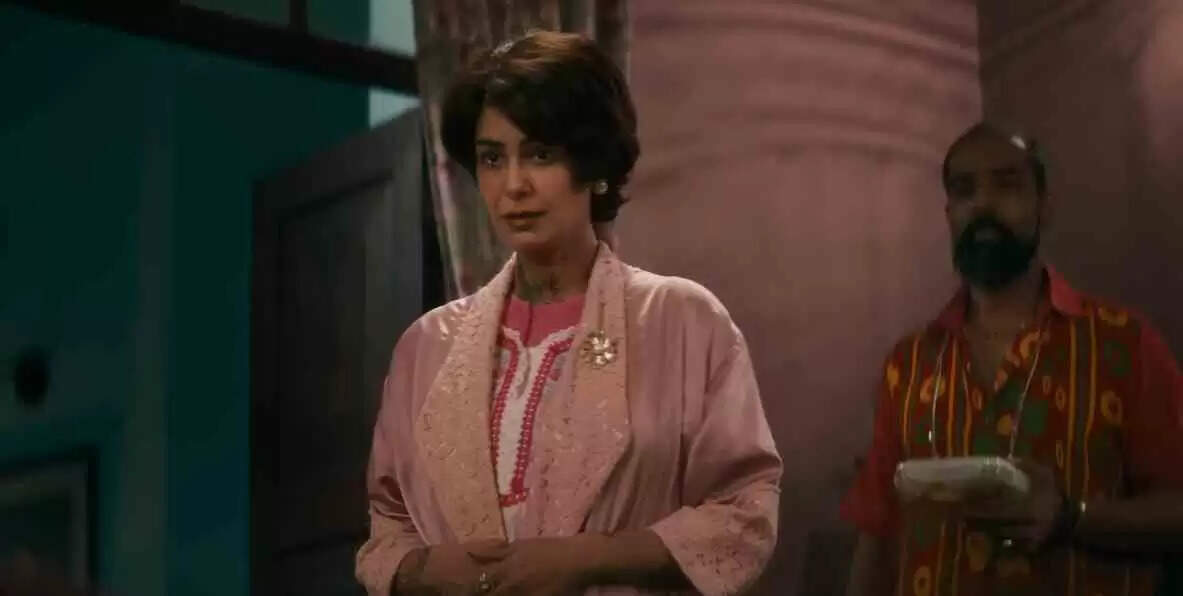
In Goa’s Panjore, which doubles as Panaji, Happy faces off against the formidable Mama (Mona Singh), who enjoys cutlets and has a quirky habit of ending her sentences with 'Man'. He also interacts with his handler Geet (Sharib Hashmi), who communicates through tea slurping sounds, and Roxy (Srushti Tawde), Geet's superior. Amidst his clumsy adventures, Happy finds himself falling for the dancer Rupa (Mithali Palkar).
The screenplay, crafted by Das and Amogh Ranadive and co-directed by Das and Kavi Shastri, relies heavily on a recurring joke about Happy's poor Hindi. His attempts at the national language, delivered with a questionable British accent, serve as the primary source of humor.
While the initial chuckles from his linguistic blunders fade quickly, Happy's struggles with both language and investigation remain consistent. The film's erratic nature appears intentional, contributing to its chaotic charm.
The narrative seems to aim at exaggerating stereotypes of Goans and parodying films featuring overachieving spies on significant missions, as well as NRIs reconnecting with their roots and the Indian fixation on fair skin. The film is a playful commentary on various cultural tropes.
At 121 minutes, Happy Patel is so absurd that it sometimes feels juvenile, yet it cleverly disguises its lack of substance. The film pretends to have a deeper message while primarily being about nothing. This could be seen as both a clever aspect and a defense against the fatigue stemming from Happy's poor Hindi and the lackluster material given to supporting characters.
Vir Das takes center stage, occasionally sharing the spotlight with Sharib Hashmi and Srushti Tawde. He effectively captures the film's chaotic spirit, maintaining a lighthearted atmosphere alongside his co-director. However, the film lacks the boldness needed to critique writer-director-actors who fail to recognize when a comedic bit has overstayed its welcome.
Mithila Palkar's character is so underdeveloped that her presence feels almost unnecessary. The film also features cameos from Aamir Khan, who plays Mama's father, and Imran Khan, who appears as an international supermodel.